
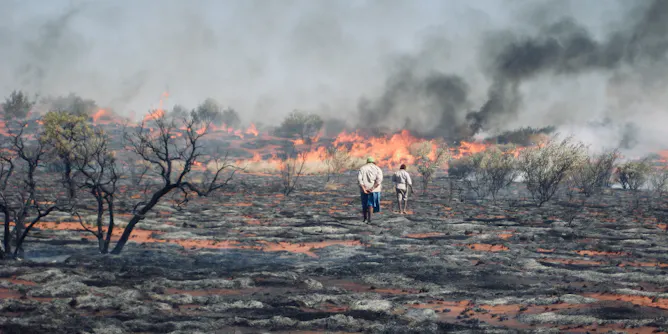
The bushfire royal commission will look at incorporating Aboriginal knowledge into mainstream fire management. But in practice, what does that mean?
Articles on Aboriginal culture
Displaying 21 - 40 of 50 articles

An honest reckoning with Captain Cook’s legacy won’t heal things overnight. But it’s a start
The Conversation41.4 MB (download)
The impact of 1770 has never eased for Aboriginal people. It was a collision of catastrophic proportions.

Incidents from Cook’s first voyage highlight themes relevant in Indigenous-settler relations today: environmental care, reconciliation and governance. This collision of beliefs, it seems, wasn’t lost on Cook.

Jimmy Chi’s 1990 musical is given its first major stage revival – and leaves the audience singing along.
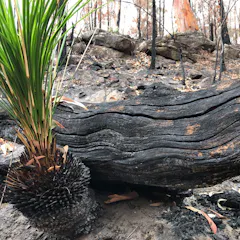
As Australia picks up the pieces after the fires, we must understand the unique grief Aboriginal people experience from a loss of country.
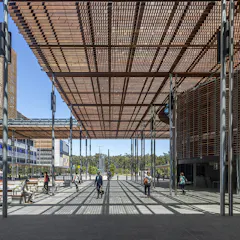
Many Indigenous people tell us they find hospitals stressful, uncomfortable and alienating. Here’s how good design can help.
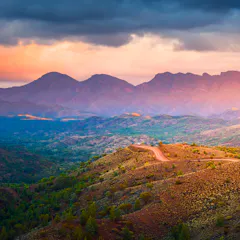
The Flinders Ranges in South Australia is Adnyamathanha Country. A country of 600 million-year-old fossils and 45,000-year-old living culture.
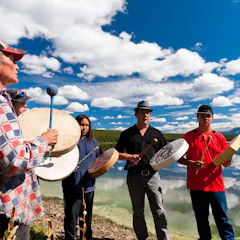
Dasiqox Tribal Park offers a powerful example of what true reconciliation can mean for Canada when Indigenous peoples and their rights are respected and upheld.
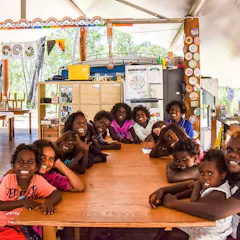
We now have a proven model for supporting self-determined building on Aboriginal homelands. The next question is how can its reach be extended?

How do you return Aboriginal remains to their place of origin when you have no record of where they came from? Look to a chemical element that’s laid down in teeth as people grow up.

Etchings over much earlier Aboriginal engravings show foreign whalers made contact with Australia’s remote northwest long before colonial settlement of the area.
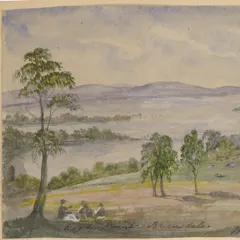
Aboriginal songs found in the notebooks of a Victorian anthropologist shed light on the mystery of a ‘captive white woman’ that has been debated for generations.
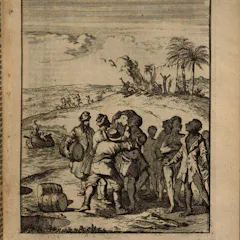
The image, depicting a group of Indigenous people resisting their enslavement, predates the next oldest image by 75 years.

They were looking to study rock art at a remote desert site but what they found showed people had been using the place almost since the first people arrived in Australia.

Sap from one tree collected in hollows in the bark, and natural yeast fermented the liquid to an alcoholic drink used by Aboriginal people. Europeans called the tree a cider gum because of the taste.

The planets we can see in the sky were known to the ancient Greeks as ‘wandering stars’. But they appeared much earlier in the stories and traditions of Australia’s Indigenous people.
In remote Northern Territory, most Aboriginal people have been buried in unmarked graves. Archaelogists are carrying out painstaking detective work to help communities find their loved ones’ remains.
With enough will and resourcing, many of the structural issues that make financial services a trial for many Indigenous consumers can be overcome. But we need more regulation to deter sharp practice.
Traditional Aboriginal healers are recognised as having special facilities for healing in childhood and are encouraged to develop their skills. They are often taught by their grandparents.
White people hugely influence the Aboriginal art world – but that can be a good thing, according to the artists.
Top contributors
-

Professor of Archaeology and Biological Anthropology, School of Social Science, The University of Queensland
-
Traditional Custodian — Kurnai, Indigenous Knowledge
-
Professor, Director of Centre for Rock Art Research + Management, The University of Western Australia
-
Associate Professor, School of Physics, The University of Melbourne
-
ARC Future Fellow, La Trobe University
-
Lecturer in Archaeology, Flinders University
-
Professor, School of Humanities, Languages and Social Science, Griffith University
-
Lecturer in Cultural Studies in Health
-
Professor of Archaeology, College of Humanities, Arts and Social Sciences, Flinders University
-
Professor in Oenology, Adelaide University
-
Senior Lecturer, University of Tasmania
-
Honorary Senior Lecturer, Australian National University
-
Professor, University of Technology Sydney
-
Research Fellow, Griffith University
-
Assistant Professor (Law School), The University of Western Australia