
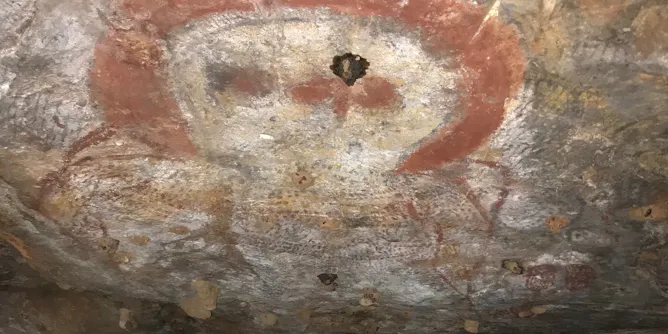
In oral cultures, knowledge must be collectively maintained. AI can help people engage in dialogue with their heritage.
Articles on Aboriginal culture
Displaying 1 - 20 of 50 articles

The tools reveal how Aboriginal ancestors survived and thrived in the continent’s interior more than 100 years ago.

This new project has strong potential to be scaled up and delivered in other land and cultural heritage management contexts.

Thousands of years ago, adults and children left their marks on soft rock surfaces deep in this cave in GunaiKurnai Country.
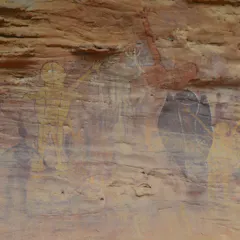
The Queensland government has halted a World Heritage nomination bid put forth by Labor last year. It’s next steps could greatly impact the cape’s future.
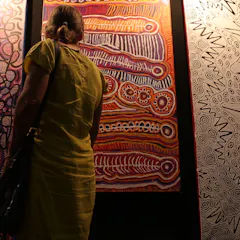
In one example, an AI image generator produced an image of what was meant to be an elderly First Nations man – in a traditional Papuan headdress.
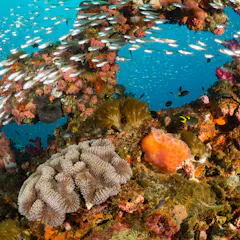
Scientists have been gathering coral spawn to create baby corals via ‘coral IVF’. Until now, much of this research has been done without consultation with Traditional Custodians.
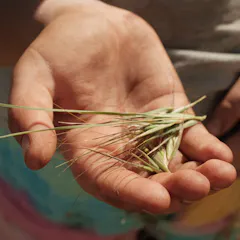
In Aboriginal knowledges, the health of people, family, Mob, culture and Country involve spiritual, emotional and physical dimensions.

By limiting the syllabus to events post-1788, the NSW Education Standards Authority indirectly sends students the message that Australia’s ‘history’ began at colonisation.

To First Nations women, ‘care’ is more broad and all-encompassing than traditional definitions. We need a new approach to capturing, and appreciating, their work, paid and unpaid.
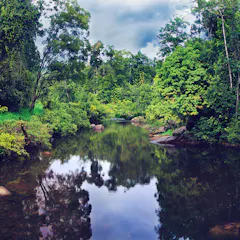
When people first came to Australia 65,000 years ago, the Earth was in an ice age. Then the seas rose, drought and floods came – and still people endured.
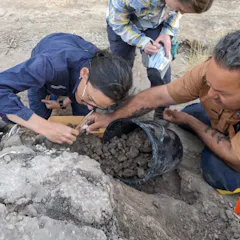
The bones of the animal were found eroding from the ground. After careful analysis, it will be reburied on Country.
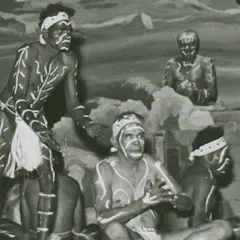
Aboriginal people in 1951 framed cultural practice as labour and as a tool for advocacy for Aboriginal rights stretching across the continent.
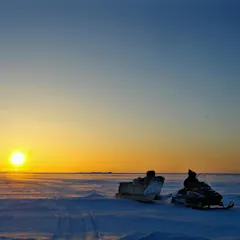
All over the world, the territories of Indigenous peoples map onto regions of the richest and most persistent biodiversity. A book about hunter-gatherer Arctic peoples shows why.
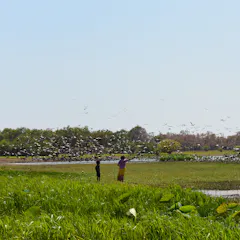
The Kakadu region has gone through immense transformation throughout history. How can archaeological food scraps tell us about how the First Australians adapted?

Some 17,000 years ago, Aboriginal artists often depicted kangaroos, fish, birds, reptiles, echidnas and plants — especially yams.

Cultures around the world call the Pleiades constellation ‘seven sisters’, even though we can only see six stars today. But things looked quite different 100,000 years ago
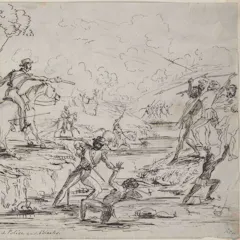
Police played a unique role in many settler colonies executing assimilationist policies designed to dismantle First Nations families.

An Aboriginal tree on Wiradjuri Country is much younger than anybody thought.

The destruction of the 46,000 year old site Juukan Gorge forces us to confront archaeology and history in Australia.
Top contributors
-

Professor of Archaeology and Biological Anthropology, School of Social Science, The University of Queensland
-
Traditional Custodian — Kurnai, Indigenous Knowledge
-
Professor, Director of Centre for Rock Art Research + Management, The University of Western Australia
-
Associate Professor, School of Physics, The University of Melbourne
-
ARC Future Fellow, La Trobe University
-
Lecturer in Archaeology, Flinders University
-
Professor, School of Humanities, Languages and Social Science, Griffith University
-
Lecturer in Cultural Studies in Health
-
Professor of Archaeology, College of Humanities, Arts and Social Sciences, Flinders University
-
Professor in Oenology, Adelaide University
-
Senior Lecturer, University of Tasmania
-
Honorary Senior Lecturer, Australian National University
-
Professor, University of Technology Sydney
-
Research Fellow, Griffith University
-
Assistant Professor (Law School), The University of Western Australia