
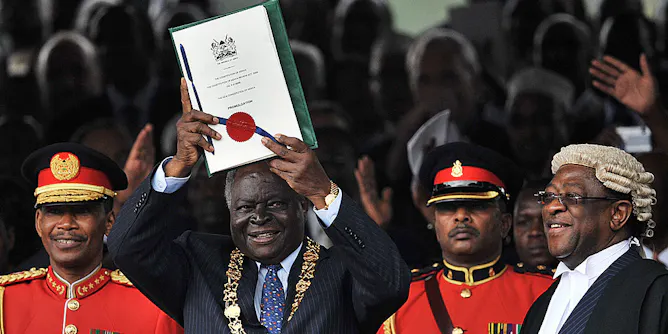
Kenya’s devolution has led to tangible improvements in everyday life in places that had long been left behind.
Articles on 2010 Kenya constitution
Displaying all articles
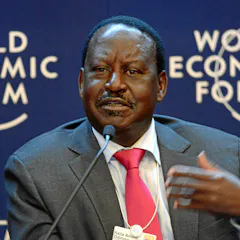
Odinga’s political personality contributed to the modernisation of Kenya’s political economy.
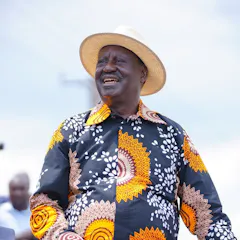
Odinga was both a remarkable figure and an embodiment of Kenya’s political contradictions.
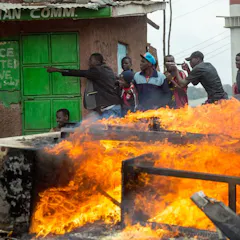
Kenya has formalised local peace committees, which support dialogue around causes of conflict and promote trust.
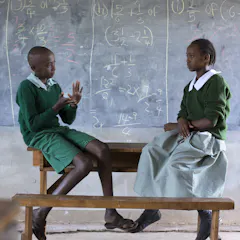
Kenya’s institutions, communities and leaders need to make the new law work for those it was designed to serve.
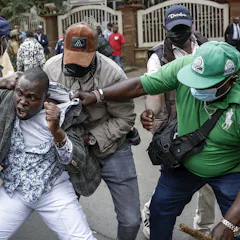
There are dangers to having government surveillance carried out without proper oversight and accountability.
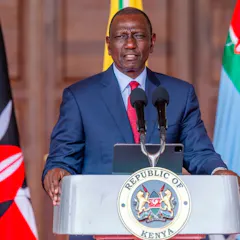
The new cabinet needs to transform the status quo.
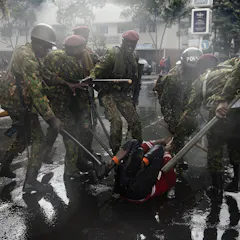
Domestic and international laws obligate the Kenyan state to enable citizens to realise the right to peaceful assembly.
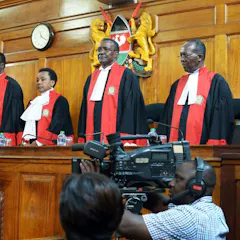
Two conditions enable courts to take the risk of nullifying the elections of ruling party candidates.

With Uhuru Kenyatta leaving office to make way for a new leader, it was always going to be an eventful year for Kenya.

The purpose of term limits is to minimise corruption and open the government to new ideas that could solve national problems.

The 2022 election proved that the country’s situation and its people have changed since the violence that marred past elections.
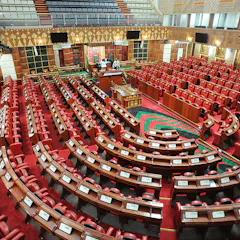
In Kenya’s parliamentary system, lack of a clear party majority makes it hard for a president to deliver on election promises.

The relationship between the state and media soured just months into the Kenyatta regime.

Kenya is not unlike any other country where democratic deepening requires a ‘two-steps forward, one-step back’ outlook.

Banned 45 years ago, and its author detained, the Gikuyu language play Ngaahika Ndeenda profoundly shaped the literary legend.

Every five years, underlying ethnic rivalries are rekindled through songs, words, euphemisms, epithets and slurs.
Top contributors
-

Professor, Weber State University
-
Professor of Comparative Politics, University of Warwick
-
Senior Lecturer, HOD-Mass Communication, Kabarak University
-
Professor in Inclusive Education, Hague University of Applied Sciences
-
Assistant Professor, University of York
-
Professor of Practice, Aga Khan University Graduate School of Media and Communications (GSMC)
-
Professor of Political Science and Co-founder of the Political Economy Forum, University of Washington
-
Lecturer of Food Science and Technology, Department of Dairy and Food Science and Technology., Egerton University
-
Adjunct Associate Professor, Departnent of Social Sciences, Pwani University
-
Fellow, Strathmore University
-
Associate Research Scientist, African Population and Health Research Center
-
Postdoctoral Researcher, University of Oslo
-
Professor of Political Science, University of Oslo
-
PhD Candidate in Political Science, University of Oslo
-
Professor of History, Durham University