

Kenya’s health financing law change suggests conditions for reform can be strategically built.
Articles on Mwai Kibaki
Displaying 1 - 20 of 30 articles
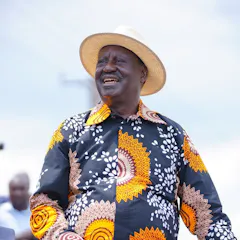
Odinga was both a remarkable figure and an embodiment of Kenya’s political contradictions.
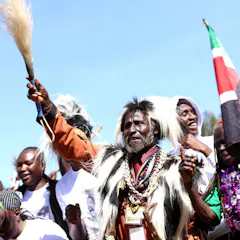
The land question and reparative packages for the ex-Mau Mau remain unaddressed.
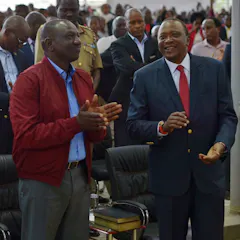
Religious checks on the state are a vital cog in the institutionalisation of moral politics in Kenya.
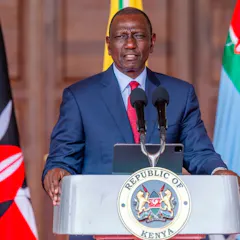
The new cabinet needs to transform the status quo.
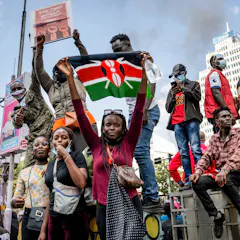
Kenya’s slow economic growth, large educated youth population and limited job opportunities are some of the factors that gave rise to the protests.
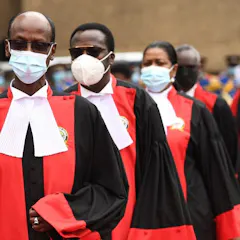
Kenya’s confidence crisis is a problem because people need to believe the judiciary is acting independently if it is to play its role.
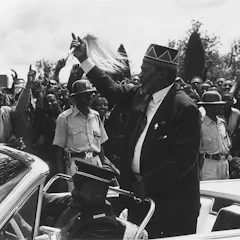
Jomo Kenyatta and his successor Daniel arap Moi set the tone for ethnic and authoritarian politics which Kenya has wrestled to free itself from in recent decades.
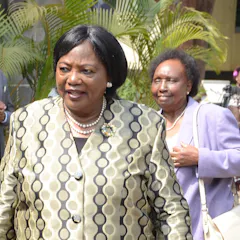
You can count on Mama Ngina Kenyattta to defend the family name, in good times and bad.
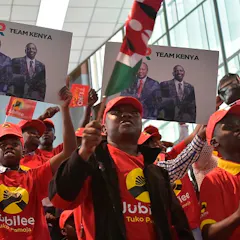
The fluidity of the country’s short-lived coalitions is a major cause of instability in Kenya.

William Ruto is determined to reduce public debt by collecting more taxes to pay for what the country needs.

The purpose of term limits is to minimise corruption and open the government to new ideas that could solve national problems.

Mega infrastructure projects entrench existing inequalities when they ignore the economic realities of vulnerable groups.

Kenya is not unlike any other country where democratic deepening requires a ‘two-steps forward, one-step back’ outlook.
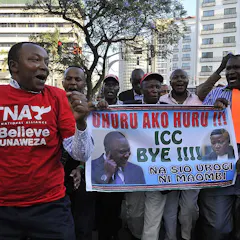
Research in Kenya finds victims or witnesses to violence are less likely to buy into anti-International Criminal Court political narratives.
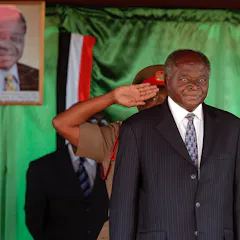
Kibaki gave Kenya’s higher education sector a free market capitalistic orientation, endearing him to the World Bank and the IMF

Kibaki’s goals were to expand access to education, and to make universities more efficient and self-sustaining.
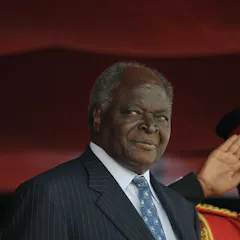
He will be remembered as the leader who plunged the country into unmitigated chaos

Nyachae always served at the intersection of politics and administration. Nevertheless, he was more of a firm manager than a politician.
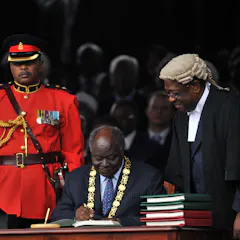
Kenya’s constitution-making process has exhibited a gyration pattern that often starts with a belief that governance reforms can rectify the country’s problems, but ends up as a power struggle.
Top contributors
-

Professor of Comparative Politics, University of Warwick
-
Professor, Weber State University
-
Research Professor, Institute for Development Studies (IDS), University of Nairobi
-
Professor of Democracy, University of Birmingham
-
Associate Professor, University of Central Arkansas
-
Professor, Faculty of Business and Management Sciences, University of Nairobi
-
PhD Candidate, Department of Political Science and Public Administration, University of Nairobi
-
Assistant professor, Leiden University
-
Associate Fellow at the HORN International Institute for Strategic Studies and Professor of History and International Relations, United States International University
-
Assistant Professor of African History and Africana Studies, Rhodes College
-
Professor Emeritus of Political Science, University of California, Berkeley
-
Marie Curie Fellow, University of Amsterdam
-
Jan Smuts Professor of International Relations and Director of the African Centre for the Study of the United States (ACSUS), University of the Witwatersrand
-
Associate Professor of Political Science, University of Toronto
-
Professor of Political Science and Co-founder of the Political Economy Forum, University of Washington