
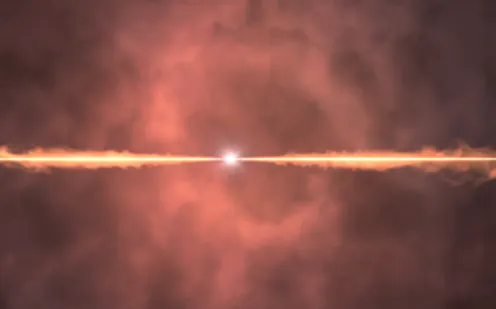
Astronomers captured the clearest example yet of one of these hidden explosions.
- Professor, Radio Astronomy, University of Sydney
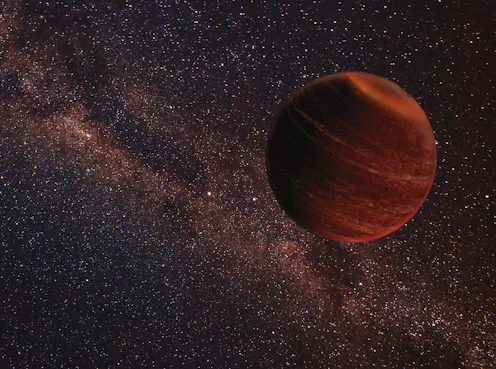
Astronomers have detected the coldest star ever found to emit radio waves using the Australian SKA Pathfinder telescope.
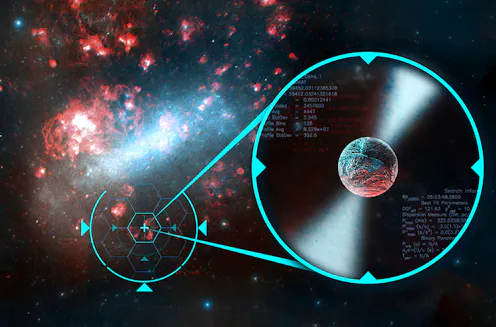
The pulsar PSR J0523-7125 is more than ten times brighter than any other radio pulsar outside the Milky Way.

Fluctuating radio waves that appear to come from near the heart of the Milky Way are a new puzzle for astronomers.
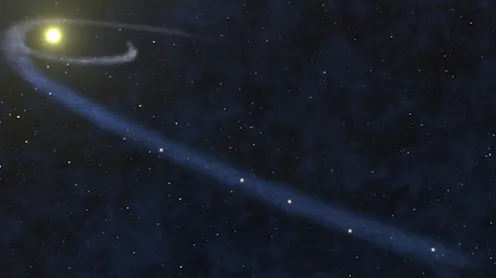
Thanks to the discovery of five twinkling galaxies in a rare alignment, astronomers have been able to calculate — for the first time — the properties and geometry of an invisible gas cloud in space.
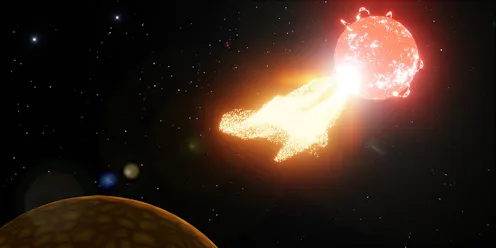
We observed a powerful flare and a huge burst of radio waves from our nearest stellar neighbour, Proxima Centauri, indicating violent space weather around the star.
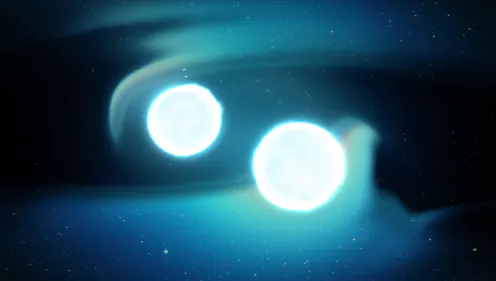
The signal came in on ANZAC Day, ripples in space-time from the merger of two neutron stars an estimated 500-million light years away. But where it happened is still a mystery.
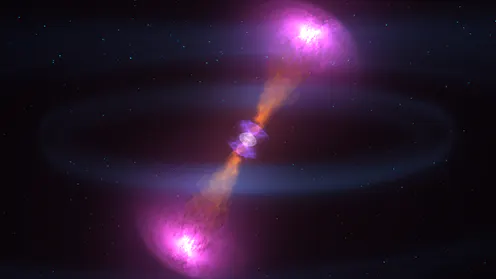
Astronomers are getting ready to say good bye to the radio emission from a neutron star merger – one of the most energetic events in the universe – that was detected last year.

All it took was a single email alert to send the world’s astronomers searching for the source of the latest gravitational wave detected.
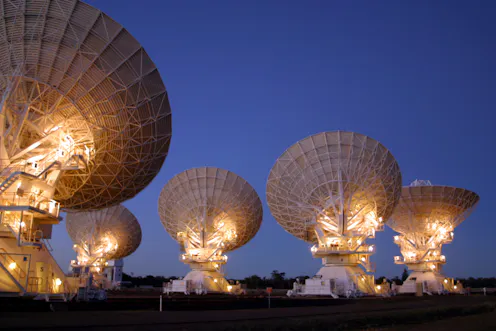
Science today is increasingly data-driven, but our education system has not caught up.
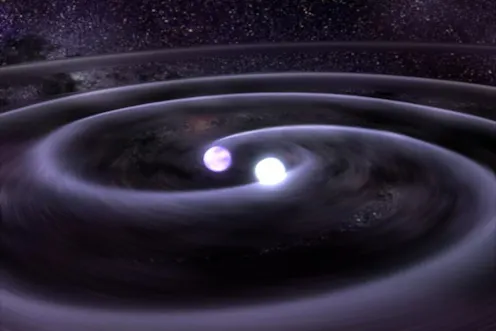
The long awaited discovery of gravitational waves has sent ripples through the scientific world. Here top experts respond to the historic announcement.
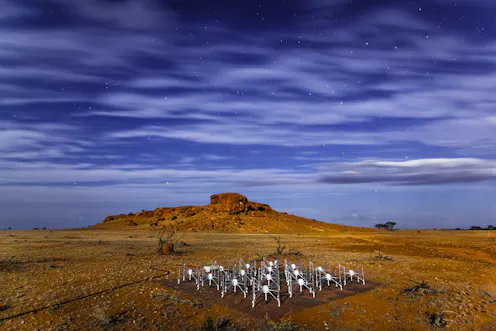
The Murchison Widefield Array sits in remote Western Australia far from noisy civilisation so it can help us understand the universe by tuning into radio waves from the distant cosmos.
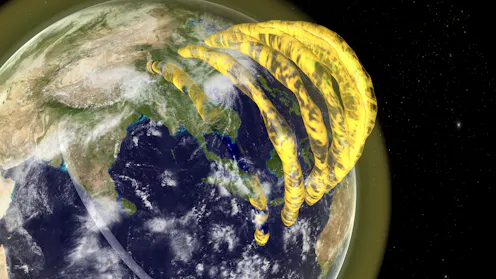
Cleo Loi was an undergraduate when she made a startling discovery. Her story shows how brilliance, dedication and imagination drive science.

Earlier this week, Senator Chris Evans announced A$5 million worth of science communication grants for 63 projects as part of the Unlocking Australia’s Potential program. We were successful in getting…
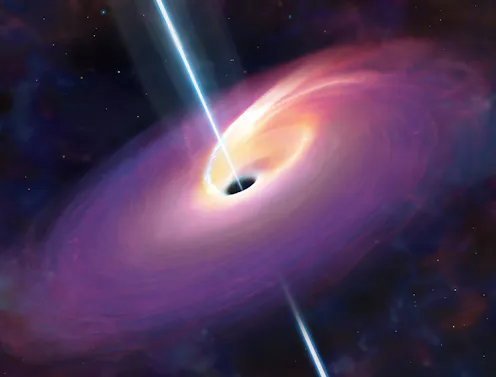
Some 3.8 billion years ago a star in the constellation of Draco wandered a little too close to a nearby black hole. The star was violently torn apart by the black hole’s tidal forces, creating two massive…
Contact Tara for
- General
- Media request
- Speaking request
- Consulting / Advising
- Research collaboration
- Research supervision
- Location: Sydney, Australia
- Website
- BlueSky: @taramurphy.bsky.social
- Article Feed
- ORCID
- Joined
