
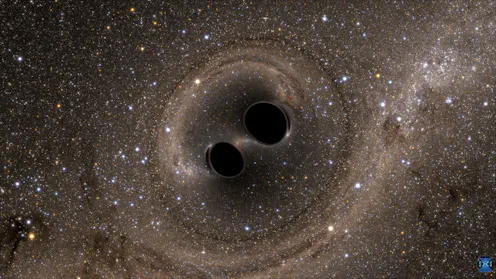
The 2017 Nobel Prize for Physics was awarded to scientists who helped pioneer the discovery of gravitational waves. Australia is playing an important role in gravitational-wave astronomy.
- Senior Lecturer and ARC Future Fellow, Monash University

Scientists have made a third detection of gravitational waves, again caused by the merger of two black holes. But they think there’s something different about the black holes in this case.
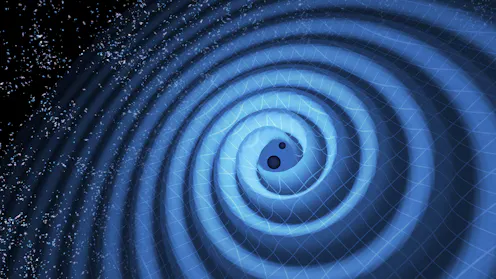
The observation of gravitational waves from a second black hole merger implies there are many more black holes in the universe than scientists had previously anticipated.
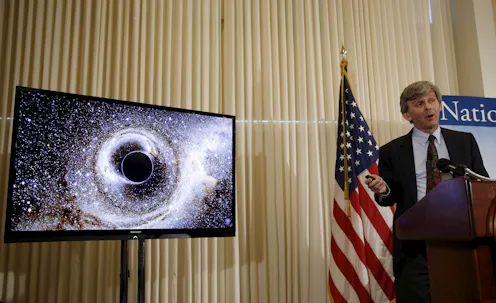
The discovery of gravitational waves involved a team of more than 1,000 scientists from across the globe, including Australia. So how does such an international collaboration work?
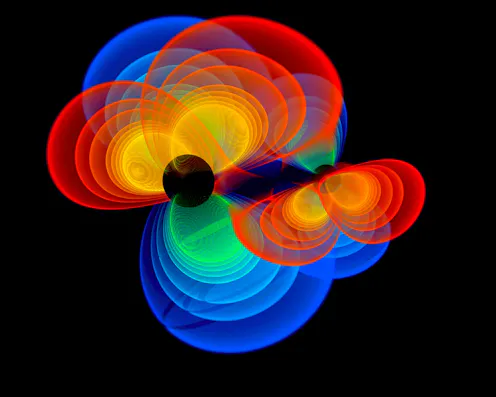
A new study has failed to find evidence of gravitational waves, but that doesn’t mean Einstein was wrong about their existence.
In my previous article we discussed the “who, what, when, where and how” of the worldwide gravitational wave detection effort. The observant observer will have noticed we’re still missing the “why”. Why…
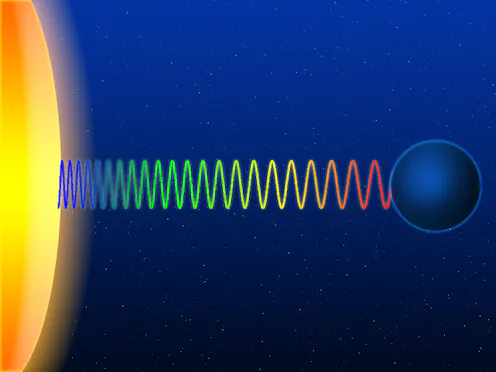
Albert Einstein made an executive decision to revolutionise our understanding of gravity in a paper published in 1916. Nearly 100 years on, a key prediction of Einstein’s theory has eluded direct detection…
Contact Paul for
- General
- Media request
- Speaking request
- Consulting / Advising
- Research collaboration
- Research supervision
