
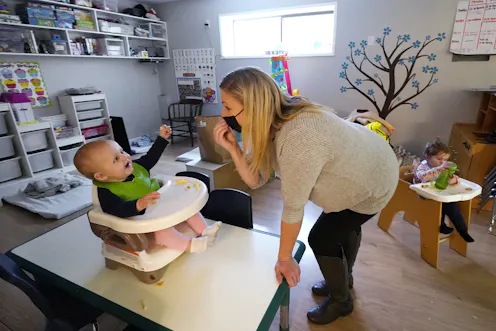
Our research has found that most pandemic-born children have been remarkably resilient to the disruptions caused by COVID.
- Associate Professor, Canada Research Chair in Mental Health and Intersectionality, University of British Columbia

Research findings are mostly reassuring for parents — despite the disruptions to nearly every aspect of life during the COVID-19 pandemic, most children continue to show healthy development.

Restricting abortion access has negative effects on parents, as well as children and families, including increased poverty, unemployment, pregnancy-related deaths and higher health risks in children.

The science of stress explains why parenting during the pandemic feels so hard. Here are strategies from psychologists for taking back control when you dread yet another challenging day ahead.

A brief daily practice of mindfulness meditation not only contributes to a better mood, but it also helps protect against the negative mental health impact of news about COVID-19.

Parents of young children are reporting alarming increases in anxiety and depression during COVID-19. This is not only a risk to parents’ mental health, but also to children’s long-term well-being.

La thérapie cognitivo-comportementale a permis la rémission de l'insomnie chez 80 à 90 pour cent des adolescents participant à l'étude et a amélioré leur rétablissement global.

Cognitive behavioural therapy for insomnia provided remission of insomnia in 80 to 90 per cent of adolescents in a research trial, and improved their overall concussion recovery.

Insomnia impacts more than 20 per cent of women during pregnancy. And it is treatable.
Contact Lianne for
- General
- Media request
- Speaking request
- Consulting / Advising
- Research collaboration
- Location: Vancouver, Canada
- Website
- BlueSky: @tomfohrmadsen.bsky.social
- Article Feed
- ORCID
-
- Joined
