
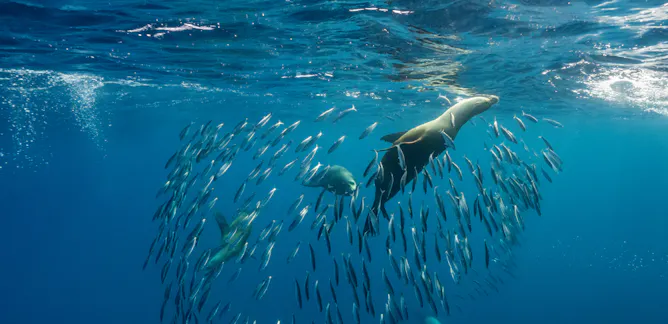
A dip in anchovy stocks is not only vital for Peru’s economy, but also essential for supporting fish farming and food production worldwide.
Plymouth Marine Laboratory

Against a backdrop of global change and for the benefit of society, our objective is to develop and apply world-leading, integrated marine science towards the sustainable future of the ocean.
We deliver this objective through excellent research, people, international and national partners, sharing our knowledge and engaging with our stakeholders.
We also have a commercial trading subsidiary, PML Applications Ltd, which delivers services, products and solutions related to the marine environment in key sectors such as ballast water management and biofouling.
Links
Articles

The southwest peninsula of the UK has a burgeoning network of marine observers.
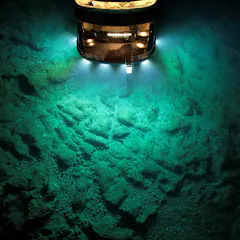
Robotic and autonomous underwater vehicles have collected vast quantities of footage from the deep sea, but most of it hasn’t been analysed.

For World Book Day, we asked ten academic experts to share a work of fiction that has challenged their assumptions and changed their thinking in a lasting way.

With the loss of sea ice, tiny filter feeders known as ‘salps’ can thrive, while shrimp-like krill lose out.
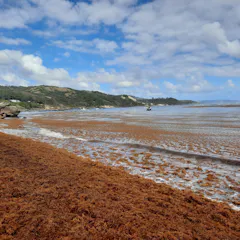
Floating seaweed can travel long distances to new territories and accumulate in large mats or wash ashore in huge quantities.
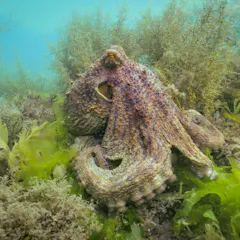
Climate-driven shifts in ocean and atmospheric dynamics underpin these recent blooms in octopus numbers in UK waters.

We asked 11 academic experts to share the book that challenged their assumptions and changed their thinking in a lasting way.
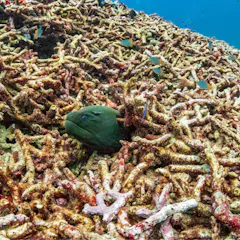
Many coral reefs are already very vulnerable, and another El Niño is forecast.

Small plastic pellets, used in wastewater treatment facilities since the 1990s, are more than just plastic pollution – they carriy potentially dangerous bacteria.
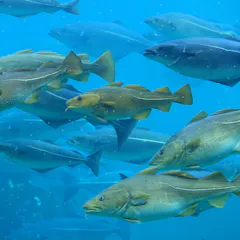
Our modelling of European fish species shows a patchwork of winners and losers as sea temperatures rise.
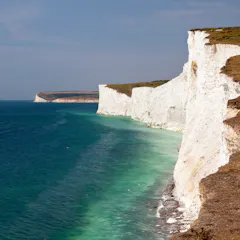
An ‘almost continuous’ marine heatwave state appears to be emerging around the UK.
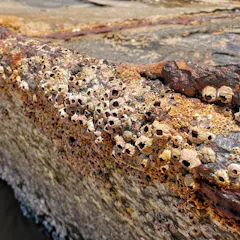
The more corroded marine structures in an area, the more potential new homes for the marine larvae to attach to and grow on.
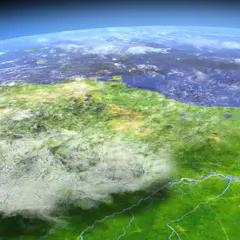
Satellite-derived Earth observation data helps researchers unlock new insights into monitoring both environmental and human health.
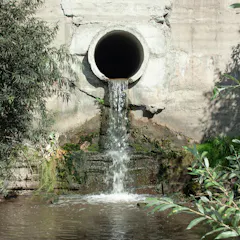
Cities need to find new ways to handle rainwater, especially in the face of climate change. Green infrastructure offers a way to tackle this challenge.

Measuring the ‘ecosystem services’ that the ocean provides is difficult, but an essential step to understand how best to protect marine ecosystems.
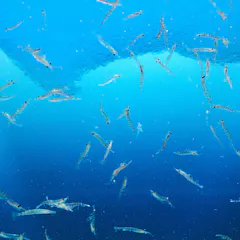
For the first time, we used a computer model of ocean currents to show that krill waste products don’t need to reach great depths to achieve carbon storage for at least 100 years.

Certain sunscreens could harm the marine environment - here’s how to choose ones with environmentally friendly UV filters.
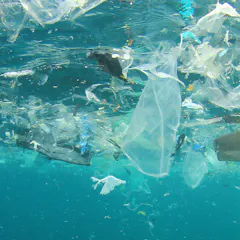
As it travels around the ocean, plastic litter can harm wildlife and marine habitats in many ways. This study highlights five key hotspots where floating plastic poses the biggest risk.
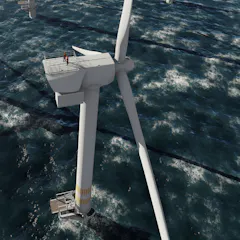
A new study highlights how different literature portrays the pros and cons of offshore wind. Comprehensive assessment frameworks could create more consistency in the future.
Authors
-

Ocean Challenge Lead: Climate Change, Plymouth Marine Laboratory
-
Professor of Marine Ecology, Plymouth Marine Laboratory
-
PhD Candidate, Ecotoxicology, Plymouth Marine Laboratory
-
Marine Ecologist, Plymouth Marine Laboratory
-
Professor of Deep Sea Ecology, Plymouth Marine Laboratory
-
Postdoctoral Researcher, Earth Observation Science, Plymouth Marine Laboratory
-
Marine Ecosystems Modeller, Marine Ecosystem Modelling Group, Plymouth Marine Laboratory
-
Professor of Marine Ecology, Plymouth Marine Laboratory
-
Senior Marine Ecosystem Services Researcher, Plymouth Marine Laboratory
-
Senior Scientist, Marine Ecosystem Modelling, Plymouth Marine Laboratory
-
Senior Scientist, Marine Ecosystem Services, Plymouth Marine Laboratory
-
Applied Marine Scientist and Biocorrosion Lead, Plymouth Marine Laboratory
-
Head of Group: Marine Processes and Observations, Plymouth Marine Laboratory
-
Principal Investigator, Bio-optical Oceanography, Plymouth Marine Laboratory
-
Earth Observation and Remote Sensing Scientist, Plymouth Marine Laboratory