

Providing street lighting will need a new approach to infrastructure development.
Olabisi Onabanjo University

Olabisi Onabanjo University, Ago-Iwoye is a state (owned and operated) university in Ago-Iwoye, Ogun State, Nigeria. The university was founded July 7, 1982 as Ogun State University (OSU) and was renamed Olabisi Onabanjo University on May 29, 2001 in honour of Chief (Dr.) Olabisi Onabanjo, whose efforts as the then civilian governor of Ogun State gave birth to the university. Meanwhile, many students still refer to the institution as OSU, an acronym for the former name.
The university has had a total output of 10,291 graduates and 1,697 postgraduates.[1]
Olabisi Onabanjo University has multiple campuses. The Main Campus in Ago-Iwoye is popularly called Permanent Site (PS) by the students and a Mini Campus which was the home of the Faculty of Science till it was moved to the permanent site in January 2013. Faculty of Agriculture is in Aiyetoro, faculty of Engineering is in Ibogun, College of Medicine, faculties of Basic Medical Sciences and Pharmacy are in Shagamu. Students and alumni of the Olabisi Onabanjo University are addressed as ‘Great OOUITES.’
Information and activities amidst Students are communicated through the school’s portal as well as notable privately owned magazines such as ‘OOU CAMPUS MIRROR’ ‘OOU PRESS CLUB’, ‘OOU Update’, ‘OOU Premium’, ‘Inside OOU magazine’, ‘OOU Vanguard’, and a few others.
Links
Articles

In response to the general state of insecurity in Nigeria, local community groups in Lagos are mobilising and providing solutions.
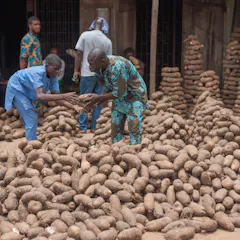
Climate change caused drought and flooding is damaging Nigeria’s staple foods, maize, cassava, millet and yam, smallholder farmers say.

An EcoBall match is a live demonstration of the circular economy.

Using plastic waste in the Nigerian textile industry would reduce pollution, generate employment, and cut a niche in the world of sustainable fashion.
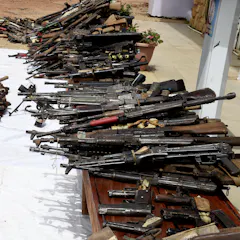
Experts provide insights into the various actors involved in Nigeria’s security challenge, their motivation and why efforts to rein them in haven’t quite succeeded.
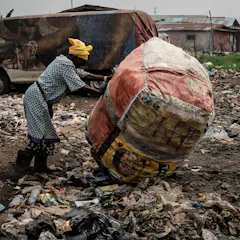
In Nigeria, informal collectors of plastic bottle waste are central to resolving the clash between its environmental costs and economic benefits.

Global scientific reports about climate change are largely written and reviewed by older researchers from the global north.

Large banditry and terror attacks were relatively rare in Lagos and other parts of Nigeria’s south-west region until recently.

Youth migration, unemployment, proliferation of small arms and drugs are some of the drivers of violent crimes in Lagos.

Employing children as waste pickers lowers costs but exposes them to hazards.

If Nigeria’s public office holders behave, there’s no reason why the country can’t progress.
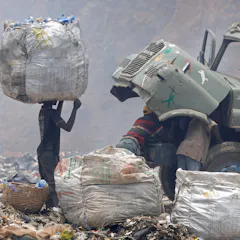
Lagos waste pickers were dissatisfied with their unhealthy working conditions, poverty and stigmatisation.

Nigeria’s 23rd year of unbroken democratic rule will be celebrated on 12 June 2022.
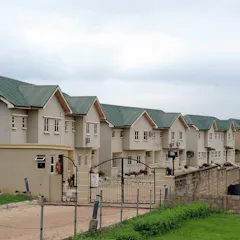
Nigeria’s built environment should ideally be part of a broader, integrated approach to crime prevention and community policing.
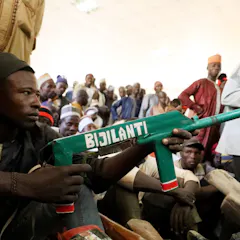
Aside from human rights abuses, vigilantes may be unreliable, poorly skilled, and lacking transparency and accountability.
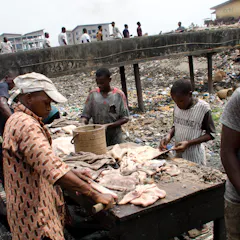
Haphazard development of abattoirs without environmental and health considerations in Nigeria can only invite diseases – and potentially pandemics such as COVID-19.
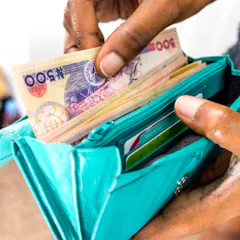
The World Bank’s latest report on Nigeria deserved closer scrutiny, just like the opinions of economic experts outside government.
Authors
-

Senior Lecturer, Department of Urban and Regional Planning, Olabisi Onabanjo University
-
Lecturer, Department of Urban and Regional Planning, Olabisi Onabanjo University, Ago-Iwoye, Ogun State, Nigeria, Olabisi Onabanjo University
-
Professor and Chair of the department for Governance and Political Science, Olabisi Onabanjo University
-
Postdoctoral research fellow, Olabisi Onabanjo University
-
Lecturer, Department of Urban and Regional Planning, Olabisi Onabanjo University, Ago-Iwoye, Nigeria, Olabisi Onabanjo University
-
Senior Lecturer, Olabisi Onabanjo University
-
Professor of Economics, Olabisi Onabanjo University
-
Lecturing, Olabisi Onabanjo University