
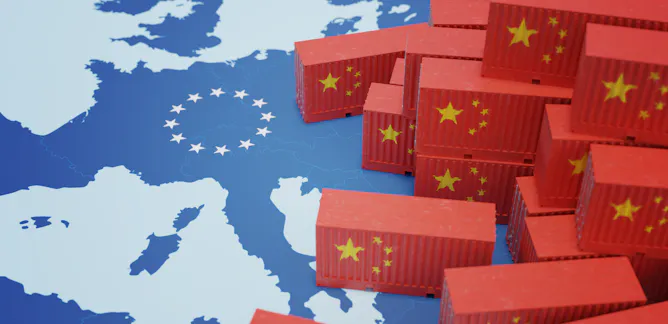
The US and China have extended their trade truce till January. Meanwhile, EU-China export/import imbalances persist with sticking points, including voluntary export curbs and industrial policy reform.
European University Institute

The European University Institute (EUI) is a unique international centre for doctorate and post-doctorate studies and research, situated in the Tuscan hills overlooking Florence. Since its establishment 40 years ago by the six founding members of the then European Communities, the EUI has earned a reputation as a leading international academic institution with a European focus. The four departments – Economics, History and Civilization, Law, and Political and Social Sciences – host scholars from more than 60 countries, studying for the Institution’s doctorate or one-year masters in law or European economics.
Links
Articles
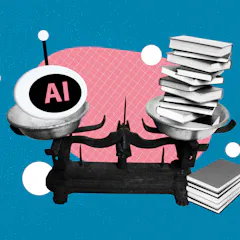
Understanding the technological shift from a literary to a post-literary society is crucial for rethinking AI’s place in learning environments.

Support settlements are at the forefront of Russian spatial policy. What does the development of these administrative service hubs tell us about how the land lies in Russia today?
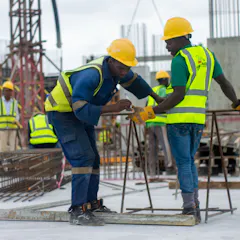
Effective migration policy is not about imposing new patterns of movement, but about making existing ones safer, fairer, and more beneficial for all.
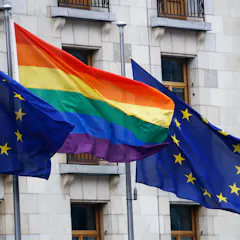
A team of researchers explains why support for LGBTIQIA+ rights in Europe that is not based on homonationalist agendas, but intersectional fights against discrimination matters now more than ever.
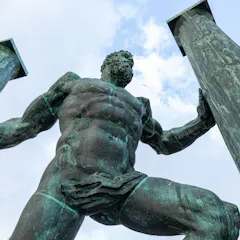
In a knee-jerk reaction to the situation in Ceuta, 22 EU member states are seeking to step up border security. What are the legal loopholes and do stronger controls comply with the rule of law?
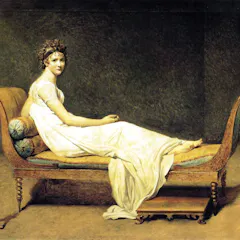
Comment s’habiller, recevoir, décorer son intérieur ou choisir un restaurant : après 1789, ces questions deviennent essentielles pour une société en pleine recomposition. C’est dans ce contexte qu’apparaissent les tout premiers influenceurs de l’histoire.
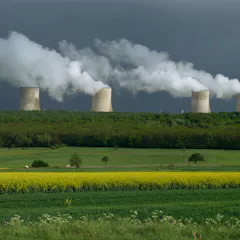
Three researchers take stock of different Union-wide policy approaches to removing and storing carbon emissions in the heavy industry sector.
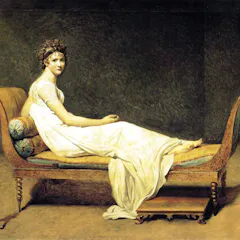
Influencer culture is not a thing of the past, and yet the movers and shakers of post-revolutionary France are proof that writing lifestyle columns and trending is a centuries-old pursuit.

We are living in a world backed by technology that seems to have a spiritual project of its own. Are the fears of the Pope’s AI-critical encyclical founded?
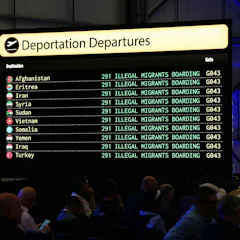
L'Union européenne a fait de l'argent et des moyens de contrôle les deux piliers de sa stratégie de retour des migrants. Cela ne fonctionne pas.

Geopolitical and economic uncertainty topped the G7 summit agenda. The world needs strong, inclusive international institutions more than ever.
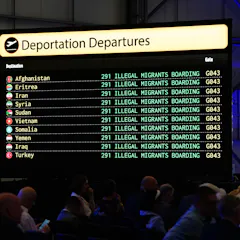
The European Union has used money and enforcement infrastructure as the twin pillars of its migrant returns strategy. The evidence suggests it isn’t working.
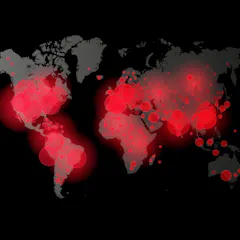
Global health funding cracks do not bode well for pandemic governance as recent disease outbreaks are reminding us. What does this mean for developing countries and how do they cope with health emergencies?
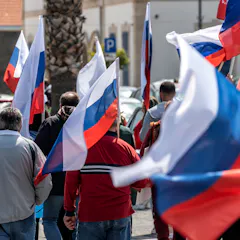
Research carried out across 18 European countries takes a closer look at pro-Russian support on the continent.

The EU’s Media Pluralism Monitor research project assesses the health of national media ecosystems but what about the bigger picture beyond compliance and the risks to Europe’s information space as a whole?
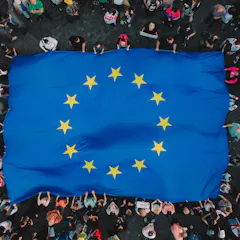
The construction of Europe after WWII sought to promote political and economic cooperation among European nations. The Historical Archives of the European Union in Florence are a testimony to this.

An economist explores the gender data bias behind credit scoring and borrowing money from the bank that excludes women worldwide, denying them the same economic rights as men.
A gas crisis could challenge Europe next winter if its gas reserves are not replenished. The phaseout of Russian gas and LNG by late 2027 is a major part of the EU’s gas diversification strategy but it exposes the continent to price volatility.
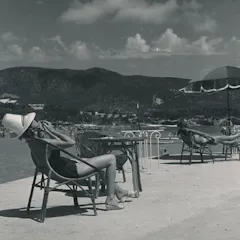
Ni fatalidad histórica ni golpe de genio franquista: otra mirada sobre la ‘diferencia’ española tras el relato del ‘boom’ turístico.
Authors
-

Researcher, European University Institute
-
Policy Leader Fellow, School of Transnational Governance, European University Institute
-
Professor of History of Gender and Sexuality, European University Institute
-
PhD Reseacher in the Department of History, European University Institute
-
Full-time Assistant Professor, European University Institute
-
PhD Researcher, European University Institute
-
PhD researcher in EU Law, European University Institute
-
Researcher, European University Institute
-
Research Team Leader - Molecules&Materials, European University Institute
-
Doctoral Researcher in Law, European University Institute
-
Research Fellow at IE University, European University Institute
-
Department of History, European University Institute
-
Researcher at The Robert Schuman Centre, European University Institute; Monash University
-
Analyst /Researcher, European University Institute
-
Department of History, European University Institute