
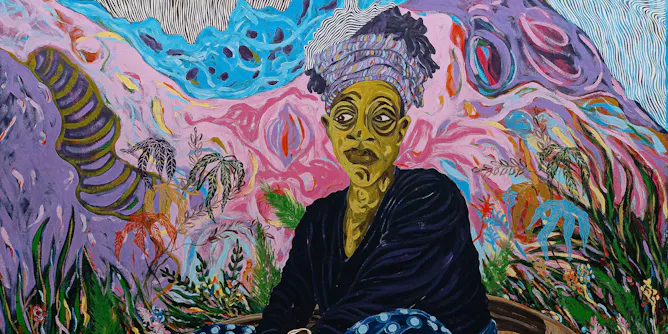
The show’s opening included a ritual performance by the artist, connecting the living with their ancestors.
Articles on Zimbabwe
Displaying 21 - 40 of 378 articles
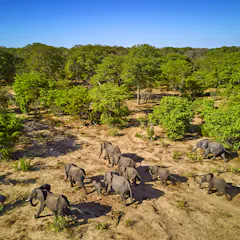
There is a desperate need to balance wildlife conservation with the wellbeing of people living in these shared spaces.
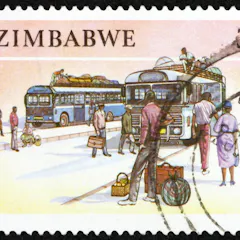
The respectful return in death, like the festive Christmas return of migrants, reinforces ties between generations.
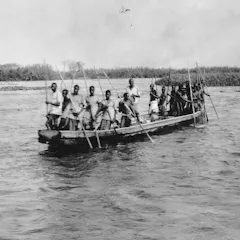
Gold was the first attraction, but late in the 1500s the Portuguese became obsessed with the idea that there were silver mines in Africa.
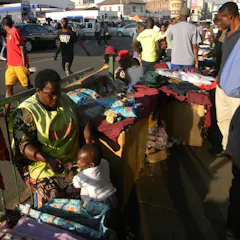
Informal governance is both a survival mechanism and a structure of power.
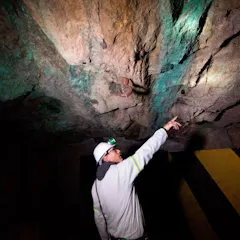
The competition for Africa’s critical minerals between China and the West presents an opportunity.
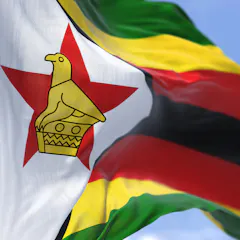
Sithole was just one of tens of thousands of individuals who died during Zimbabwe’s independence struggle.
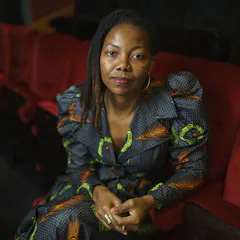
She experiments with form while capturing the hopes and contradictions of our times.

African artists are not only present on the global stage but are shaping the languages of art itself.

English readers can now encounter African novels as they were first imagined, in the rhythms of their own languages.

The framing of TikTok content could hurt the reputation of the two countries.
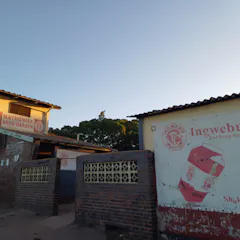
Municipal drinking amenities were built to control and profit from African drinking. In Bulawayo, the quality of the beer became a colonial obsession.
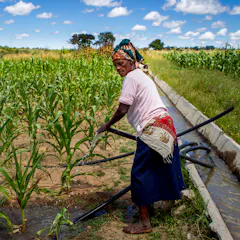
Small-scale irrigation schemes in southern Africa can produce more food, support more jobs and be more profitable for the local community.
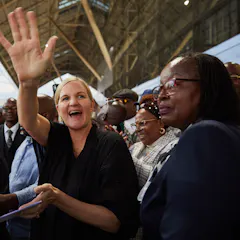
Kirsty Coventry’s rise to political importance as a white woman in a black majority Zimbabwe shows how sport is able to reshape race and power.

The IOC is betting on a younger female leader to signal change. She enters the ring at a crucial time for athletes.

Maintaining current elephant numbers, let alone reversing declines, requires new thinking and conservation innovation.
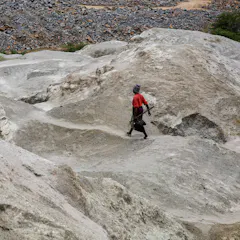
In Zimbabwe it was believed that if a woman went underground the gold seam would vanish, but above ground women held spiritual power over mines.
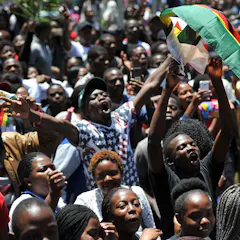
Zimbabwe’s graduates feel let down because the modernist promises of education have failed them.
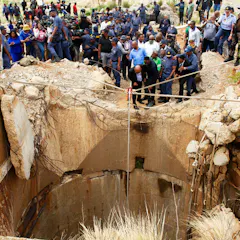
South Africa’s police have resorted to medieval military tactics against illegal miners. But the solution lies elsewhere: massive regional economic repair.
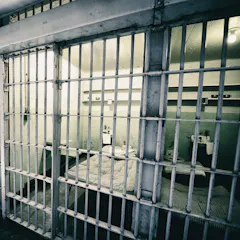
Countries that retain the death penalty often argue that the public supports it. In Zimbabwe, research helped challenge this narrative.
Top contributors
-

Professor of World Politics, SOAS, University of London
-
Research Associate, Dept of Anthropology & Development Studies and Fellow, Clare Hall, University of Cambridge, University of Johannesburg
-
Professorial Fellow, Institute of Development Studies
-
Senior Research Associate, University of Johannesburg
-
Professor of Sociology, University of the Witwatersrand
-
Senior Lecturer, Stellenbosch University
-
Professor of Democracy, University of Birmingham
-
Assistant Professor, Harvard University
-
Extraordinary Professor, Department of Political Sciences, University of Pretoria
-
Visiting Professor, University of Kent
-
DLitt et DPhil Student in Politics, University of South Africa
-
Senior Research Fellow, Centre for the Advancement of Scholarship, University of Pretoria., University of Pretoria
-
Associate Professor in the Politics of Africa, University of Oxford
-
Professor of Economics, Salisbury University
-
Honorary Senior Research Fellow, University of Stirling