
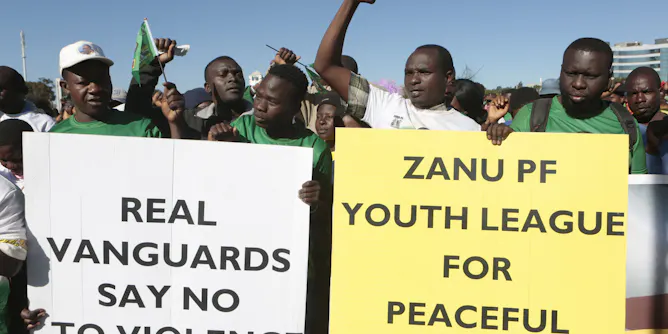
The credibility of Zimbabwe’s elections will depend on issues like political violence and media freedom.
Articles on Zanu-PF
Displaying 41 - 60 of 68 articles
As Emmerson Mnangagwa blames Grace Mugabe for a failed bombing at a rally, his rivals try to find a way to close the gap.
The world waits to see if Zimbabwe will pass the democracy test as it holds its first election after Robert Mugabe next month.
Zimbabwe has high hopes for a post-Mugabe era, but it has some serious growing pains to deal with first.
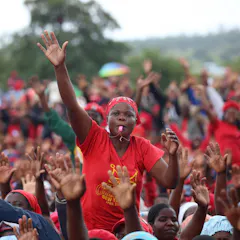
Emmerson Mnangagwa has a struggle on his hands as president of Zimbabwe, but he doesn’t face much of a challenge from the opposition.

No one is immune to change in leadership that has led many African presidents to lose their coveted top job.
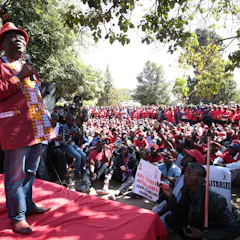
Despite spirited efforts to douse the flames of infighting within the MDC-T, matters came to a head at a recent rally in Chitungwiza.
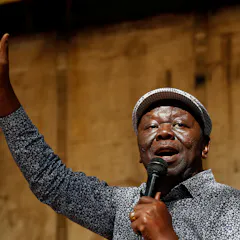
But for ZANU-PF’s coercion, Tsvangirai could well have ushered in a democratic era in Zimbabwe as the country’s second president.
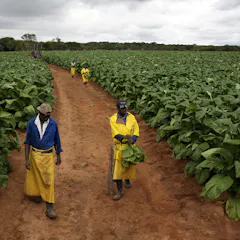
A new land administration system that responds to changed ownership patterns of Zimbabwe’s agricultural land is needed if the country is to harness its farming potential.
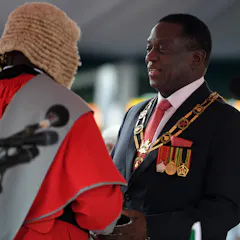
Zimbabweans have every right to celebrate the end of Robert Mugabe’s long and disastrous reign, but they would be wrong to assume that this is the end of their political problems.

Zimbabwe’s new leader needs to shake off his infamous reputation and the suspicion that he is merely another Mugabe in a younger frame.
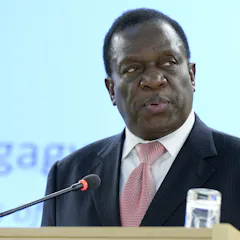
After the fall of autocratic ruler Robert Mugabe, Zimbabwe faces a difficult choice between the stability of a transnational government or a potentially divisive election contest.
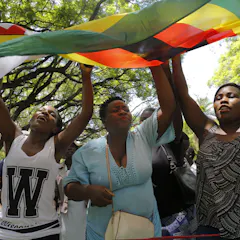
A week after the army issued its limp-wristed and ambiguous statement that Mugabe should go, he remains in place, and a new avenue - impeachment - is being pursued to get rid of him.
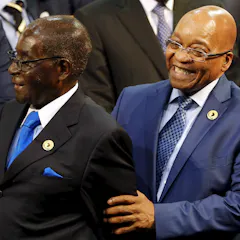
The unfolding misfortunes of Zimbabwean President Robert Mugabe hold key lessons for his South African counterpart Jacob Zuma who faces the possibility of a forced exit.
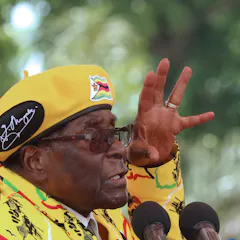
Are we witnessing the end of an era in which dictators stayed in power for decades? If so this must be good not only for Angola and Zimbabwe but for southern Africa as a whole.

The coup in Zimbabwe means Mugabe’s long and disastrous presidency is finally over. The questions that remain are the precise details and mechanics of the deal which secures his departure.

The protracted political crisis in Zimbabwe has worsened since President Mugabe fired vice president Emmerson Mnangagwa. Now the military has entered the fray, raising fears a coup is imminent.
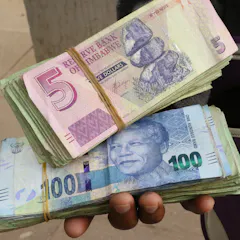
Years of political instability and economic mismanagement under the rule of ZANU-PF have left Zimbabwe’s financial system in chaos. The country is living on borrowed time and borrowed money.

The effects of President Mugabe’s post-independence security clampdown that led to the murder of between 10 000 and 20 000 Zimbabweans, known as the Matabeleland massacre, continue to be felt.
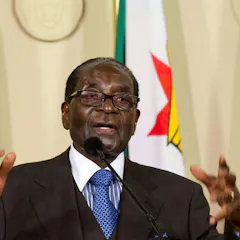
Zimbabwe’s ZANU PF sees itself as having brought democracy to the country and will not leave power. Unless civil society succeeds in pressing for change, the 2018 elections will bring none.
Top contributors
-

Research Associate, Dept of Anthropology & Development Studies and Fellow, Clare Hall, University of Cambridge, University of Johannesburg
-
Professor of Sociology, University of the Witwatersrand
-
Professor of World Politics, SOAS, University of London
-
Associate Professor of Sociology & Director of the Centre for Data Ethics at the Institute for Intelligent Systems, University of Johannesburg
-
Extraordinary Professor, Department of Political Sciences, University of Pretoria
-
Research Fellow, International Studies Group, University of the Free State
-
DLitt et DPhil Student in Politics, University of South Africa
-
Honorary Senior Research Fellow, University of Stirling
-
Senior Lecturer, Stellenbosch University
-
Research Fellow Willy Brandt School, University of Erfurt
-
Founding Director of Program on Intrastate Conflict, Harvard Kennedy School
-
Research Associate in the Department of Historical and Heritage Studies, University of Pretoria
-
Lecturer in Politics and International Relations, University of Leicester
-
Researcher, Sciences Po
-
Professor, Department of Political Sciences, University of South Africa