
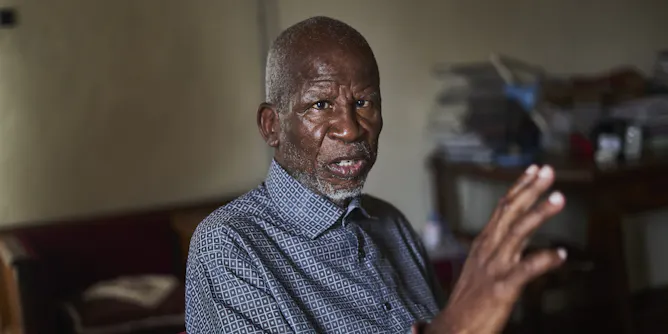
A public figure who appeared often on TV and radio, Pathisa Nyathi celebrated the history and culture of Zimbabwe’s marginalised Ndebele people.
Articles on Gukurahundi
Displaying 1 - 20 of 23 articles

President Emmerson Mnangagwa has not faced official investigation or prosecution over his role in Operation Gukurahundi – 40 years on.
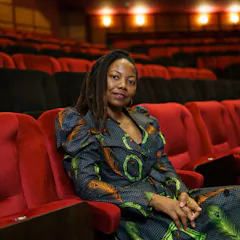
Writers have challenged oppression, exposed social injustices and advocated for political change.

Playing out in an animal kingdom, Glory is a devastating political commentary on Zimbabwe today.
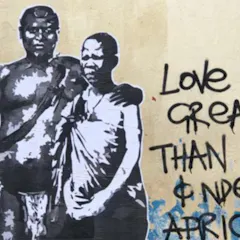
The unity between Zimbabwe’s two main ethnic groups is so fragile that even an inspirational street mural can expose it.

A forensic archaeologist and former Zimbabwe police officer uses his investigative skills to find the missing and the dead in his homeland.
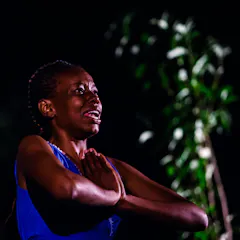
Artists are filling the state’s silence by revisiting history so that it can be discussed.

It remains to be seen how much longer the ‘old men syndrome’ will persist in Zimbabwe, Namibia and South Africa, despite growing frustration among the politically powerless.

Robert Mugabe’s years of playing one group off against the other to favour himself finally wore too thin in 2017.

Where should we place Mugabe among the pantheon of African nationalists who led their countries to independence?

It’s time for a new approach as it becomes increasingly clear that protests won’t topple the Zanu-PF government.
The Mnangagwa regime’s coercive acts are a continuation of the violence and brutality of the Mugabe era, while he seeks global re-engagement and selective national dialogue.
Only psychologists could discern how Dumiso Dabengwa maintained his legendary composure, a necessary trait for an intelligence supremo.
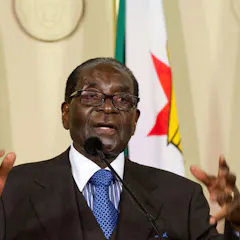
For many Zimbabweans Robert Mugabe will remain a contested figure.

Winners and losers are both trying to win the West’s support for their view.
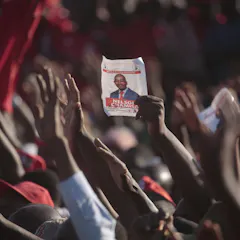
Zimbabweans face a complicated array of choices at the polls.

The credibility of Zimbabwe’s elections will depend on issues like political violence and media freedom.

It’s still unclear whether Zimbabwe will manage an effective transition to participatory democracy and freedom. And the current signs are not encouraging.
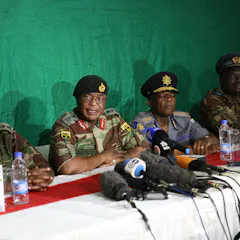
Contrary to popular sentiment that the coup in Zimbabwe would usher in a new era of democracy, the military intervention is much more about a succession crisis in the ruling Zanu-PF.
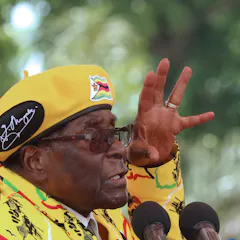
Are we witnessing the end of an era in which dictators stayed in power for decades? If so this must be good not only for Angola and Zimbabwe but for southern Africa as a whole.
Top contributors
-

Research Associate, Dept of Anthropology & Development Studies and Fellow, Clare Hall, University of Cambridge, University of Johannesburg
-
Senior Lecturer, Stellenbosch University
-
Research Fellow, International Studies Group, University of the Free State
-
Lecturer in Politics and International Relations, University of Leicester
-
Honorary Senior Research Fellow, University of Stirling
-
Associate Professor of Sociology & Director of the Centre for Data Ethics at the Institute for Intelligent Systems, University of Johannesburg
-
Lecturer in Development Studies, University of Johannesburg
-
Lecturer, University of Staffordshire
-
Nancy and Robert J. Carney Postdoctoral Associate in Art History, Rice University
-
Extraordinary Professor, Department of Political Sciences, University of Pretoria
-
Professor of Sociology, University of the Witwatersrand
-
Research Associate in the Department of Historical and Heritage Studies, University of Pretoria
-
Emeritus Professor, University of Cape Town
-
DLitt et DPhil Student in Politics, University of South Africa
-
Senior Lecturer, Edge Hill University