
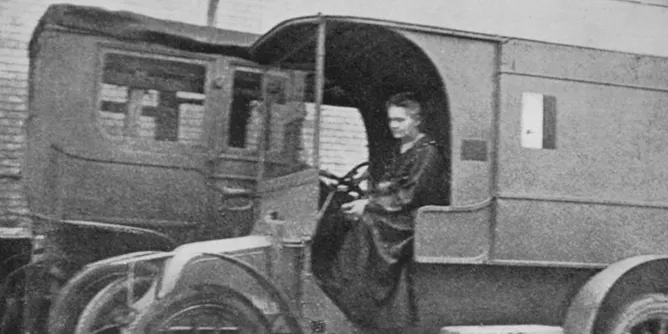
During World War I, Marie Curie left her lab behind, inventing a mobile X-ray unit that could travel to the battlefront and training 150 women to operate these ‘Little Curies.’
Articles on X-ray
Displaying 21 - 32 of 32 articles
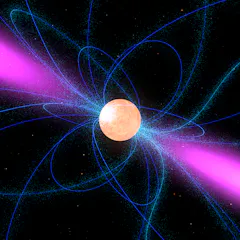
Studying mysterious neutron stars could uncover the secrets of exotic physics – and a way to navigate the stars.
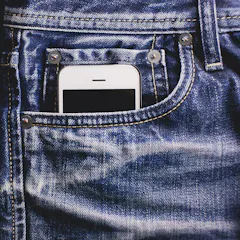
Did your holiday gift list include radiation-shielding undies to protect your privates from cellphone radio waves? A radiation expert explains they’re unnecessary – your phone won’t affect your fertility.
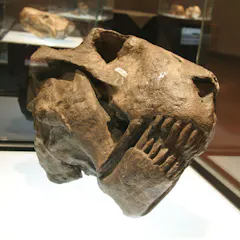
Modern sabre-tooth mammals have their canines constantly on display. This allows them to seduce mates. But was sexual selection also an important phenomenon among our pre-mammalian ancestors?

It took cutting edge technology and a collaboration between the Australian Synchrotron and the CSIRO to reveal the mysterious hidden lady in Degas’s famous painting.
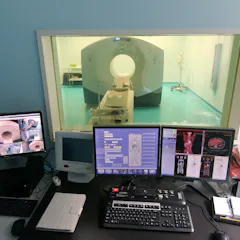
Pairing more powerful computers with increasingly sensitive scanners can yield many benefits in medicine and other fields.
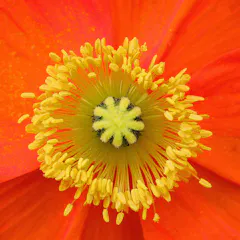
The relentless pursuit of showy flowers for garden display – as seen at Chelsea Flower Show – has seen some odd uses of radiation and chemicals .
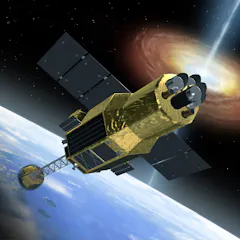
The universe looks very different with X-ray vision, revealing some of the most energetic interactions in our galaxy. Japan’s new Hitomi telescope will help us see these wonders.
Scientists are not always as scientific as many suppose. Recent well-publicized cases of scientific fraud prove that scientists can be as susceptible to the allures of wealth, power and fame as politicians…

“Diabetic urine”, the surgeon Herbert Mayo wrote in 1832, “is almost always of a pale straw or greenish colour. Its smell is commonly faint and peculiar, sometimes resembling sweet whey or milk.” The use…
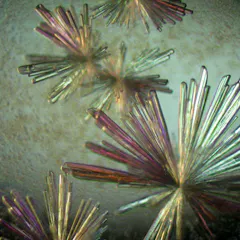
For more than 100 years, scientists have “peered” at atoms in a crystal by analysing the way they scatter X-rays. This process, known as crystallography, reveals the chemical structure of compounds in…
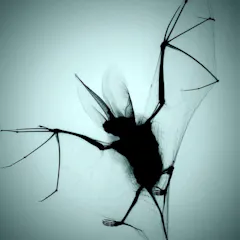
Widening our view of the world can mean taking a much closer look at the familiar. And technology from MRI to Scanning Electron Microscopes, which use focused beams to interact with a sample’s surface…
Top contributors
-

Chancellor's Professor of Medicine, Liberal Arts, and Philanthropy, Indiana University
-
Timothy J. Jorgensen is a Friend of The Conversation.
Director of the Health Physics and Radiation Protection Graduate Program and Professor of Radiation Medicine, Georgetown University
-
Junior Research Fellow, Imperial College London
-
Researcher, National Renewable Energy Laboratory
-
Associate Professor of Osteoarchaeology, Uppsala University
-
Associate professor, University of Southampton
-
Associate Professor in History of Modern Science and Technology, University of Cambridge
-
Associate Professor, Japan Aerospace Exploration Agency (JAXA)
-
Lecturer in Inorganic Chemistry, University of Hull
-
Associate Professor in Astronomy, Monash University
-
Postdoctoral Researcher, Massachusetts Institute of Technology (MIT)
-
Associate Professor of Anthropology, Binghamton University, State University of New York
-
Geologist, CSIRO
-
Associate professor in Vertebrate Palaeontology, University of the Witwatersrand
-
PhD Candidate in Electronic Engineering, University of Surrey