

Most states know that without widely understood and accepted international laws and principles it would be harder to resolve their disagreements peacefully.
Articles on World Trade Organisation
Displaying 1 - 20 of 52 articles

China’s zero tariff regime has the potential to boost trade between African countries and lead to better coordination.
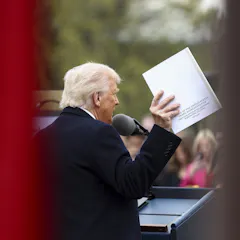
The ruling against the Trump administration was based on two separate lawsuits. But there’s little chance it will bring global trade chaos to an end.

The G20 has an important role to play in global affairs. But its lack of representation and informal way of working need to be fixed first.
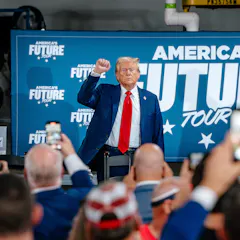
Other countries – including Australia – won’t be able to simply look away and hope for the best. For better or worse, markets and the world must now adapt to the return of Donald Trump.
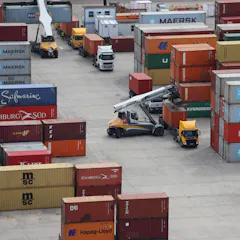
African countries require efficient infrastructure networks to boost trade within the region and with the rest of the world.
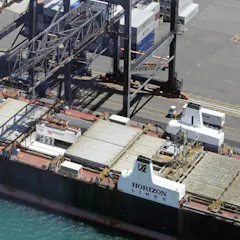
As of 2022, only Nigeria and Sudan had lower trade-to-GDP ratios.
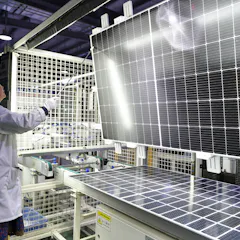
Africa must guard against new environment friendly trade rules that leave the continent in the poor position of exporting raw materials that developed nations use to manufacture green energy systems.

Breaking the impasse on wine is a big deal for producers. Before the duties, China was Australia’s largest wine export market.
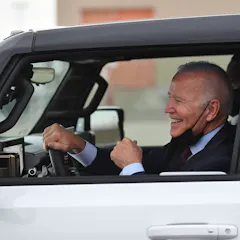
Joe Biden’s ‘buy American’ effort with EVs likely violated World Trade Organization rules that the US helped create. The US has an opportunity now to update the system – if it’s willing to take it.

Can UK business compete in an international green subsidy race?
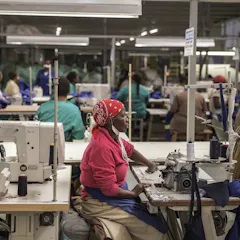
Africa should push for extension of AGOA rather than bilateral trade deals with the US.

Africa must focus on building strong alliances with advanced economies to mitigate the steps being taken by the European Union and US.
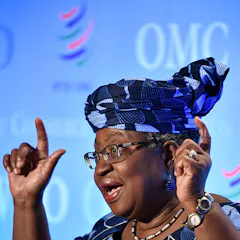
Creating employment and fighting corruption are two of the subjects discussed in the wide ranging discussion.

Trade regulation by rich countries against pests and disease is gradually making its way into the less developed nations. On top of safer foods, new research shows this could also bring sustainable growth.
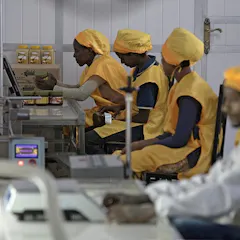
Countries like Ethiopia, Mali and Guinea find it difficult to access the US market.

Developing nations can’t make COVID vaccines because some rich nations won’t support waiving patents. Unless Australia and others do more, the world will keep living with “grotesque” vaccination gaps.

Waiver talks might convince companies to focus on technology transfer and training, and let go of the plan to maximise patent-based revenues.
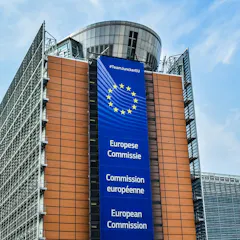
Rising protectionism has the potential to have major negative effects on many European companies, yet firms have been largely absent from the public conversation. Why?
Both sides can make a case, but they might not get the chance.
Top contributors
-

Professor of Intellectual Property Law, City St George's, University of London
-
Professorial Fellow, University of Canberra
-
Professor of Law, UNSW
-
Credit Union SA Chair of Economics, Adelaide University
-
Professor/Senior Research Fellow, Centre for Advancement of Scholarship, University of Pretoria
-
Professor of Public Health, La Trobe University
-
Associate Professor, Co-Director of China International Business and Economic Law (CIBEL) Centre, Faculty of Law and Justice, UNSW Sydney, UNSW
-
Research Assistant, Faculty of Law, Chinese University of Hong Kong
-
Emeritus Professor of Law, University of Auckland, Waipapa Taumata Rau
-
Professor and Distinguished Research Chair, Globalization and Health Equity, L’Université d’Ottawa/University of Ottawa
-
Professor Emeritus, Macquarie Business School, Macquarie University
-
Senior Research Consultant, University of Technology Sydney
-
Emeritus Professor in Public Health, University of Sydney
-
Lecturer in Law, Queen's University Belfast
-
Distinguished Professor, Arthur J. Gosnell Professor of Economics, & Head, Department of Sustainability, Rochester Institute of Technology