

In a landmark study of 1,000 LGBTQ young people, we found many experience threats to “fix” them through sexual violence.
Articles on Workplace sexual harassment
Displaying 1 - 20 of 25 articles

It’s often too challenging or dangerous for workers to stand up to men in positions of power.

Samantha Dodson talks to The Conversation Weekly podcast about her research into why some people feel sympathy for men accused of sexual harrassment.

Away from the glare of high-profile trials, defamation law is being used against women who come forward about sexual harassment. There’s little political appetite to fix it.

A new study examines why women who report sexual misconduct often experience retaliation while men who are alleged perpetrators of sexual assault escape repercussions.

Non-disclosure agreements have been used to keep victim-survivors from speaking up. Despite guidelines addressing this, new research shows such agreements remain standard practice.

Growing awareness of sexual harassment and discrimination in the field prompted an international survey and research into potential solutions.

Confronting a bully isn’t the only way to call out toxic behaviour at work.

These women most often experienced workplace sexual harassment when they were in temporary, casual or contract positions.

The RCMP’s ongoing issues with systemic misconduct and harassment and its inability to police itself require immediate, bold and systemic measures.

To win back the trust of its members, policymakers and the public, the CBI must change its culture and governance. But this is a very difficult undertaking.

Sexual violence in the Canadian Armed Forces is a common, dominant and serious issue that can have severe consequences for victims. Why is the military so slow to seriously address it?

The fifth national survey on sexual harassment in Australian workplaces shows little movement since the last survey in 2018.

Based on the 2019 book, She Said follows journalists Jodi Kantor and Megan Twohey as they report on Harvey Weinstein.

Australia’s political economy was built on the primacy of (white) male labor, male power and male control, writes Julianne Schultz. Women have changed this culture - but still risk abuse when speaking out.

Research shows supervisors often fail to recognize the coercive nature of their power over a subordinate.
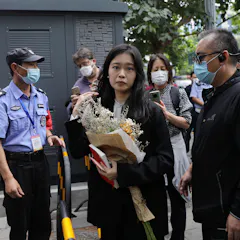
Despite the emancipation of women in China in 1949, sexual harassment and inequality in the workplace are still the norm.
Research shows even human resources students who have experienced sexual harassment in the workplace would be unlikely to report it. So how do company’s make real change?

Cuomo used language that people forced to apologize often deploy to avoid taking responsibility and show genuine contrition. An expert on public apologies suggests three don'ts and a do.

Sexual harassment on campus often casts students as targets of their instructors. Researchers have found that it happens the other way around, too.
Top contributors
-

Senior Researcher Centre for Future Work at the Australia Institute; Sessional Academic RMIT University, The Australia Institute
-
Assistant Professor, Organizational Behaviour and Human Resources, University of Calgary
-
Program Director & Associate Professor Master of Psychology Health and Wellness & Master of Industrial-Organizational Psychology, Adler University
-
Dean, Edith Cowan University
-
Senior Lecturer in Journalism, Monash University
-
Professor of Business Ethics, Warwick Business School, University of Warwick
-
Lecturer in Criminology, The University of Melbourne
-
Associate Professor of English Language Studies, The Middlebury Institute of International Studies at Monterey, Middlebury College
-
Assistant Professor of Management, Syracuse University
-
Associate Professor, Marketing & International Business, Auckland University of Technology
-
Professor of Sociology and China Studies, SOAS, University of London
-
Professor of Law, University of Oregon
-
Senior Lecturer in Human Resource Management, University of Waikato
-
Associate Professor in Coastal and Marine Science, University of Newcastle
-
Social Justice Practitioner in Residence/Senior Lawyer, University of Sydney