

The Hockey Canada verdict shows how we talk about sexual violence matters and can have a profound impact on those who survive sexual assault.
Articles on Harvey Weinstein
Displaying 1 - 20 of 81 articles

When Lynch’s films were first released, they seemed to be funhouse-mirror reflections of society. Not so anymore.

Non-disclosure agreements have been used to keep victim-survivors from speaking up. Despite guidelines addressing this, new research shows such agreements remain standard practice.

Non-English language cinema – previously seen by niche audiences – is increasingly finding acceptance and recognition, reflecting the many demographic changes taking place within the academy.

On Nov. 12, fashion mogul Peter Nygard was convicted of sexual assaults going back to the 1980s. Research shows that a delay in reporting sexual assault may not impact juries’ decision-making.
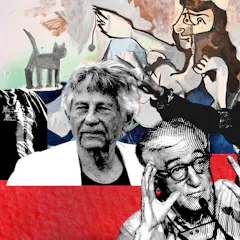
So many of our artistic geniuses have complicated legacies. What do we do with work we love by artists whose behaviour is more difficult to admire?
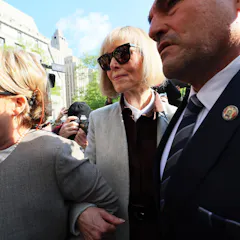
Trump’s lawyers questioned E. Jean Carroll, a magazine columnist, about why she did not scream or call the police after, she alleged, Trump sexually assaulted her in the 1990s.

Based on the 2019 book, She Said follows journalists Jodi Kantor and Megan Twohey as they report on Harvey Weinstein.
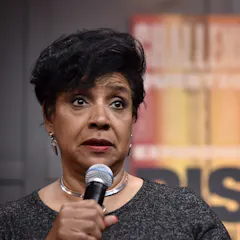
A single Tweet the day before she took over as dean of the College of Fine Arts at Howard University has led to calls for Phylicia Rashad’s ouster. A scholar on college deans weighs in on what’s next.

It’s not the sole answer to fixing structural inequalities, but as a profession committed to addressing harassment and abuse on set, it’s clearly needed

Scandals are violent shocks to social systems, yet not all questionable behaviour produces scandal. How can we explain that some figures escape the consequences of their own behavior while others don’t?
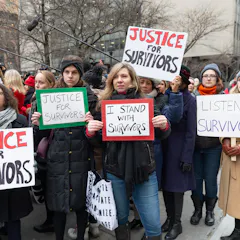
Harvey Weinstein’s conviction isn’t the norm for perpetrators of sexual violence.

Achieving justice in response to sexual violence is complex, and we should treat the Weinstein conviction with some caution.
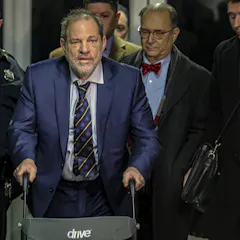
Studies show the physical and emotional pain of minorities and women is often discounted by both the U.S. justice and health care systems. That has serious consequences.
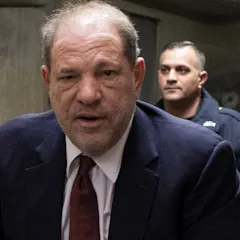
As women began to come forward with experiences of rape and abuse, backlash came forward too. The notion of ‘false memory’ developed to explain away assault. Here’s why that notion itself is untrue.

The backlash has given way to a simmering male anxiety that an innocuous comment could lead to a sexual harassment accusation.

As the Harvey Weinstein trials start, a psychology scholar explains why jurors may be biased on the question of consent. While the situations examined in these studies are not equivalent to sexual assault, they illustrate a pervasive psychological bias.
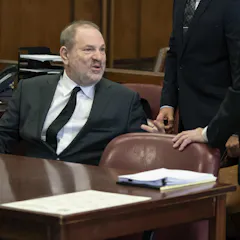
The New York Times reporters who broke the Weinstein story show how lawyers – whether ones who represented him or his victims – enabled the movie mogul’s wrongdoing.
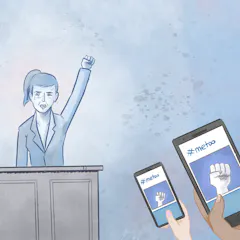
The #MeToo movement brought to light the extent of sexual violence in the community, largely through the media. But there is still a long way to go to overturn stereotypes and shut down online abuse.
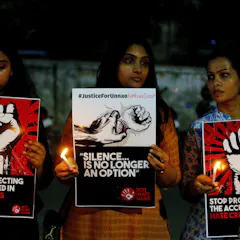
Women in countries such as India, Pakistan and others have long organized campaigns against sexual violence – many of which have resulted in stronger laws in these countries.
Top contributors
-

Professor of Law, University of Oregon
-
Associate Professor in Criminology, The University of Melbourne
-
Professor of Psychology, University of Denver
-
Lecturer in Criminology and Policing, Glasgow Caledonian University
-
Professor of English and Literary Arts, University of Denver
-
Professor of Political Science and Chair of the South African Research Initiative in Gender Politics, Stellenbosch University
-
Albert E. Kent Professor of Psychiatry, Yale University
-
Lecturer in Media and Journalism, Glasgow Caledonian University
-
Senior Lecturer in Criminology, University of Wollongong
-
Associate Professor, Eighteenth-Century English Literature, Northumbria University, Newcastle
-
Benjamin Waite Professor of the English Language, Wesleyan University
-
Professor of Law and Co-Director, Center on Applied Feminism, University of Baltimore
-
Professor of Organisational Psychology and Health, University of Manchester
-
Dean’s Professor of Religion & Professor of History, USC Dornsife College of Letters, Arts and Sciences
-
Lecturer in History and Politics, Anglia Ruskin University