

Bill C-39 makes it easier for Ottawa to intervene when collective bargaining produces the very conflict that it is designed to manage.
Articles on Worker rights
Displaying 1 - 20 of 56 articles

Canada’s approach to airline strikes pits the need for reliable air travel against the constitutionally protected right to strike. Other countries show there is a workable middle ground.

A Senate committee is recommending a permanent tribunal that could ban strikes in federally regulated industries. The proposal would gut constitutional protections workers won in court.
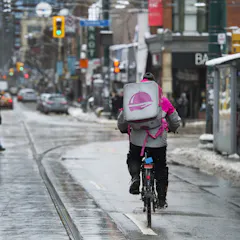
Canada supports the first international treaty protecting platform workers. The same government is weighing a proposal that could make it difficult to legally strike in the rail and marine sectors.
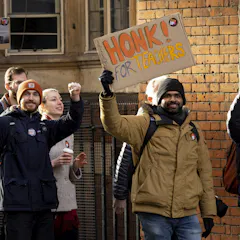
Less than 4% of young workers now belong to a union.

The government’s U-turn will disappoint many workers – and it’s not enough make life easier for employers.

Whether you’re single, a parent or carer, or an employer trying to look after your business and staff, a legal expert explains your rights ahead of the holidays.

The dispute exposes several fault lines in Canada around work, how we value it and how the law impacts workers.

Air Canada flight attendants have been in negotiations with the company since March, fighting for fairer wages and working conditions.

In its governance structure, the modern workplace operates as a kind of mini dictatorship. But what if there were an actual legal right to workplace democracy?

What it means for workers, employers and maintaining harmony between staff with differing beliefs.

Trade unions are vital to designing new European labour laws that actually protect workers.

Farm certification offers a potential strategy to improve labour standards, uphold rights, and amplify migrants’ voices.

Overlooked and vulnerable, it is in Indonesia’s interest to protect the rights of foreign professionals to sustain economic growth and maintain its global reputation.

After decades of inflation and wage stagnation have eroded wages for workers, the upcoming wage hikes represent progress. But workers certainly deserve more than that.

‘Hope labour’ leaves people working in creative industries open to exploitation as they try to develop their careers.

Enforcement of labour market regulation among small businesses such as hand car washes and nail salons is too complicated.
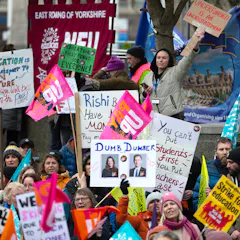
The UK parliament’s Joint Committee on Human Rights has suggested changes to the strikes bill but even those may not go far enough.

Improving the ability for worker’s voices and perspectives to be heard in the workplace could have wide ranging benefits for employers and broader society at large.

If the labour movement can organize and mobilize working people in B.C. and Canada, the change could be significant.
Top contributors
-

Affiliate Research Associate, School of Political and Social Sciences, University of Glasgow
-
Professor of Economics and Political Economy, University of Leeds
-
Associate Professor of Business and Society, Gustavson School of Business, University of Victoria
-
Associate Professor, Faculty of Business Administration, University of Regina
-
Faculty Lecturer and Academic Program Co-ordinator, Supply Network and Aviation Management, McGill University
-
PhD candidate, Labour Studies, McMaster University
-
Professor of Employment Relations & HR Management, University of Birmingham
-
Reader in Organisational Behaviour, University of Liverpool
-
Policy Director, Centre for Future Work at the Australia Institute and Adjunct Principal Research Fellow, RMIT University
-
University Teacher in History, Loughborough University
-
Senior Lecturer Human Resource Management, University of Huddersfield
-
Professor of Sports Law, Melbourne Law School, The University of Melbourne
-
Director of Studies, Loughborough University
-
Professor of Management and Sociology, Vanderbilt University
-
Laurie Carmichael Distinguished Research Fellow at the Centre for Future Work, Melbourne; and Professor Emeritus, Griffith Business School, Griffith University