

Academic words are useful at school and university – but they can be tricky to learn.
Articles on Words
Displaying 41 - 60 of 73 articles

Using machine learning to study over 85 million YouTube comments, a research team has, for the first time, identified linguistic differences among cable news viewers.

Updates to the Oxford English Dictionary provide a fascinating glimpse into how language changes in the face of rapid and unprecedented social and economic disruption.

One anthropologist found 1,072 similar words for ‘mom’ and ‘dad’ in the world’s languages. It turns out a mix of biology, culture and encouragement from parents explains this phenomenon.

Accents differ depending on where we’re from, even in the same country.

Some animals, like rats, learn linguistic patterns better than humans can.

The word ‘OK’ has only been around for 180 years, but it’s become the most spoken word on the planet.

A 1984 magazine produced by students at Xavier College contains the earliest known reference to the word ‘bogan’ as we now understand it.

Pyt doesn’t have an exact English translation, but there’s a rich strain of psychological research devoted to its benefits in everyday life.

Grant abstracts with more words, more complex language and more storytelling tend to earn more money – even if that’s not exactly what funders say they’d want.

Why do some words sound pleasant to us, while others provoke disgust? Learning a new language can help us find out.

Probably the most famous ‘Welsh’ word, ‘cwtch’ is the perfect example of a dialect term.

Marijuana has a rich linguistic tradition. But drive by dispensaries like ‘Advanced Medical Alternatives’ or ‘Alameda Wellness Center,’ and you might think you’re passing the office of a physical therapist.

Although loneliness may seem timeless and universal, the word seems to have originated in the 16th century,

A loving relationship may be a unique mix of different ‘flavours’ of love.
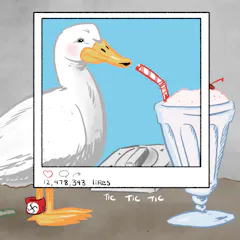
‘Milkshake duck’, a word created in 2016 on Twitter, is the Macquarie Dictionary Word of the Year. Efforts to coin new words have a long history and were particularly in vogue in the 1980s.
Evolutionary biologists ask very similar questions about species to those asked by linguists about languages.
People across the globe all see millions of distinct colors. But the terms we use to describe them vary across cultures. New cognitive science research suggests it’s about what we want to communicate.

There are benefits to shared reading long after children can read to themselves, so how long should you read to your children?

A recent study uncovered the words that people find the funniest. But humour differs between men and women in surprising ways.
Top contributors
-
 Roger J. Kreuz is a Friend of The Conversation.
Associate Dean and Feinstone Interdisciplinary Research Professor, University of Memphis
-
Professor of English Language and Literature, University of Oxford
-
Professor of Psychology, Cornell University
-
Professor of Psychology, Dickinson College
-
Assistant Professor, Department of Psychology, Carleton University
-
Professor of Linguistics, University of Nevada, Reno
-
Honorary Associate Professor in the School of Literature, Languages, and Linguistics, Australian National University
-
Associate Professor of American Literature, University of North Georgia
-
Professor of Linguistics, Monash University
-
Lecturer and Consultant in Applied Ethics, University of Leeds
-
Professor in Language and Media, Middlesex University
-
Professor in Linguistics and Philology, Uppsala University
-
Research Associate in English, Queen Mary University of London
-
Senior Investigator at the National Eye Institute, Section on Perception, Cognition, and Action, National Institutes of Health
-
Professor, University of Nottingham