

The road to becoming a champion speller is made easier with support from family and friends, but ultimately it depends on an individual student’s commitment to learning, a scholar writes.
Articles on Words
Displaying 21 - 40 of 73 articles

Denmark, despite its cold and gloomy winters, is full of people who consistently rank among the happiest in the world.
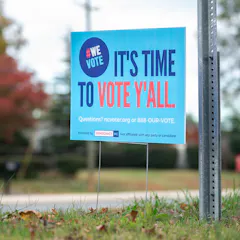
The use of ‘y'all’ has often been seen as vulgar, low-class and uncultured. That’s starting to change.

He is certainly important to English but he isn’t responsible for as much of it as you might think.

A linguist explores the origin of the word ‘father’ – and why derivatives are common in languages across the globe.

The claims made by the creators of the app – which highlights parts of words to supposedly enhance users’ reading abilities – are dubious.

Many of the coinages fail to differentiate the mundane from the momentous. Has the suffix’s overuse rendered it essentially meaningless?

Poetry can unite people when all seems lost. The Conversation US has pulled together four articles from its archives that speak on the power of poetry.
Is there a connection between sound and meaning?

Whether you want to win with as few guesses as possible, or you just want to figure out the right word before running out of turns, a scholar offers some tips.

An American university has banned the expression ‘no worries’. Here are some other words and phrases that confuse speakers of different versions of English.
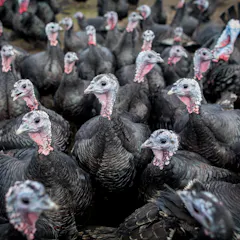
From ‘turkey trot’ to ‘going cold turkey,’ the centerpiece to many Thanksgiving dinners has lent its name to many things. But it also borrowed its name from elsewhere.

National Cliche Day is Nov. 3. So what makes a cliche a cliche? And why do we find ourselves rolling our eyes when we hear certain ones?

A scholar of spelling bees explains why Zaila Avant-garde’s victory at the National Scripps Spelling Bee is significant from a historical perspective.

People often decry words and call for action after tragic events. But words are action and they’re fundamental to Canadian democracy.

Recent research on Danish shows that not only is it hard for Danish children to learn their mother tongue, but adult Danes use their native language differently than speakers of other languages.

As the effects of the pandemic intensify, so does the importance of the choice of language.

A young reader asks: How are languages formed?

Dogs’ barks say a lot about how they’re feeling.

Because of context and history, some words and phrases carry a heavy burden with them. Their mere mention can bring back painful memories and problematic situations.
Top contributors
-
 Roger J. Kreuz is a Friend of The Conversation.
Associate Dean and Feinstone Interdisciplinary Research Professor, University of Memphis
-
Professor of English Language and Literature, University of Oxford
-
Professor of Psychology, Cornell University
-
Professor of Psychology, Dickinson College
-
Assistant Professor, Department of Psychology, Carleton University
-
Professor of Linguistics, University of Nevada, Reno
-
Honorary Associate Professor in the School of Literature, Languages, and Linguistics, Australian National University
-
Associate Professor of American Literature, University of North Georgia
-
Professor of Linguistics, Monash University
-
Lecturer and Consultant in Applied Ethics, University of Leeds
-
Professor in Language and Media, Middlesex University
-
Professor in Linguistics and Philology, Uppsala University
-
Research Associate in English, Queen Mary University of London
-
Senior Investigator at the National Eye Institute, Section on Perception, Cognition, and Action, National Institutes of Health
-
Professor, University of Nottingham