

Preventing unintended pregnancies among women living with HIV is a critical strategy for the prevention of mother-to-child HIV transmission.
Articles on Women's reproductive health
Displaying all articles

A combination of education, income and technology has a strong influence on women’s reproductive autonomy.

Advances in research and medicine have given doctors helpful tools to assess a person’s individual risk and to help prepare them for pregnancy.
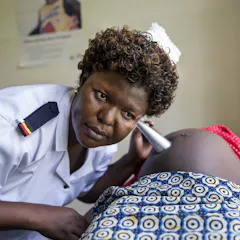
Research indicates that pre-eclampsia has a genetic basis. African women are at greater risk than other population groups.

Scholars of communication and politics assess a presidential debate with a clear loser, but no clear winner.

New federal pharmacare legislation is an important opportunity to give all Canadian women access to effective contraception and realize the right to reproductive health.

Environmental policymakers and scholars must listen to sub-Saharan Africans’ voices and recognize the importance of population for achieving sustainable development goals.

Abortion bans and restrictions have numerous downstream effects on health care. For instance, medical students in states where those laws exist will not receive training for some standard procedures.
Top contributors
-

Professor of Communication Studies, Colorado State University
-
Adjunct Professor of Politics and Director of Think Again, University of Virginia
-
Associate Professor of Nursing, UMass Lowell
-
PhD Candidate (Epidemiology), University of Toronto
-
Adjunct Professor and Senior Fellow, School of Health Sciences, L’Université d’Ottawa/University of Ottawa
-
Postdoctoral Research Fellow, University of Johannesburg
-
Professor of Sociology, University of Johannesburg
-
Associate Professor of Obstetrics and Gynecology, Makerere University
-
Associate Professor of Rheumatology, University of Colorado Anschutz
-
Assistant Professor of Public Health, University of Iowa
-
Ph.D. Candidate in Community and Behavioral Health, University of Iowa