

Gender-based violence responses must include energy access as a structural intervention, not an add-on.
Articles on Women empowerment
Displaying 1 - 20 of 29 articles
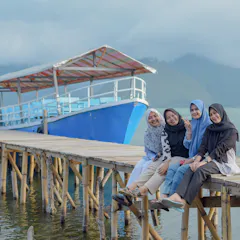
Two decades of post-disaster and conflict learning should be enough to remind us of the importance of meaningful access and participation for Acehnese women. The facts are yet to reflect this.
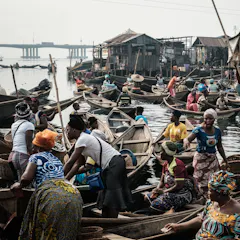
Women in Makoko, a floating slum in Nigeria, face challenges funding their fish trade. Literacy and financial inclusion programmes can make a difference.
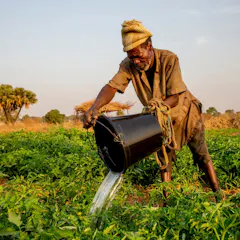
The relationship between small-scale irrigation and food security, diet quality, and nutrition is growing.
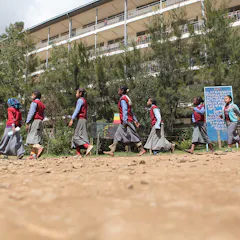
Health extension workers in Ethiopia have had a measurable impact on interconnected challenges such as child marriage, teenage pregnancy, and school dropout.
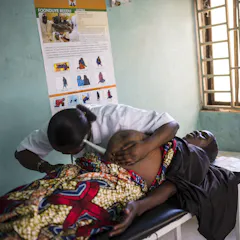
When women have opportunities, a country’s economic productivity and development is enhanced.

After 24 years of democracy, women still struggle for political relevance in Nigeria - limited by poverty, corruption and other factors.
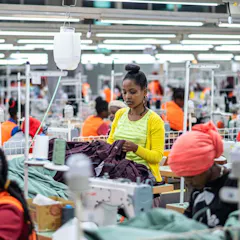
In democratic contexts, getting women into work empowers them. In autocracies like Ethiopia’s, this doesn’t hold. We found out why.
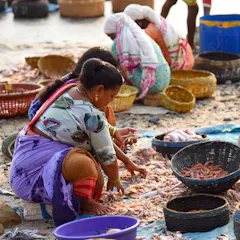
Creating opportunities to meaningfully engage women in governance and decision-making is necessary to achieve gender equality in small-scale fisheries.
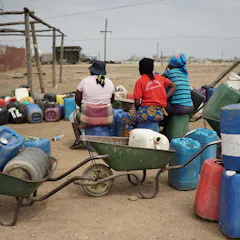
The provision of better health services and social grants has aided rural women’s progress in South Africa, but there are still tremendous needs to be met.

Globally, experts are beginning to recognise that focusing on one aspect of food overlooks the trade-offs or sacrifices people make.

The Communist Party draws most of the members from South Africa’s mainly young, unemployed people, a group that keeps growing.
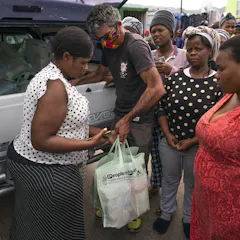
Early in the pandemic, countries had to address several questions as the virus spread and lockdowns became inevitable.
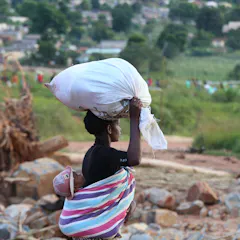
Findings show that income transfer programmes must operate in deliberate coordination with ancillary social service institutions to deliver the maximum benefits for women’s empowerment.

Empowerment can mean different things for different women, but access to information is key. In Mali radio is the main source of information.
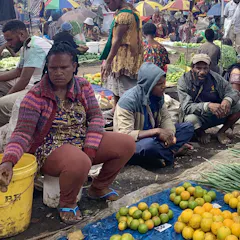
A new study explores how feelings of relative poverty can negatively affect gender dynamics among households.
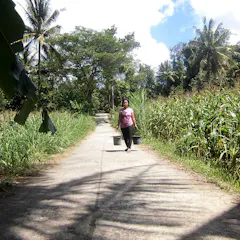
When women have to spend hours getting water for their families, it comes at the expense of their incomes and their other contributions to their communities.

Scholars say a ‘critical mass’ of representation is necessary to overcome ‘token’ status. That’s exactly what we saw at the Democratic debate in Atlanta.
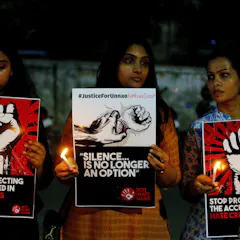
Women in countries such as India, Pakistan and others have long organized campaigns against sexual violence – many of which have resulted in stronger laws in these countries.
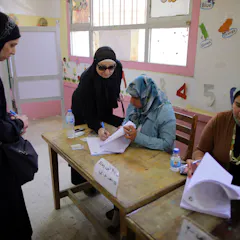
Opening up positions of political power to women will lead to effective and better implemented development policies.
Top contributors
-

Professor of Social Development Studies, University of Johannesburg
-
Associate Dean, Research and External Relations; Executive Director, Madden Center for Value Creation; Phil Smith Professor of Entrepreneurship, Florida Atlantic University; Institute for Humane Studies
-
Postdoctoral Fellow, Tulane University
-
Deputy Dean for Research and Post-Graduate Studies, Faculty of Economic and Management Sciences, University of Pretoria
-
PhD Candidate, RMIT University
-
Associate Professor of Strategy and International Business, Florida Atlantic University
-
Professor of Psychology, University of Windsor
-
Director, Master of Business Administration Program (MBA); Co-Director, Better Consumption Lab, Deakin University
-
PhD researcher, KU Leuven
-
Professor of Social Geography, Newcastle University
-
Research Fellow at the International Development Department, University of Birmingham
-
Professor, Gender and Sexuality Studies, University of Calgary
-
Professor of Political Science and Chair of the South African Research Initiative in Gender Politics, Stellenbosch University
-
Faculty member, Curtin Business School, Curtin University
-
Associate Professor of Management and Entrepreneurship, Suffolk University