
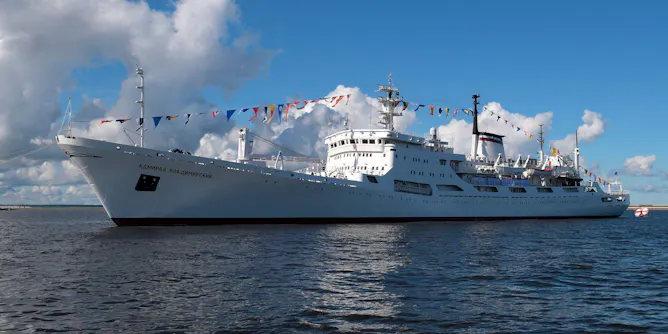
A new documentary has tracked a Russian vessel apparently collecting data on energy and communications infrastructure in the North Sea and Baltic.
Articles on Wind farms
Displaying 21 - 40 of 92 articles
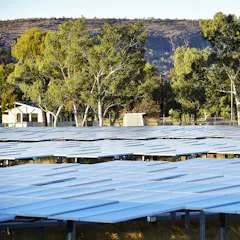
To achieve a target of 82% renewable energy generation by 2030 requires a huge number of new sites for solar and wind farms.
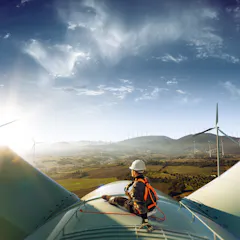
We’ll need to almost double our electricity sector workforce to build renewables as quickly as we need to. Where will the workers come from amid a skills shortage and infrastructure boom?
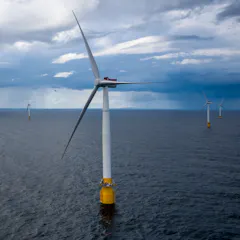
Some of the most powerful offshore wind is over water too deep for a standard wind turbine. Engineers found a way around the problem.
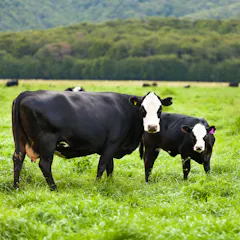
Dairy farming accounts for a quarter of New Zealand’s total emissions. Fermentation technology could help cut agricultural emissions, while also restoring water and ecological quality.

Coal plants are exiting the grid faster than expected. We’ll need to redouble efforts to add flexibility into our energy systems and build renewables and storage.
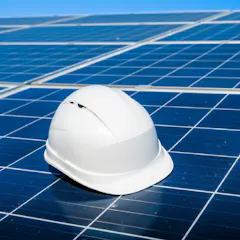
Australia is already in the grip of a skills shortage. We’re going to have to solve that before we can start on the big renewables build.
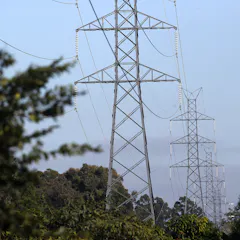
We arrived at this moment thanks to a series of policy decisions under previous governments – state and federal - that left Australia’s energy system unable to cope with the demands placed on it.
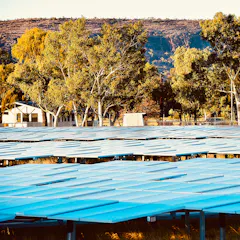
In the first major study of its kind, the authors travelled to where renewable energy is expanding in NSW to ask communities how they feel about the changes.
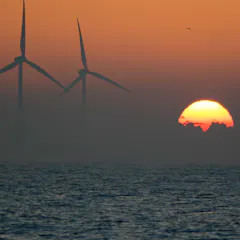
Their underwater foundations cause different layers of the ocean to mix together.
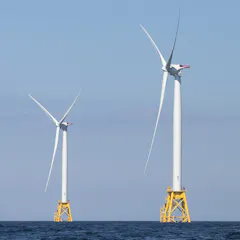
Wind turbines often can produce more power than is needed for electricity onshore. That extra energy could be put to work capturing and storing carbon.

Those who talk down an independent Scotland’s prospects are not factoring in one of its biggest natural resources.
The transition to 100% renewable energy will require a lot of land – mostly in regional Australia. This presents big challenges, and opportunities, for the farming sector.

The Arctic is particularly vulnerable to climate change, but efforts to tackle it risk alienating the people who live there.
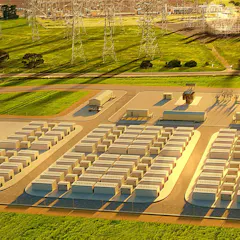
Australia’s biggest states are taking back control of their electricity systems, because the way we make power is changing.
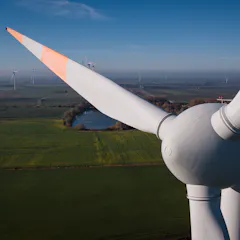
Despite Boris Johnson’s newfound enthusiasm for offshore wind farms, the UK risks going backwards on wind power capacity.
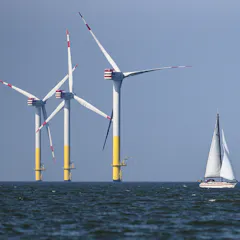
China has a monopoly on rare earth metals, so where will the materials for the UK’s wind revolution come from?
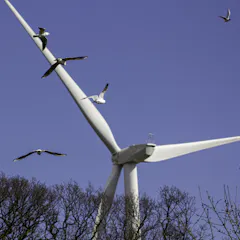
Black turbine blades seem to reduce bird collisions, but it’s important to know why.
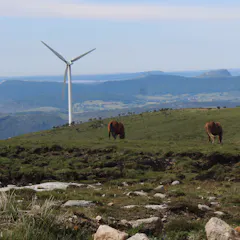
We discovered wind farms in Spain that had carved up peat bogs, causing them to release carbon to the atmosphere.
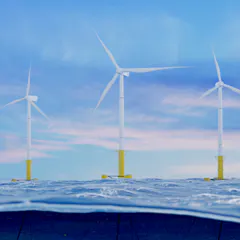
More than 80% of the world’s offshore wind blows further from land than conventional wind farms can reach.
Top contributors
-

Emeritus Professor in Public Health, University of Sydney
-
Research Principal, Institute for Sustainable Futures, University of Technology Sydney
-
Senior Lecturer, Australian National Centre for the Public Awareness of Science, Australian National University
-
Senior Research Consultant, Institute for Sustainable Futures, University of Technology Sydney
-
Professor of Engineering, Australian National University
-
Professor and Director, Victoria Energy Policy Centre, Victoria University
-
Professorial Fellow, University of Canberra
-
Professor of Political Economy, Utah State University
-
Lecturer in Environmental planning, Cardiff University
-
Reader in Energy Policy, University of Aberdeen
-
Professor, School of Mechanical and Manufacturing Engineering, UNSW
-
Senior Research Associate, Renewable Energy & Energy Systems Analyst, UNSW
-
Senior Lecturer, University of Newcastle
-
Research Director, Institute for Sustainable Futures, University of Technology Sydney
-
Lecturer, Australian National University