
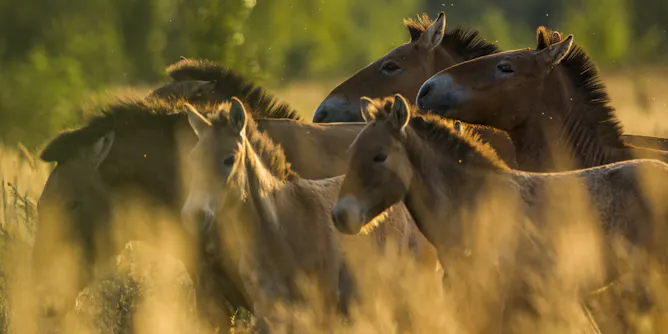
Wild horses native to the steppes of Asia live now in the Chernobyl Exclusion Zone (Ukraine), with an expanding population, 34 years after the nuclear accident.
Articles on Wild horses
Displaying all articles
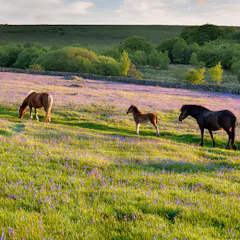
Wild ponies have lived in Britain for over 4,000 years, but they’re in danger of dying out.
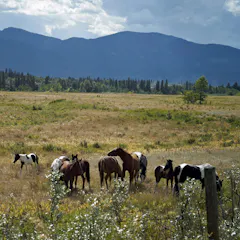
Horses roam free around the world. In the Alberta foothills, their management has become contentious.
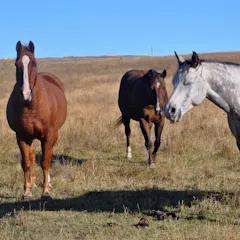
Horses can stand on three legs and rest the other leg. They can change the leg they rest so that all of their legs get a chance to have a break.
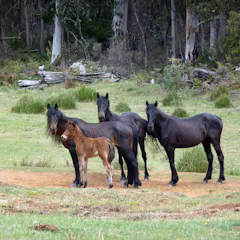
Brumbies have a devoted following among high country locals, despite the fact that they were despised by colonial settler farmers. Their mythical status today owes a lot to cultural figures such as Banjo Paterson.
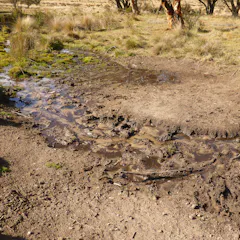
The ‘brumby bill’ which passed the NSW upper house late last night, is an embarrassing step backwards for the state.
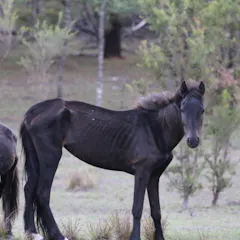
There is no way to effectively administer fertility control to thousands of horses scattered through a huge national park meaning population growth will only be limited as they run out of food

A new study of ancient Botai horses turns our knowledge about wild and domestic horses on its head.
The cultural meanings of wild horses
The Conversation18.6 MB (download)
Today's episode of Essays On Air explores how humans have related to horses over time and across the world, and asks: is it time to rethink how we 'manage' brumbies in the wild?
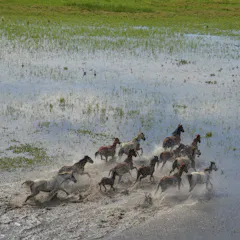
From 30,000-year-old cave paintings to The Man From Snowy River, wild horses have always been part of human culture. As Australia debates what to do with ‘brumbies’ in mountain environments, it’s time to reconsider their place.
Top contributors
-

Honorary Principal Fellow, Human Geography, University of Wollongong
-
Professor in Terrestrial Ecology, Deakin University
-
James Cook University
-
Honorary Research Fellow, University of Sydney
-
Fellow, Keele University
-
Veterinary Specialist, Research Fellow, University of Technology Sydney
-
Honorary Research Fellow, Centre for the Study of the Inland, La Trobe University
-
Professor in Wildlife Ecology and Conservation, School of Life & Environmental Sciences, Deakin University
-
Professor, School for Resource and Environmental Studies, Dalhousie University
-
Associate Professor, School of Animal and Veterinary Science, Adelaide University
-
Professor in Upland Agroecology, Aberystwyth University
-
Research fellow, The University of Melbourne
-
Profesor Titular de Zoología / Associate Professor of Zoology, Universidad de Oviedo