

Feral horses can inflict major ecological damage, as two experts explain.
Articles on Brumbies
Displaying all articles
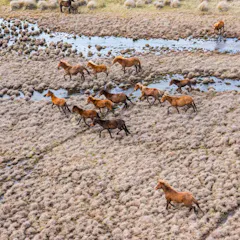
With feral horses gone, fragile alpine areas are no longer being trampled by hard hooves. But Kosciuszko’s landscapes will take decades to recover.
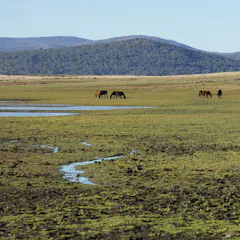
When it comes to storing carbon, alpine peatlands are powerhouses. But feral horse grazing and trampling tips the carbon balance in the other direction. We need to protect and restore our peatlands.
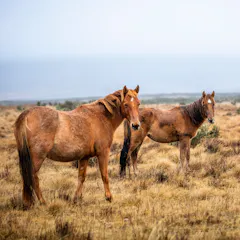
Too often our discussions of brumbies don’t consider the darker aspects of the horse’s role in Australian history.

Feral horses trample endangered plant communities, destroy threatened species’ habitat and damage Aboriginal cultural heritage — and their numbers are increasing.
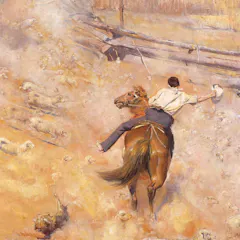
Anthony Sharwood’s The Brumby Wars looks at the tension between environmental damage and sentimental attachment to Australia’s brumbies — and how Banjo Paterson’s poem feeds the myth.
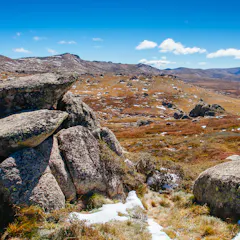
Victoria’s plan has flaws, but it’s still likely to bring the feral horse problem under control, and will do a lot better than the very low benchmark set by NSW.

Compassionate conservationists believe no animal should be killed in the name of conservation. This idea is a death knell for Australia’s native species.
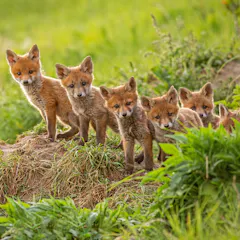
Introduced species are often targeted for culling in conservation, but killing charismatic animals like foxes can be controversial.

Rapid action is needed to reduce feral horse numbers before they cause more damage to native species.
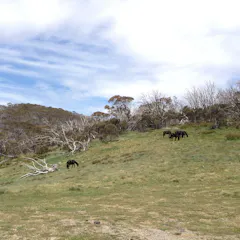
Feral horses are a clear point of division between parties in this weekend’s election. Labor has pledged to repeal the Coalition government’s bill to preserve large numbers of brumbies.
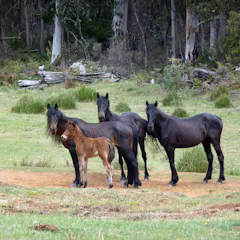
Brumbies have a devoted following among high country locals, despite the fact that they were despised by colonial settler farmers. Their mythical status today owes a lot to cultural figures such as Banjo Paterson.
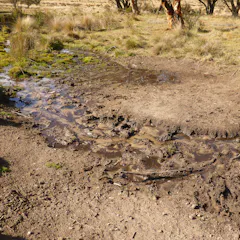
The ‘brumby bill’ which passed the NSW upper house late last night, is an embarrassing step backwards for the state.
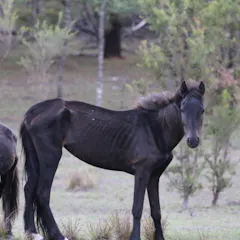
There is no way to effectively administer fertility control to thousands of horses scattered through a huge national park meaning population growth will only be limited as they run out of food
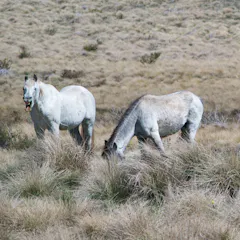
Failing to cull feral horses in Kosciuszko National Park may end up promoting environmental destruction while actually increasing the horses’ suffering.
The cultural meanings of wild horses
The Conversation18.6 MB (download)
Today's episode of Essays On Air explores how humans have related to horses over time and across the world, and asks: is it time to rethink how we 'manage' brumbies in the wild?

Victoria’s new plan to control feral horses aims to remove up to 400 a year from the eastern Alps. But without considering aerial culling, the plan seems unlikely to get to grips with the problem.
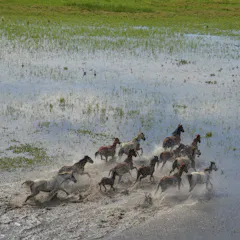
From 30,000-year-old cave paintings to The Man From Snowy River, wild horses have always been part of human culture. As Australia debates what to do with ‘brumbies’ in mountain environments, it’s time to reconsider their place.
Top contributors
-

Professor in Terrestrial Ecology, Deakin University
-
Professor in Ecology, Charles Sturt University
-
Professor in Wildlife Ecology and Conservation, School of Life & Environmental Sciences, Deakin University
-
Honorary Principal Fellow, Human Geography, University of Wollongong
-
Postdoctoral Research Fellow in Conservation and Wildlife Management, University of Sydney
-
Professor of Conservation Science, University of Newcastle
-
Professor, Department of Community Sustainability
-
Lecturer in Ornithology, Ecology, Conservation and Parasitology, Charles Sturt University
-
Conservation Biology Researcher, University of Newcastle
-
Senior Lecturer in Wildlife and Conservation Biology, School of Life and Environmental Sciences, Deakin University
-
James Cook University
-
Post-doctoral researcher, University of Newcastle
-
Professor, University of Sydney
-
Associate Professor in Wildlife Conservation Science, School of Environmental and Life Sciences, University of Newcastle
-
Adjunct Associate Lecturer, University of Newcastle