

Research shows that humans are susceptible to simple stories and biased toward arguments that fit their current perspectives. Here’s how to confront those tendencies.
Articles on Wicked problems
Displaying all articles

It’s important to position students as collaborators and co-creators of knowledge.

The climate emergency can’t be addressed with simplistic solutions. A network of Indigenous communities in Brazil invites us to reorient colonial approaches and embrace deeper change.

From the biggest ‘wicked’ problems on down, finding solutions to challenges depends on working together collaboratively. Students think they’re good at this, but they aren’t. Here’s what could help.
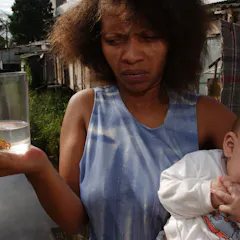
Brazil’s scorpion infestation, which is terrorizing residents of São Paulo and other major cities, is a classic ‘wicked problem.’ That means officials must think outside-the-box to fix it.

Energy-efficient water supply is a wicked problem – and we might have found a way to solve it.
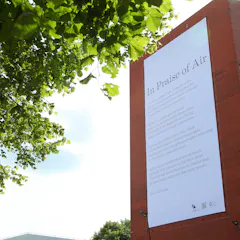
Science cannot ensure a sustainable future for the world’s population on its own. Artists are needed as well.
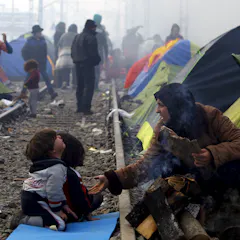
Our institutions are not solving the world’s wicked problems, such as the refugee crisis and climate change. Can sustainable coffee – a bottoms-up, modular approach – provide clues to a better way?

Adopting an African philosophy of education can be a powerful tool to help the continent’s universities create real social change and justice.
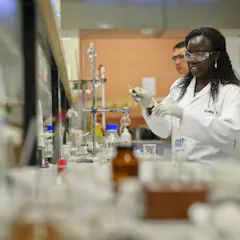
Africa has deep-rooted problems: poverty, disease, corruption and war. Could these be solved through mathematical science?

Evidence-based solutions to our systemic dilemmas won’t be conjured out of thin air. Universities, governments and businesses all have to work together.
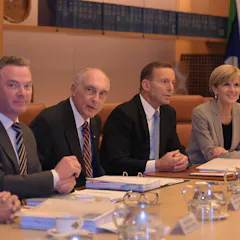
Analysis of the mindsets and responses of thousands of senior leaders tells us only about 7% are likely to have the right stuff to lead effective government responses to wicked problems.
Top contributors
-

Professor in Operations Management, Trinity College Dublin
-
Professor of International Management & Sustainability, King's College London; Independent Social Research Foundation
-
Professor of Strategy and Innovation, University of Sussex Business School, University of Sussex
-
Marie-Curie Research Fellow, Institut Català de Recerca de l'Aigua (ICRA)
-
Professor in English Language and Literature, University of Sheffield
-
Executive Director: Gauteng City-Region Observatory, University of the Witwatersrand
-
Educational Consultant
-
Distinguished Professor of Philosophy of Education, Stellenbosch University
-
Director and Niels Bohr Chair, Perimeter Institute for Theoretical Physics
-
Researcher in Complex Social Problems, Universidade de São Paulo (USP)
-
Professor of Cognitive Sciences, University of Central Florida
-
Assistant professor of Indigenous Literatures, Department of English Language and Literatures, University of British Columbia
-
Associate Professor of Teaching, Sustainable Food Systems, University of British Columbia
-
Canada Research Chair in Indigenous Peoples’ Well-Being and an Associate Professor in the Department of Educational Studies, University of British Columbia
-
Associate professor, University of British Columbia