
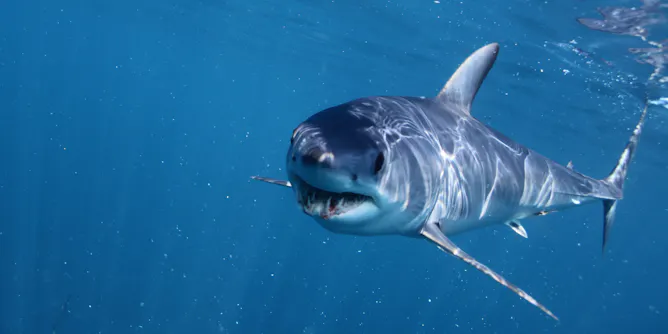
If you do see a shark this summer, don’t panic – you just got lucky.
Articles on White sharks
Displaying 21 - 40 of 40 articles
South Africa’s white shark population faced a rapid decline in the last generation. More concerning is that their numbers might already be too low to ensure their survival.
Independent tests show that a wearable electric deterrent called a Shark Shield does indeed seem to live up to its name.
The best way to guard against shark attacks is to study them, not kill them. Because while the alleged “shark boom” almost certainly not real, the more we know about sharks, the better.

Despite low shark attack numbers, many people are afraid of being bitten. There are, however, ways to steer clear of these creatures.
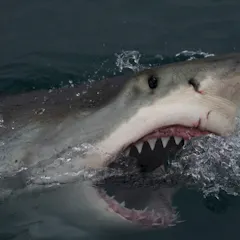
South African sharks have low levels of genetic diversity. This could pose a threat to their survival as a species.
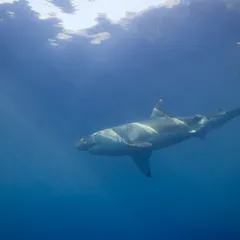
More research may not necessarily prove to be the answer to shark attacks. Instead, we should look at programs that are already working, such as aerial patrols.
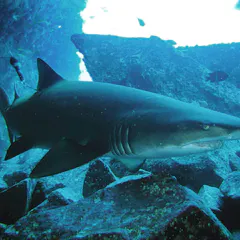
Calls are growing louder for a shark cull in New South Wales. But like in Western Australia, which infamously experimented with culling last year, a NSW cull would harm sharks while failing to protect people.
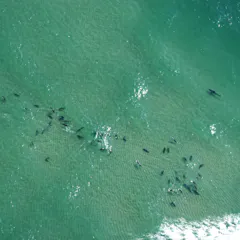
A rash of white shark attacks this summer points to a rebounding population in the US – a sign of healthier oceans and the need to coexist with this apex predator.
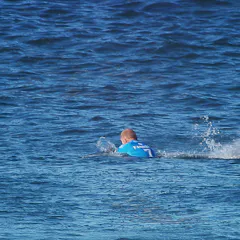
Although frightening, the footage of Mick Fanning at Jeffreys Bay is a reminder that sharks are present in the oceans, and that the vast majority of interactions between people and sharks end without fatality or injury.

When I used to tell people that I did my PhD on the politics of shark attacks, they would ask, “Is there a politics to shark attacks?” Nobody asks that any more. Now they just say, “Oh, like in Western…
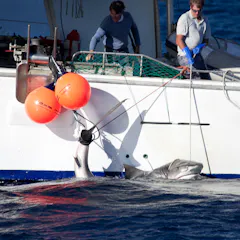
Western Australia’s controversial shark drum line policy will come to an end, after the state’s Environmental Protection Agency recommended that it not be continued this summer. WA EPA chairman Paul Vogel…
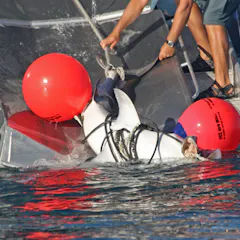
As Western Australia’s Environmental Protection Authority and the federal environment minister Greg Hunt mull the question of whether to let the state government resume its controversial shark cull next…
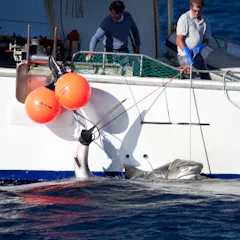
Perhaps predictably, the Western Australian government has claimed that its shark drum line season, which ended last week, was a success. In a media statement, fisheries minister Ken Baston said that “172…

The end of April marks the end of Western Australia’s shark cull – for now at least. Since January 25, dozens of sharks (the WA government has not yet released official figures) have been killed off popular…
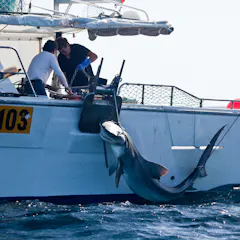
One of the most common justifications for Western Australia’s shark cull is the longstanding use of baited hooks - or drum lines - in regions such as Queensland. Two key questions need answering. First…
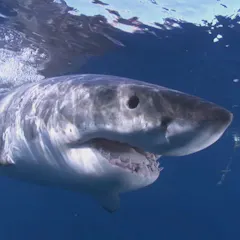
An unprecedented cluster of white shark bite fatalities in Western Australia over the past decade has led the state government to enact a policy of culling large sharks in coastal waters off Perth and…
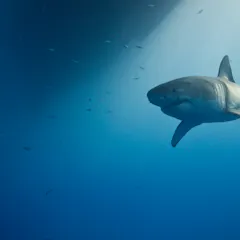
Dozens of sharks have reportedly been caught since Western Australia’s “catch-and-kill” drum line program began two weeks ago. Firm numbers are not available given the WA government’s unwillingness to…
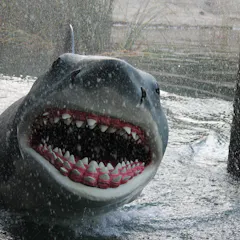
Each summer, for several years in a row, a tabloid would send me a picture of a shark fin photographed off Cornwall and ask if it was a Great White. “No,” I would patiently explain, “it is a harmless basking…
The energy and food intake needs of white sharks are much higher than previously thought. White sharks were previously believed…
Top contributors
-

Wen Family Chair in Conservation, The University of Western Australia
-
Senior Lecturer in Geography, University of Wollongong
-
Professor of Marine Fisheries Ecology, Macquarie University
-
Marine Biologist, South African National Parks (SANParks); Honorary Research Associate, South African Institute for Aquatic Biodiversity (SAIAB), South African Institute for Aquatic Biodiversity
-
Associate Professor of Public Policy, University of Sydney
-
Postdoctoral Researcher in management and conservation of white sharks, Stellenbosch University
-
Professor, College of Science and Engineering, Flinders University
-
Shark biologist, The University of Western Australia
-
Director, Florida Program for Shark Research, University of Florida
-
Director, Florida Program for Shark Research and Coordinator of Museum Operations, Florida Museum of Natural History, University of Florida
-
Associate Professor of Environmental Science, Bond University
-
Associate Professor, School of Life and Environmental Sciences, Deakin University
-
Postdoctoral Fellow, School of Animal Biology, The University of Western Australia
-
Senior Research Fellow, Ocean and Earth Science, University of Southampton
-
Winthrop Professor/WA Premier's Research Fellow, School of Biological Sciences and the Oceans Institute, The University of Western Australia