
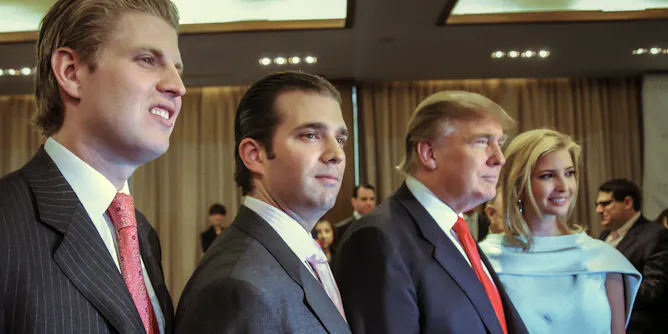
Publicly traded companies must have independent oversight and make regular financial and other disclosures. The Trump Organization has none of these safeguards.
Articles on Wall Street
Displaying 21 - 40 of 79 articles
Both Spacs and bitcoin went rocketing up in price only to come crashing back down. And that’s not all they have in common.
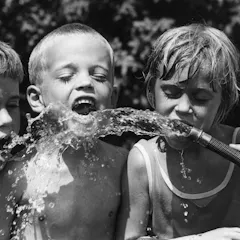
The world’s first futures market for water launched in California in December. Two commodities experts explain how it works, what the potential problems are and why there’s no reason to freak out.

Robinhood’s trading app uses features commonly found in video games and casinos to make investing more fun, which also obscures the real risks involved.

A finance scholar explains what an IPO is, how it works and a new way companies are going public that’s winning the hearts of WallStreetBets Redditors.

Geographers are documenting slave-built infrastructure, from railroads to ports, in use today. Such work could influence the reparations debate by showing how slavery still props up the US economy.
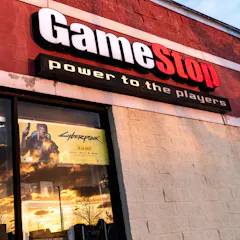
It’s up to the courts to draw a line between free speech and illegal market manipulation. And the Supreme Court has never ruled on this specific question.
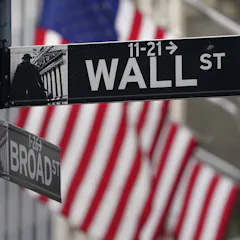
WallStreetBets is now reshaping financial markets: Non-professional market participants, or retail investors, are doing the work traditionally performed by financial advisers and analysts.
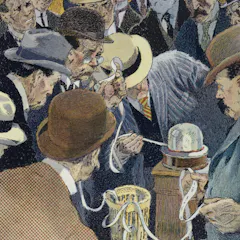
The gleeful manipulation of GameStop’s share price is not the first time amateur investors have created a legitimacy crisis on Wall Street.
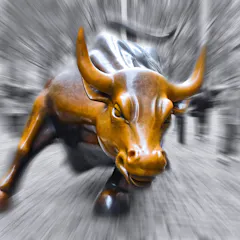
The question is if and how the regulators can respond.
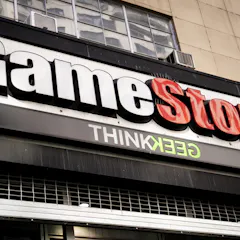
The easy answer as to why trading was halted relates to the stock’s ‘volatility’ after its dramatic climb in recent weeks. But it could also mean something fishy is going on.
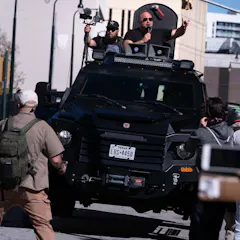
Much as the South rejected President Lincoln’s election with a massive armed uprising, could President Trump’s many supporters rise up and overthrow a Biden-led government?
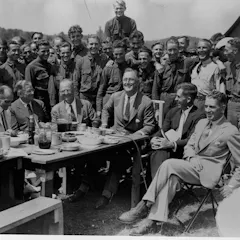
Similarities between the 1930s and today are hard to ignore, but Franklin D. Roosevelt’s New Deal teaches us that several developments have to coincide to generate a lasting social safety net.
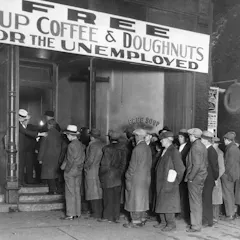
While the Great Depression reduced inequality and closed the racial wealth gap, the Great Recession of 2009 did the opposite.
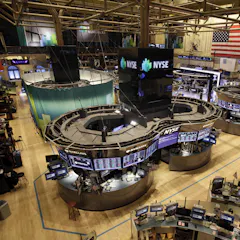
Plunging stocks have triggered rarely used ‘circuit breakers’ that temporarily halt trading. A finance scholar explains what they are and the costs of shutting down markets.
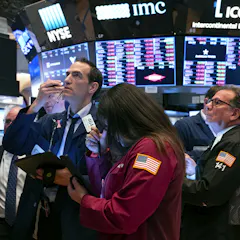
The Fed slashed interest rates to near zero but, just as in 2008, it will require unprecedented action to calm panicky markets.
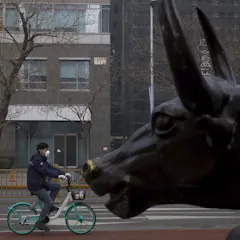
An economist explains how a virus like COVID-19 could disrupt the US economy – and why it’s too soon to freak out just yet.
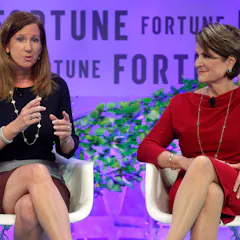
Women occupy just 5% of the top jobs at companies in the S&P 500. Research shows the problem to be even worse.
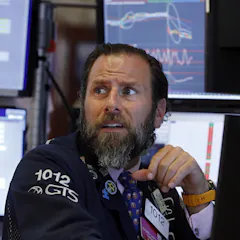
A growing number of investors, policymakers and others say the US economy may be at risk of spiraling downward. A finance professor explains how to ride it out.
Thanks to new trading technology, sudden steep falls may become more common. A new program uses the principles of fluid dynamics to try to predict crashes before they happen.
Top contributors
-

Professor of Law, St. Mary's University
-
Professor of Finance and Fred T. Tattersall Excellence in Finance Research Chair, West Virginia University
-
Associate Professor of Public Administration, West Virginia University
-
Professor of Accountancy, University of Notre Dame
-
Part-Time Professor of Economics, The New School
-
Assistant Department Chair and Professor of Finance, West Virginia University
-
Associate Professor of Economics, Skidmore College
-
-
David W. Ichel Distinguished Professor of Law, Duke University; Institute for Humane Studies
-
Associate Professor of Business, Boston University
-
Adjunct Professor, University of California, Los Angeles
-
Lecturer in Urban Geography, University of Sheffield
-
Ph.D. Candidate in Mathematics, University of Michigan
-
Professor of Accounting and Finance, Brock University
-
Senior Lecturer in Finance, University of Bristol