
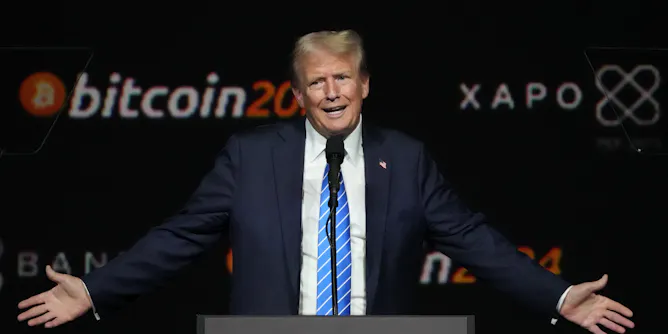
The crypto industry scored a series of wins in 2025, only to see its top legislative goal fail in 2026.
Articles on US Securities and Exchange Commission
Displaying 1 - 20 of 32 articles

An overnight update to Counter-Strike 2 erased billions of dollars in valuable digital assets that players had accumulated. The law gives them almost no recourse.
Switching from quarterly to semiannual reporting may have merit, but as with any decision affecting a wide range of stakeholders, some stand to lose while others may gain.
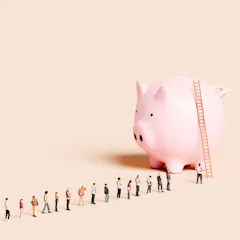
The law requires crowdfunded startups to report back to investors. The reality? Most don’t.
The US economy has always been a mix of government regulation and market forces. The balance between those has shifted over time, but never has one side or the other been substantively removed.
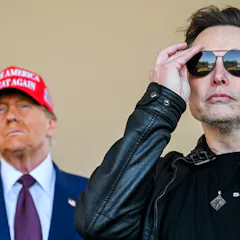
Granting tech leaders direct control over government functions fundamentally alters the relationship between private power and public governance.
Donors often try to conceal their involvement in politics, and campaigns try to hide what they spend their money on.
By injecting hidden risk into the financial statements of the listed companies monitored by the Securities and Exchange Commission, the Supreme Court may have set the stage for the next recession.
The 6-3 Supreme Court ruling could create new risks for unwary investors – and a new reason for them to invest in index funds.

Climate disclosure rules are meant to help investors understand their risks, but they come with costs for companies, as a finance scholar explains.
Executives and other high-level inside traders at US companies with global sales earned about three times as much in a month as the average investor, a new study found.
US regulators are beginning bringing more enforcement actions against crypto firms, with the latest targeting top exchange Binance.
A review of S&P 500 companies finds carbon disclosure doesn’t necessarily mean emissions fall.

Public companies have many governance safeguards that private ones lack, such as independent oversight and transparency.

Some investors want publicly traded companies to disclose their full climate impact, including emissions from their supply chains and product use.
A bipartisan group of US lawmakers is pushing for a ban on active trading by members of Congress following accusations that some of their colleagues may have engaged in insider trading.
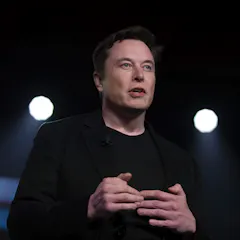
Giving away stock that has soared and that the donor has owned for at least a year makes the biggest dent in what share the IRS takes.
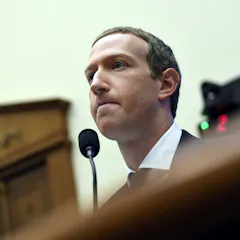
Recent reporting suggests Facebook and CEO Mark Zuckerberg presented different versions of the company’s policies in private and public. That could draw the scrutiny of regulators.
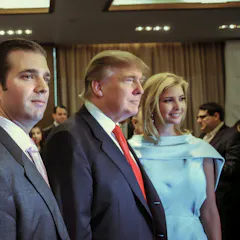
Publicly traded companies must have independent oversight and make regular financial and other disclosures. The Trump Organization has none of these safeguards.
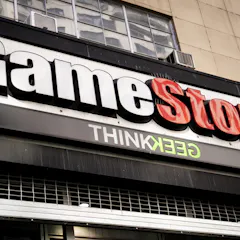
The easy answer as to why trading was halted relates to the stock’s ‘volatility’ after its dramatic climb in recent weeks. But it could also mean something fishy is going on.
Top contributors
-

Professor of Law, St. Mary's University
-
Associate Professor of Public Administration, West Virginia University
-
Distinguished Emeritus Professor of Management, University of California, Davis
-
Associate Professor of Finance, Mississippi State University
-
-
Director, Energy, Climate Justice, and Sustainability Lab, and Research Professor, New York University; Tufts University
-
Associate Professor of International Business and Strategy at the D'Amore-McKim School of Business, Northeastern University
-
Assistant Professor of Finance, University of Florida
-
Lecturer/Assistant Professor in Management Information Systems, University College Dublin
-
Assistant Professor of Business Law and Ethics in the Kelley School of Business, Indiana University
-
Associate Professor of Economics, Skidmore College
-
Professor of Finance and Fred T. Tattersall Excellence in Finance Research Chair, West Virginia University
-
Senior Lecturer in International Relations, The University of Melbourne
-
Professor of Finance and Distinguished Professor of Applied Investments, Appalachian State University
-
Associate Professor of Finance, University of Oregon