
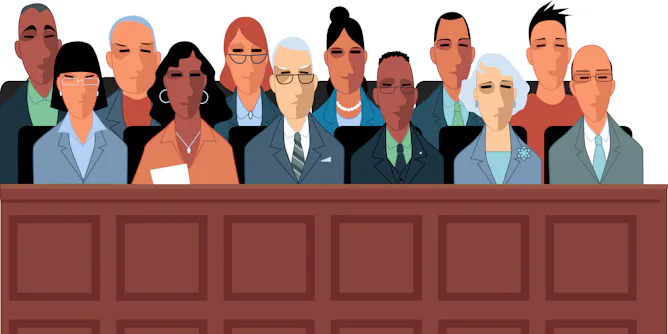
In many places across the US, law prohibits people with felony convictions to serve on juries. Research puts the thinking behind these laws to the test.
Articles on Voting rights
Displaying 101 - 113 of 113 articles
While the US sends observers around the world to monitor elections, few will be present during the 2018 midterms in the US.
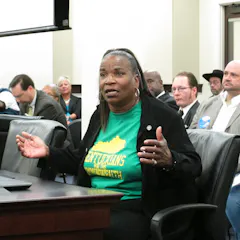
New research shows that when ex-offenders are told they’re able to vote, their attitudes about democracy and justice improve. A November ballot measure in Florida hangs in the balance.

A legal loophole could grant computer systems many legal rights people have – threatening human rights and dignity and setting up some real legal and moral problems.
Transgender voting rights could be undermined in two broad ways during the 2018 midterm elections.
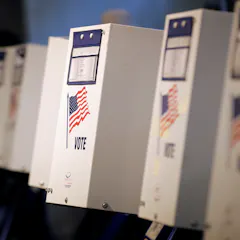
More than 6 million US citizens can’t vote because they’ve been convicted of a felony. But states are beginning to change their laws. Will it make a difference?
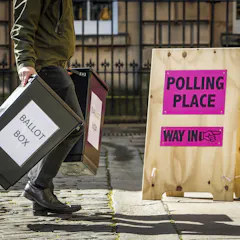
As the American colonists famously said: ‘No taxation without representation.’

With a year before Election Day 2018, election integrity depends on ensuring fairness and access for American voters. Foreign tampering is a real but less serious concern.
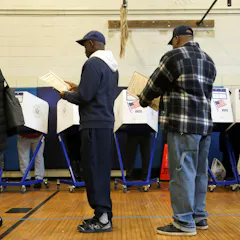
There are good reasons to be concerned about the procedures used for voter registration in many countries, including many long-established democracies.
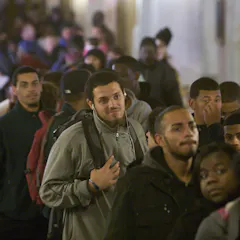
Republicans want voter ID laws. Democrats want more access to the ballot. Why do we have to choose?
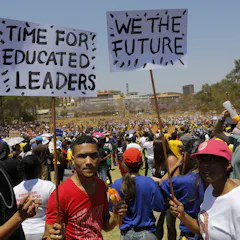
South Africa’s university students have shown that they can have an impact on the political landscape. That’s why it’s so important that they exercise their right to vote.
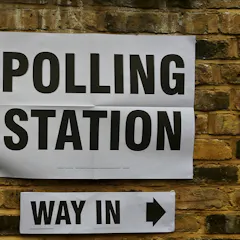
British citizens who have lived outside the UK for 15 years or more won’t have a say.
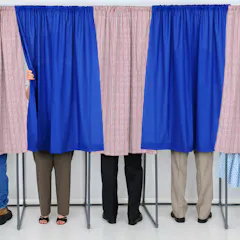
Who gets to vote? As Campaign 2016 looms, Democrats and Republicans are clashing on just who gets to exercise this fundamental right in a democracy.
Top contributors
-

Professor of Law, University of Richmond
-
Assistant Professor of Political Science, University of Pittsburgh
-
William Nelson Cromwell Professor of Jurisprudence and Political Science, Amherst College
-
Professor of Political Science, Valdosta State University
-
Professor of History, Texas A&M University
-
Professor of Leadership Studies, University of Richmond
-
Assistant professor of politics and policy, Simmons University
-
Research Associate, Idaho Policy Institute, Boise State University
-
ARC Laureate Fellow, Professor of Government and International Relations at the University of Sydney and McGuire Lecturer in Comparative Politics, Harvard Kennedy School
-
C.O. Johnson Distinguished Professor of Political Science, Washington State University
-
Derek H. Alderman is a Friend of The Conversation.
Chancellor's Professor of Geography, University of Tennessee
-
Professor of Geography and Senior Research Associate in the Rock Ethics Institute, Penn State
-
Professor of Constitutional Law, New York University
-
Associate Professor of Social Work, University of Tennessee
-
Graduate Student in History, Northwestern University