
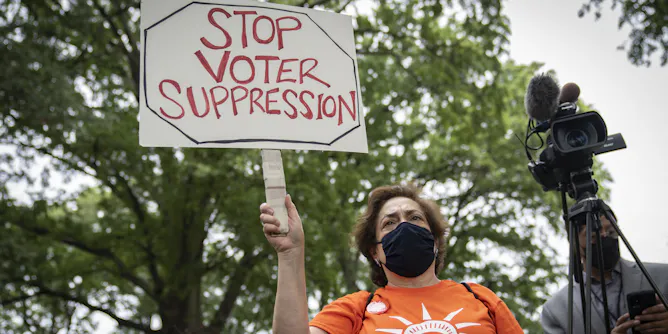
Not all new laws labeled “voter suppression laws” are, in fact, voter suppression laws. An election law expert takes a closer look.
Articles on Voter suppression
Displaying 21 - 39 of 39 articles
With Democratic voters already packed into a small number of districts, reducing voter turnout won’t really lower the chances of Democrats winning – or help Republicans win.
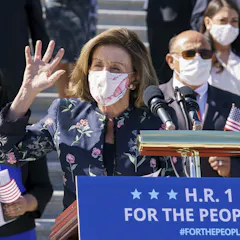
As GOP-run statehouses across the country tighten voting restrictions, a bill in Congress would, its Democratic sponsors say, undo more than 15 years of moves to make voting harder.
Democracy only works well when citizens participate in the democratic process and participate equally. But in the United States, lack of trust is eroding democracy’s promise.
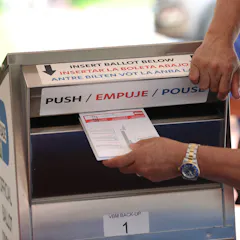
Lawsuits are being argued in courthouses across the country over the conduct of the election. That could lead to the public losing confidence in the election’s legitimacy.
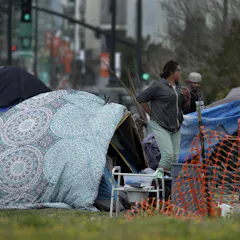
Debt-free property ownership is no longer a requirement for voting rights, but the idea remains that a person must have a residence in a particular community to be allowed to vote.
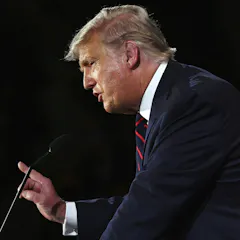
The 2020 presidential election will be the first in nearly 40 years conducted without protections from a court order that forbid the GOP from using voter intimidation at the polls.
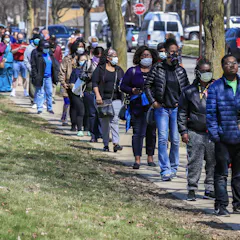
The Voting Rights Act was intended to prevent voter suppression in states with histories of discrimination. But states are finding other ways to make it difficult for people of colour to vote.
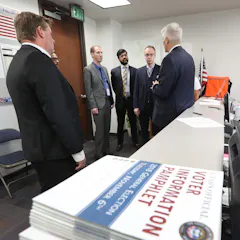
Many US states forbid foreign observers to monitor their elections, but as the 2020 presidential election nears, a poll finds broad public support for international election observers.
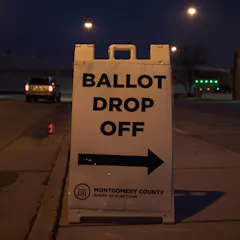
Republicans are free again to recruit poll watchers – four decades after ‘ballot security’ operations helped steer New Jersey’s 1981 gubernatorial race toward their candidate.
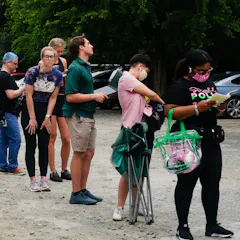
Voters across the nation should prepare for similar circumstances in their communities – but there is still time for them to demand better from their officials.
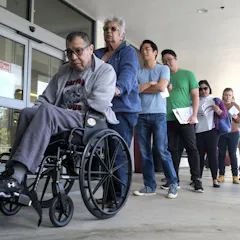
The modern poll tax isn’t paid in money, but in time – how long it takes a person to get to a polling place, and, once there, how long it takes for them to actually cast their ballot.
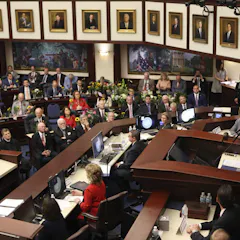
This state law is leaving up to a million people unable to participate in elections who might have gotten relief through an amendment voters approved. Critics call it a modern-day poll tax.
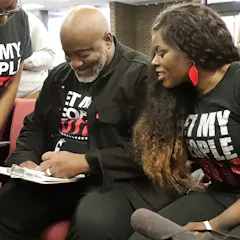
Legislation requiring that all criminal debt associated with a citizen’s conviction be repaid would leave thousands of people unable to cast ballots.
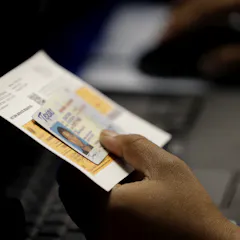
States may have passed these laws with the aim of reducing turnout. But new evidence suggests that they have a minimal or nonexistent effect.
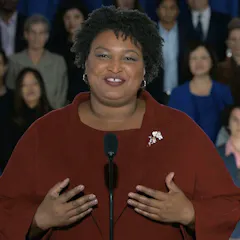
The South is changing, with more Asian and Latino immigrants moving in and diversifying a region that was once black and white. Stacey Abrams knows that Democrats can win these rural voters.
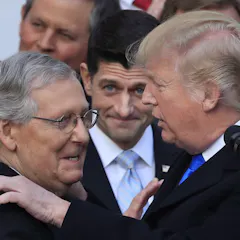
Donald Trump may have executed a hostile takeover of the Republican party, but the GOP has been laying the groundwork for decades.
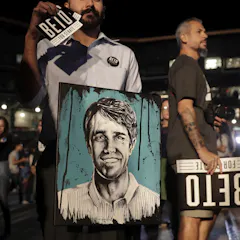
Record high Latino participation shows this growing voter segment will turn out for parties and politicians who tackle issues they care about. That’s a big lesson for 2020 – and not just for Dems.
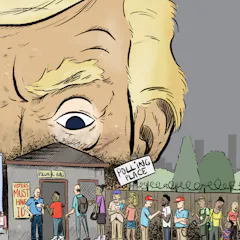
The Democrats are favoured to win control of the US House, but it may be closer than expected.
Top contributors
-

Professor of Political Science, Valdosta State University
-
Assistant Professor of Political Science, University of Pittsburgh
-
Associate Professor of History and American Studies, Rutgers University - Newark
-
Professor of Law, University of Notre Dame
-
Assistant Professor of Journalism and Emerging Media Studies, Boston University
-
Derek H. Alderman is a Friend of The Conversation.
Chancellor's Professor of Geography, University of Tennessee
-
Professor in U.S. Politics and U.S. Foreign Relations, United States Studies Centre,, University of Sydney
-
Professor of Political Science, University of Florida
-
Professor, School of Economics, The University of Queensland
-
Professor Emeritus of Political Studies and History, Queen's University, Ontario
-
Vice Provost for Graduate Studies and Dean of the Graduate Division, Professor of Education, University of California, Berkeley
-
William Nelson Cromwell Professor of Jurisprudence and Political Science, Amherst College
-
PhD Student in Department of Political Science, Penn State
-
York Research Chair and Associate Professor, York University, Canada
-
Associate Lecturer in English and Writing, University of Sydney