

Subject choice fairly early on is linked to later political preferences.
Articles on Voter behaviour
Displaying 1 - 20 of 36 articles

More than 60% of New Zealanders would like the government to do more to address climate change. But this won’t necessarily change how they vote.
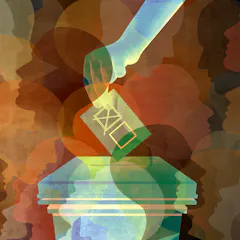
People are generally more prone to activating the parts of their brain associated with fear than those linked to rational decision making.

Neuropolitics is the science of using your brain activity to predict your political preferences. You might not like it but it’s already in use.

Labour’s Muslim vote is concentrated in safe seats – but with an electoral mountain to climb, no contest can be taken for granted.
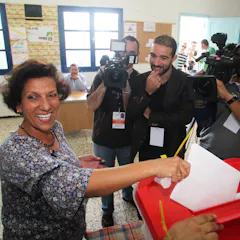
Voting patterns over decades show how hard it is to maintain enthusiasm for democracy.

Fewer people are being ‘socialised’ into Conservative voting since the dominance of New Labour in the 1990s.

More and more people are saying they don’t trust the news or can’t face engaging with it – and that appears to have political implications.
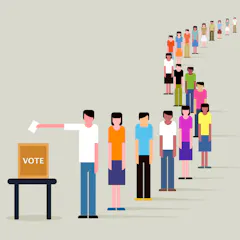
Research has long suggested that women shift left on a generational basis, but we think something else is happening here.
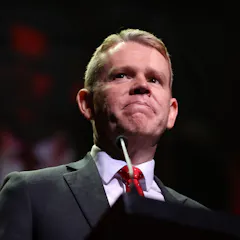
The election campaign’s first live TV debate offered a glimpse of the leadership challenge faced by Labour’s Chris Hipkins – to connect with voter’s values and interests, not just their current mood.

The transactional nature of politics reduces opportunities for debate and dialogue between elected officials and their constituents.
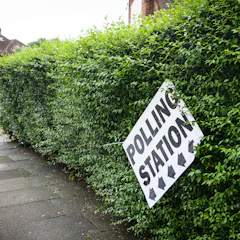
Across the world, people have become less likely to take part in elections in recent decades.

Research shows shared traumas drive political preferences in certain directions.
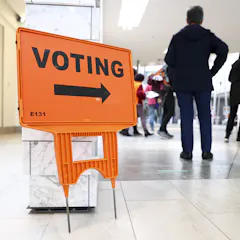
If the pattern on election night holds, 2020 will be the most dramatic election in 100 years in terms of votes shifting between major parties.
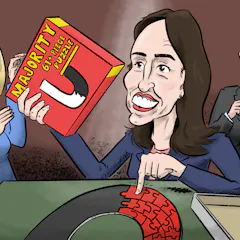
Jacinda Ardern and Labour are returned to power in a landslide, making New Zealand political history in the process.
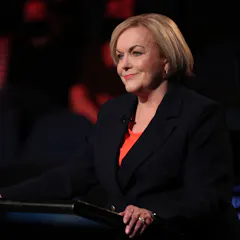
As they prepare for the final TV leaders’ debate, Jacinda Ardern and Judith Collins share the same challenge: overcoming voter perceptions based on masculine definitions of leadership.
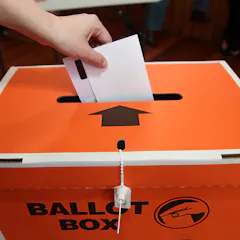
Changing the voting age from 18 would allow more young citizens to make voting a habit before they lose interest in politics.
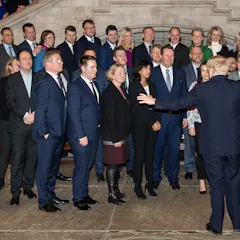
Participants were asked to choose between white and ethnic minority candidates.
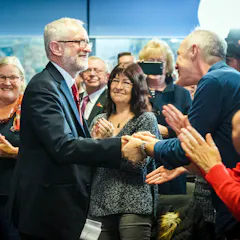
The British electorate is volatile but one party has to benefit more than the others for that to actually affect the outcome.
Study shows voters struggle to take media bias into account – even when they are explicitely told it’s there.
Top contributors
-

Professor, Department of Government, University of Essex
-
Senior Lecturer in Politics, University of Manchester
-
Associate Professor, School of Management and Marketing Te Kahui Kahurangi, Te Kunenga ki Pūrehuroa – Massey University
-
Senior Research Fellow, Centre for European Studies, Australian National University
-
Professor of Political Science, Te Herenga Waka — Victoria University of Wellington
-
Lecturer in Politics, University of Manchester
-
Professor of Political Science and Public Policy, University of Southampton
-
Research Fellow (Henry Jackson Society - Centre on Radicalisation & Terrorism), Royal Holloway, University of London
-
Researcher, University of Oxford
-
125th Anniversary Chair and Professor of Politics and Public Policy at the University of Birmingham, University of Sheffield
-
Director of the Global Institute for Women’s Leadership and Professor of Politics, King's College London
-
Senior Lecturer in Politics, University of Canterbury
-
Professor of Politics, University of Canterbury
-
Professor and Chair in Political and Social Change, European University Institute
-
Associate Professor in Clinical Psychology and Neuropsychology, Trinity College Dublin