

Rather than focusing only on what men should stop doing, we should also pay greater attention to the kinds of men we hope they become.
Articles on Violence prevention
Displaying all articles

Building relationships and creating equitable opportunities are critical to engaging Detroit’s young people in safe and positive activities.

Women are at highest risk of being hurt or killed after separating from a potentially violent partner, but interventions such as taking away the former partner’s firearms can protect them.

Lethal domestic violence is persistent, despite a statewide decline in overall homicides.

The fines of $250 for a first offense and $500 for a second hit low-income families the hardest.

Juvenile incarceration creates worse outcomes for young people and costs more than community-based treatment. So why does Philadelphia spend so much on it?

The results of a landmark longitudinal study into domestic violence paint a grim picture, but they also point to key solutions, especially before men offend.

Primary prevention is aimed at addressing the underlying drivers of violence so it never occurs. But many interventions also aim to reduce and respond to violence.
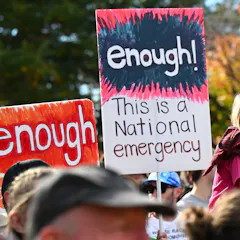
National Cabinet unveiled a $4.7 billion partnership, starting July 1 2025, to address domestic violence. It’s funding that’s sorely needed and enthusiastically welcomed, but needed immediately.

Committing resources to violence prevention and services for victims/survivors is necessary to meet current and future needs.

When violence prevention policies and programs don’t reflect how it unfolds in today’s networked and digitally-connected world, they cannot be effective.

Publishing the faces and names of people accused of violence isn’t the best way of getting them to change their behaviour.

Some countries closer to achieving gender equality still have high rates of domestic violence, but look a bit closer and you’ll see the full story.

Survivors of gender-based abuse can often feel retraumatized by the justice system. But simple acts of validation and support can make a meaningful difference and restore a sense of agency.

While many initially balk at violence prevention programs aimed at boys and men, these programs reduce the likelihood of abuse and improve the chances of bystanders intervening on behalf of victims.

A new community risk assessment tool allows post-secondary institutions to make evidence-based decisions about their policies and procedures.

Kids were more likely to tell an adult and less likely to touch or hold a handgun that they discovered if they’d recently watched a short video about gun safety.

Experience of any form of partner violence increases the risk of developing chronic illnesses. Healthcare professionals need to recognise family abuse as a health issue.

School violence prevention requires professionals – counselors, psychologists and social workers – who know how to create an emotionally safe environment. Those staffers are in very short supply.

Gun violence has killed hundreds of Americans, including kids, this summer. There are proven ways to bring peace to city streets, says an expert in violence prevention – but someone has to pay for it.
Top contributors
-

Professor of Family and Sexual Violence, RMIT University
-
Postdoctoral Fellow at The Injury and Violence Prevention Program, Virginia Commonwealth University
-
Assistant Professor, School of Social Work, University of Windsor
-
PhD Candidate in Sociology, Dalhousie University
-
Research Fellow, Australian National University
-
Professor of Educational Psychology, University of Connecticut
-
Professor of Communication, The Ohio State University
-
Professor, Department of Psychology, MacEwan University
-
Psychologist and Faculty Member, Toronto Metropolitan University
-
Professor, Department of Criminology, Saint Mary’s University
-
Research Fellow, La Trobe University
-
Associate Professor. Department of Human Sciences, The Ohio State University
-
Associate Professor of School Psychology, Northeastern University
-
Professor in Violence Prevention and Mental Health Promotion, University of Auckland, Waipapa Taumata Rau
-
Professor, Family Studies, Mount Saint Vincent University