
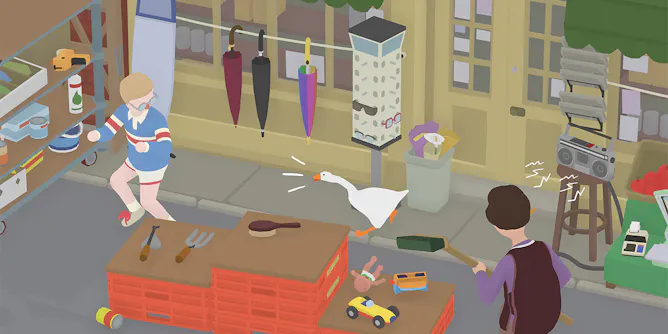
Australia’s video game developers are struggling to find funding in a structure that prioritises profit over artistry.
Articles on Videogame industry
Displaying all articles
China could be considered the sleeping lion awakening in the global gaming industry. And there’s plenty of ‘soft power’ to be exerted through its ventures.

People form as strong attachments to gaming universes and can mourn their loss as keenly as physical places.
The recent acquisition is the largest in video game history. Here’s what it will mean for players, developers and the future of video gaming

Sexual harassment and discrimination in gaming and tech are not inevitable or permanent, write experts in the field. The solutions are positive community standards and women in power.

A former video game executive offers advice on how to land a job in the industry.

The game that launched today’s massive video game industry was not a roaring success when it debuted 52 years ago. The oft-told story of why turns out to be off the mark.

Sexual harassment and discrimination in gaming and tech is not inevitable or permanent, write experts in the field. The solutions are positive community standards and women in power.

Video games are a fun diversion, but they can also build connections and help address feelings of isolation and loneliness.

Creators of video game sound scores have more in common with classical composers than you might think - and they create dynamic sounds and music that cleverly respond to play.
The Australian Classification Board has “refused classification” for at least four videogames in recent months. Such bans show the introduction of an R18+ classification was not a win for players.

While they may talk about ‘free speech,’ businesses make decisions about their content based on a very different set of principles.
Readers read, viewers watch and players do. That level of engagement gives games real power to influence people both within and outside the play itself.

People want video games and interactive experiences that help them explore deep and meaningful themes, such as creating family, valuing diversity and living responsibly.
Videogaming’s rich cultural history is already being lost. We need to do more to save it.
How did we go from videogames played in bedrooms to watching live in front of an audience of millions?

Parents could certainly do more to be aware of what their children are playing. But threatening letters are unlikely to help.
Are video games societal microcosms wherein deviant behaviour flourishes and spills into “real life”? Or are they just harmless fun in which nobody really gets hurt? This endless debate usually concerns…
Top contributors
-

Director of Public Interest Technology and Stuart Rice Honorary Research Professor, UMass Amherst
-
Assistant Professor of Media Studies/Game Studies, University of Oregon
-
Associate Professor, Queensland University of Technology
-
Assistant Professor of Computer Science and Engineering, University of South Florida
-
Assistant Professor of Sport Management, Syracuse University
-
Professor of Computational Media, University of California, Santa Cruz
-
Barrett Hazeltine Professor of the Practice of Engineering, Brown University
-
Director of the International Gaming Research Unit and Professor of Behavioural Addiction, Nottingham Trent University
-
Associate Professor, Game Studies. Department of Digital Humanities., Brock University
-
Associate Professor of Game Design, Texas A&M University
-
Associate Professor in Psychology, University of East Anglia
-
Master Lecturer Economics and Labour relations, Laurentian University
-
Mathematics, Computer Science, Science, Engineering, Architecture, Laurentian University
-
Professor of Media
-
Lecturer in International Business, University of the Sunshine Coast