
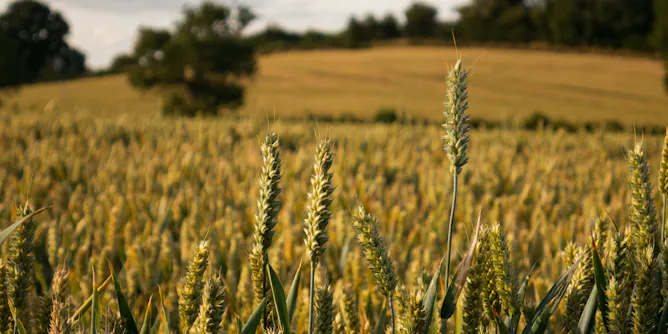
The amount of land occupied by a farming system does not necessarily reflect its importance to our food supply.
Articles on Vertical farming
Displaying all articles

Nature-centric housing solutions already exist in places Brazil, Italy and the Netherlands. The challenge is how to build these at scale and adapt them to the UK.

The world’s largest indoor vertical farm closed its doors in late 2024, capping a bad run for this fledgling sector.
The world is facing one of the century’s biggest challenges: How to nutritiously feed the growing population, address climate change and not destroy the ecosystems on which we all depend for life.
We all need to eat. Experts imagine how the next agricultural revolution can feed us while fighting climate change and habitat destruction, instead of accelerating it.

Indoor plant factories have high energy costs since LEDs replace the sunlight outdoor plants get for free. Scientists found a way to dial back how much light is needed by breaking it into tiny bursts.
CC BY-NC-ND5.65 MB (download)
Vertical farms have the potential to feed many on the African continent.
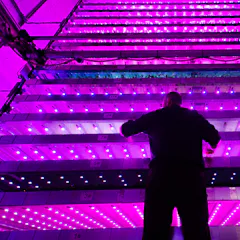
Vertical farms grow more food but use much more energy, so let’s consider other kinds of urban agriculture.
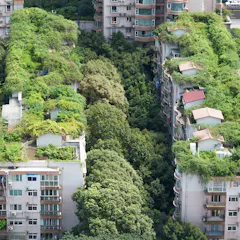
Dense, high buildings limit the space available for urban greenery. But imaginative projects that involve the community can ensure nature and the city go hand in hand.
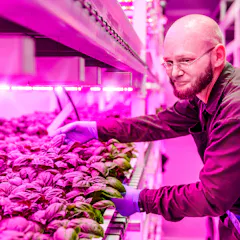
The challenges of growing enough food to feed the world have grown more severe in the 21st century. We need to feed more people with limited agricultural land and resources. We need to make better use…
Top contributors
-

Assistant Professor in Systems Biology, University of Nottingham
-
Associate professor, UNSW
-
Associate Professor of Crop Science, University of Nottingham
-
Research Fellow, School of Natural and Built Environment, Queen's University Belfast
-
Professor of Horticultural Sciences and Plant Molecular and Cellular Biology, University of Florida
-
Professor and Dean of The Ontario Agricultural College, University of Guelph
-
Director, Food and Agriculture Institute, University of The Fraser Valley
-
Associate Professor, Department of Entomology; African-American Studies, University of Illinois Urbana-Champaign
-
Director of the Arrell Food Institute and Professor in the Dept. of Geography, Environment and Geomatics, University of Guelph
-
Dean of Life Sciences, UCL
-
Professor of Applied Ecology, University of Reading
-
Associate Head of Research and Knowledge Exchange - Reader in Plant Science, Edge Hill University