
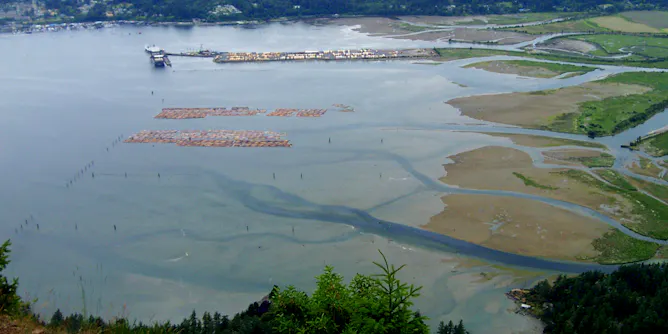
Fibreglass is denser than seawater, and it sinks quickly and accumulates in sediments where many coastal organisms live and feed.
Articles on Vancouver Island
Displaying all articles
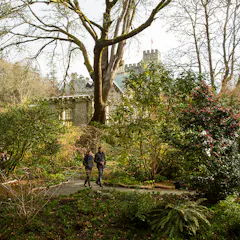
Universities must develop an intentional, place-based approach to research and teaching that’s organized around a region’s unique and specific problems.
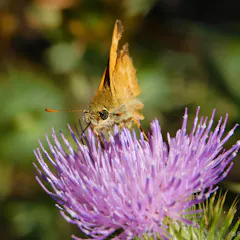
Conservation practitioners and policymakers must organize and prioritize the management of habitats around whether species are more beneficial or harmful to biodiversity.
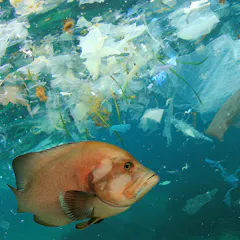
We need to advance our understanding of the effects of microplastics on aquatic ecosystems, especially on small animals at the base of food webs that might be ingesting more of these particles.

How flowering plants evolved has been a mystery, but a new fossil discovery hints at the unknown complexity of ancient plant diversity.
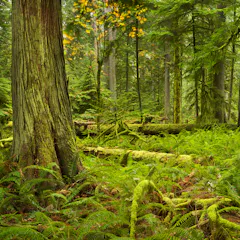
Environmental groups have protested logging of British Columbia’s old-growth rainforest for three decades. But the Fairy Creek dispute could grow into another ‘War in the Woods.’
Top contributors
-

Assistant professor, Biological Sciences, University of Manitoba
-
Postdoctoral Researcher, Department of Biological Sciences, Simon Fraser University
-
Adjunct professor, Simon Fraser University
-
Postdoctoral fellow, Department of Ecology and Evolutionary Biology, University of Toronto
-
PhD Student, Department of Biology, University of Victoria
-
Postdoctoral fellow, Marine Ecology, University of Victoria
-
Researcher, Department of Biology
-
Associate Professor of Ecology, L’Université d’Ottawa/University of Ottawa
-
Professor of Sociology, University of British Columbia
-
President and Vice-Chancellor, Royal Roads University
-
Professor, School of Environment and Sustainability, Royal Roads University