

Researchers found that most homeless people spent the money they received on rent, food and other living costs.
Articles on Vancouver
Displaying 21 - 40 of 67 articles
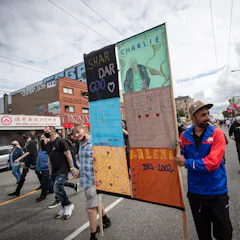
A police policy of not making arrests for simple possession is a way to essentially decriminalize personal drug use. However, confiscating drugs — even without arrests — can be harmful in many ways.

Canada should invest in sustainable transportation infrastructure to accelerate the green transition.

We need a new agreement between employers and employees in the B.C. ports that will allow both sides to enjoy the benefits of new workplace technologies.

Chan had been subjected to a pattern of abuse by senior members of the Vancouver police force starting when she was being recruited to the department.

By reflecting on the violent origins of the Canadian sugar industry, we can bring wider attention to the exploitation underpinning the history of Canadian cuisine.
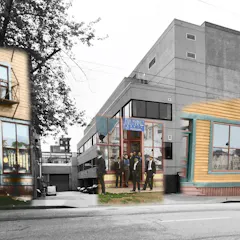
A virtual walking tour traces the route of a white mob that attacked Asian communities of Vancouver in 1907. Learning about past contexts may shed light on the recent surge in anti-Asian violence.

By starting their own entrepreneurial and developmental projects, First Nations are working toward economic prosperity for their communities and furthering reconciliation.

Cities are clearing homeless encampments, sometimes violently, without providing those who live there any alternatives. Long-term solutions are needed to help people off the streets.

About 10 million people live in Canada’s earthquake-prone zones. Yet few have practical knowledge of what to do with new early warning system alerts which aim to save lives and protect livelihoods.

As demand grows for real estate and housing prices rise, more people are being priced out of the market. Government intervention is needed to produce affordable housing and control speculation.

More housing supply doesn’t mean lower prices. If policy-makers want to make homes more affordable, they must tackle developers who drive up prices and consider taxing capital gains on homes.
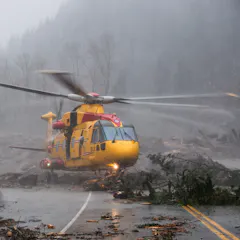
Compound climate disasters are likely to become more common as the Earth warms.
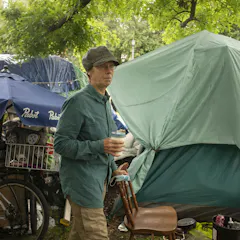
As we push for a real solution — an increase in housing supply and related supports — the encampment evictions must stop. We need to make encampments unnecessary.

Some of the worst risks of earthquakes are in a zone running from the Great Lakes to the St. Lawrence River that includes major cities like Toronto, Ottawa and Québec City.

Increasing even part-time remote work disrupts public transit revenue. Agencies need to adapt fare structures and business models to meet the changing work market.
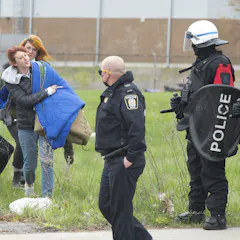
A key component in any planning around encampments is the voice of people with lived experience. It is clear the go-to response of policing is not working.
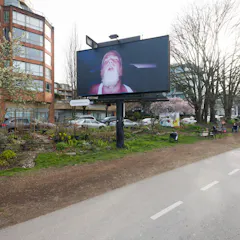
Examining parallels between Steven Shearer’s billboard images and religious figures of 17th century baroque art allow a consideration of how context is everything when it comes to reading images.
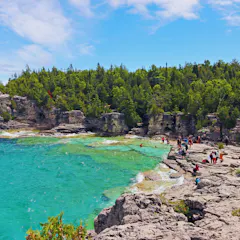
Large Canadian cities, usually major tourist destinations, have have experienced drastic declines in tourists and tourism spending while some regional hotspots have been overwhelmed with visitors.
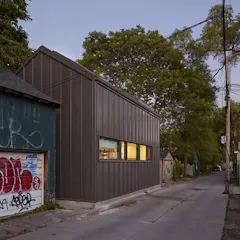
Laneway suites could increase rental stock in established neighbourhoods without affecting their character. Toronto has lagged behind other cities in Canada and North America.
Top contributors
-

Professor, Urban Studies and Professor of Resource and Environmental Management, Simon Fraser University
-
Associate Professor of Real Estate, University of Guelph
-
Professeur titulaire, Université du Québec à Montréal (UQAM)
-
Research Coordinator, University of Toronto
-
Research associate, The University of Melbourne
-
Associate Professor, Law, University of Victoria
-
Research Scientist, BC Centre on Substance Use and Assistant Professor in the Division of AIDS, Department of Medicine, University of British Columbia
-
Research Associate, British Columbia Centre on Substance Use and PhD Candidate, Faculty of Health Sciences, Simon Fraser University
-
Professor, Department of Geography, Simon Fraser University
-
Professor, School of Urban and Regional Planning; Department of Geography and Planning, Queen's University, Ontario
-
Assistant Professor, Dept of Medicine, University of British Columbia and Research Scientist with the BC Centre on Substance Use, University of British Columbia
-
Assistant Professor, Dept of Politics, Virginia Tech
-
PhD Student, Department of Sociology, University of British Columbia
-
Postdoctoral Fellow, Harvard University
-
Professor of Strategic Design, Queensland University of Technology