

New RSV tools can prevent infant hospitalizations, but access varies by province. Who is responsible for ensuring vaccine equity across Canada?
Articles on Vaccine efficacy
Displaying 1 - 20 of 27 articles

Vaccine passes have outlived their usefulness, at least for now. But as New Zealand’s Omicron wave begins to subside, other public health measures remain vitally important.

For hospitalisations and deaths, the difference between vaccinated and unvaccinated people is more dramatic. Only 5% of New Zealanders are unvaccinated, but they account for 20% of hospitalisations.
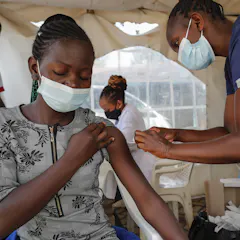
Emerging evidence suggests the highly infectious Omicron variant has the ability to escape the protection two vaccine doses offer.

For a number of reasons, as time goes on vaccines become less effective. So how do researchers calculate how well vaccines are working?
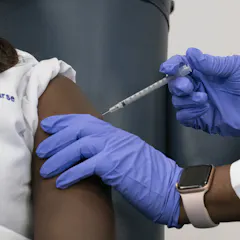
Using a robust statistical model, researchers estimate that coronavirus vaccines had prevented 140,000 deaths by May 9, 2021.

Epidemics do not require the total eradication of the disease to end.
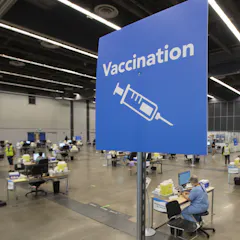
A medical student answers questions he gets asked at a COVID-19 vaccine clinic: Efficacy versus real-world effectiveness, immune response and how the mRNA vaccines compare to vaccines already in wide use.

Vaccine efficacy is usually expressed as a percentage, but what is it actually measuring? Statisticians explain what the numbers mean, and what they say about how well a vaccine can protect us.
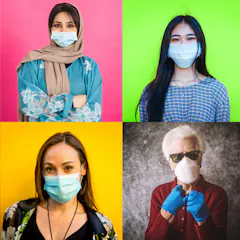
AstraZeneca, Pfizer and Moderna appear equivalent in reducing your chance of serious illness from COVID-19.

China has administered more than one billion doses of its homegrown COVID-19 vaccines, the majority of which were developed by local companies Sinovac and Sinopharm. So what do we know about them?

Even if we came up with a definition of what makes the “best” vaccine, we don’t have the luxury of choice, when vaccines are in short supply.

What does the Seychelles experience tell us about variants, vaccine efficacy and herd immunity?

An immunologist explains that you get some protection from the first dose of the mRNA vaccines but you need two to build up strong immunity, particularly to newer coronavirus variants.

With four COVID-19 vaccines approved for use in Canada, it’s time to answer FAQs about efficacy, immunity, eradication and variants.
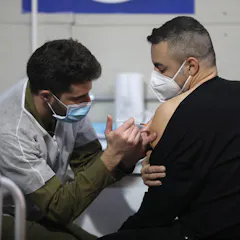
Real-world studies of vaccines aren’t directly comparable with clinical trials, but their results are still good news.
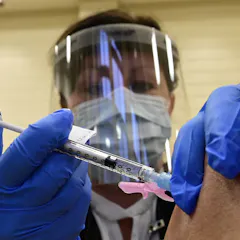
The arrival of COVID-19 vaccines has raised hope for an end to the pandemic. Hopefully that’s true, but there are variables. Here are some factors that could affect the success of the vaccine rollout.

New trial data appears to support pushing back the second dose to 12 weeks.

The vaccine is still very likely to be protective in over-65s, even if efficacy in this age group is unknown.

Whether you are predicting the outcome of an election or studying how effective a new drug is, there will always be some uncertainty. A margin of error is how statisticians measure that uncertainty.
Top contributors
-

Professor of Medicine, University of Virginia
-
Professor of Medicine, University of East Anglia
-
Research Assistant Professor of Epidemiology, University of Michigan
-
Professor of Medicine, Monash University
-
Professor of Global Biosecurity, NHMRC L3 Research Fellow, Head, Biosecurity Program, Kirby Institute, UNSW
-
Clinical researcher, Murdoch Children's Research Institute
-
Professor of Sociology, University of Colorado Denver
-
Project Lead - COVID Modeling Aotearoa; Senior Lecturer - Department of Physics, University of Auckland; Principal Investigator - Te Pūnaha Matatini, University of Auckland, Waipapa Taumata Rau
-
Early Career Research Leader, Emerging Viruses, Inflammation and Therapeutics Group, Menzies Health Institute Queensland, Griffith University
-
Associate Professor, Respiratory Medicine, University of Cambridge
-
Professor, Dalla Lana School of Public Health, University of Toronto
-
Professor, The Children's Hospital at Westmead Clinical School and Sydney Infectious Diseases Institute, University of Sydney
-
Professor of Evidence-Based Practice, Institute for Evidence-Based Healthcare, Bond University
-
Associate Professor of Viral Immunology, Department of Pathobiology, University of Guelph
-
Clinician-Scientist Trainee, Faculty of Medicine & Dentistry and Faculty of Science, University of Alberta