

New analysis answers questions about the ongoing effectiveness of COVID vaccines: How well they protect against infection, hospitalization and death months after initial doses or after a booster shot.
Articles on Vaccine effectiveness
Displaying all articles
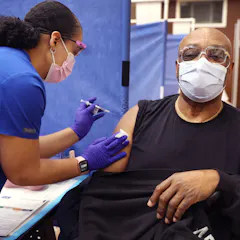
New data on the second booster suggests the older you are, the more you need it.

For a number of reasons, as time goes on vaccines become less effective. So how do researchers calculate how well vaccines are working?
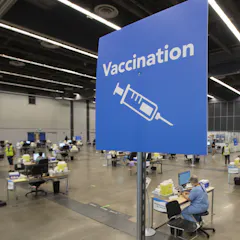
A medical student answers questions he gets asked at a COVID-19 vaccine clinic: Efficacy versus real-world effectiveness, immune response and how the mRNA vaccines compare to vaccines already in wide use.

Vaccine efficacy is usually expressed as a percentage, but what is it actually measuring? Statisticians explain what the numbers mean, and what they say about how well a vaccine can protect us.

AstraZeneca, Pfizer and Moderna appear equivalent in reducing your chance of serious illness from COVID-19.
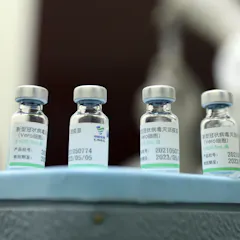
China has administered more than one billion doses of its homegrown COVID-19 vaccines, the majority of which were developed by local companies Sinovac and Sinopharm. So what do we know about them?

Even if we came up with a definition of what makes the “best” vaccine, we don’t have the luxury of choice, when vaccines are in short supply.
Top contributors
-

Professor of Behavioural Medicine, Concordia University
-
Postdoctoral researcher, The Peter Doherty Institute for Infection and Immunity
-
Clinical researcher, Murdoch Children's Research Institute
-
Professeure Associée, Département de mathématiques; Chercheure émérite, STATQAM, Université du Québec à Montréal (UQAM)
-
Clinician-Scientist Trainee, Faculty of Medicine & Dentistry and Faculty of Science, University of Alberta
-
Postdoctoral researcher, The Peter Doherty Institute for Infection and Immunity
-
Postdoctoral Fellow, Department of Health, Kinesiology, and Applied Physiology, Concordia University
-
Adjunct Professor of Epidemiology, University of Texas Health Science Center at Houston
-
Professeur de Statistique, Département de Mathématiques, Université du Québec à Montréal (UQAM)
-
Senior Principal Research Fellow; paediatrician; infectious diseases epidemiologist; vaccinologist, The University of Melbourne
-
Postdoctoral Research Fellow, Department of Health, Kinesiology, and Applied Physiology, Concordia University
-
Professor of Public Health, American University
-
Professor of Evidence-Based Practice, Institute for Evidence-Based Healthcare, Bond University
-
Professor of Medicine, Bond University