

Vaccination and testing requirements will limit the number of infected people leaving Auckland, but cases are likely to spread across the country as people travel in the lead-up to the holiday season.
Articles on Vaccination rates
Displaying 21 - 40 of 52 articles
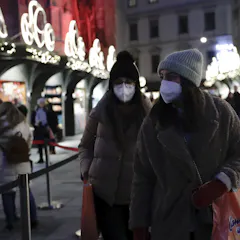
For starters, we need to start thinking of fully vaccinated as three doses, not two. But vaccines alone won’t be enough.
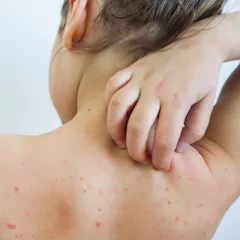
Chickenpox has largely disappeared from the public’s memory thanks to a highly effective vaccine. But the virus’s clever life cycle allows it to reappear in later adulthood in the form of shingles.
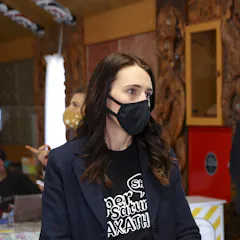
As pressure mounts to adopt the “individual armour of vaccination” before public health measures are removed, New Zealand needs to shift resources and control to locally run vaccination programmes.
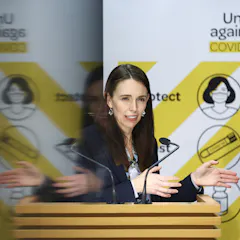
Dealing with what have been called ‘wicked’ and ‘adaptive’ problems is a huge challenge for political leaders. A ‘clumsy’ response can be inevitable – and even desirable.
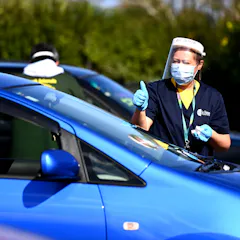
Most countries experienced serious outbreaks of COVID before widespread vaccination was available. Will it make the difference as New Zealand walks a narrow path towards opening up?

With the government decision on alert levels due today, it’s clear a more radical approach to vaccination is needed — including restrictions for eligible but unvaccinated people.
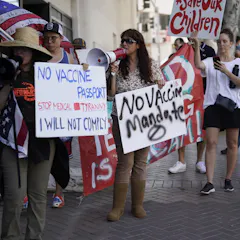
While surveys have shown a large share of unvaccinated workers threatening to quit over a mandate, the reality is few actually do.
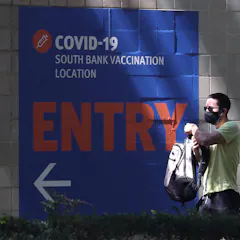
Experts at the Doherty Institute have updated their modelling to heighten caution around reopening for business and play.
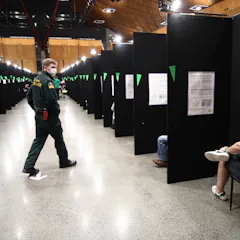
A survey found almost a quarter of participants thought they could not receive a vaccine because of medical conditions. But only 28.9% of this group actually meet the criteria set by health agencies.
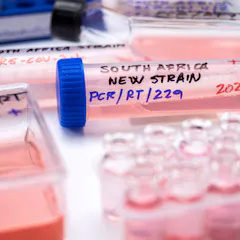
Communities with high vaccine coverage rates are likely to see lower case numbers, hospitalisations and deaths related to COVID-19 compared to those with poor vaccine coverage.
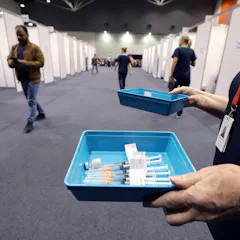
Australia could again fall into the trap of false economies by opening up too soon.
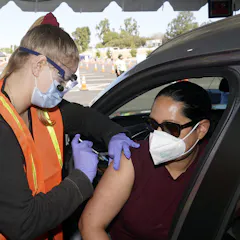
Two economists explain what insurers can and can’t do to factor vaccination status into their coverage and rates.
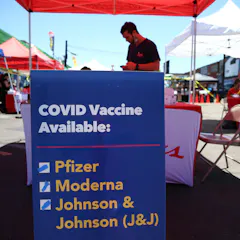
People who haven’t gotten vaccinated for COVID-19 often have complex reasons for their relunctance or may face other barriers. Lumping them all together undercuts the vaccination campaign.
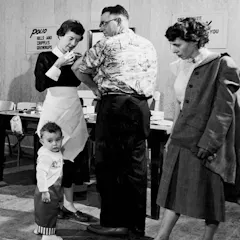
At the height of polio and H1N1, Canadians were keen to get vaccinated, but vaccine enthusiasm waned once the crisis had passed — what does that mean for COVID-19?
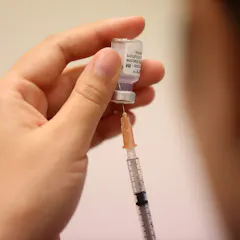
Age and education level are the main factors associated with vaccine hesitancy. While this affects Māori and Pacific communities, basic access to health care and information is more important.
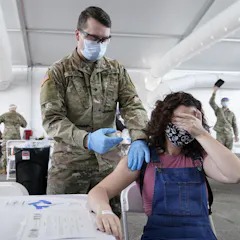
Am I really eligible? Isn’t there someone more worthy of getting immunized before me? A bioethicist explains that such feelings of guilt are understandable. In fact, they are good for society.
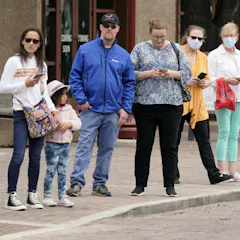
Texas and many other states have eased all or most coronavirus restrictions such as mask-wearing. A cost-benefit analysis suggests reversing those moves for just a short period could make a big difference.
The pandemic has exposed inequalities in society. There is concern that tying freedoms to vaccinations may further disadvantage vulnerable groups.

Though COVID-19 has killed Black Americans at nearly twice the rate as white Americans, Black people are the least likely racial group to say they’re eager to get the vaccine.
Top contributors
-

Professor of Global Biosecurity, NHMRC L3 Research Fellow, Head, Biosecurity Program, Kirby Institute, UNSW
-
Professor and Director of Doherty Epidemiology, The University of Melbourne
-
Professor in Applied Mathematics, University of Canterbury
-
Senior Lecturer, University of Auckland, Waipapa Taumata Rau
-
Senior research fellow, University of Waikato
-
Professor, Virginia Tech
-
Professor, School of Population Health, UNSW
-
Head of School of Population Health and Professor, Infectious Diseases Dynamics and Interventions, UNSW
-
Associate Professor, Computing & Information Systems; Director, Melbourne Data Analytics Platform, The University of Melbourne
-
Professor of Paediatrics and vaccinologist, Royal Childrens Hospital, University of Melbourne and Murdoch Childrens Research Institute (MCRI); Associate Dean International, University of Melbourne, Murdoch Children's Research Institute
-
Research Fellow, University of Sydney School of Public Health, University of Sydney
-
Professor, School of Public Health, University of Sydney
-
Professor, The Children's Hospital at Westmead Clinical School and Sydney Infectious Diseases Institute, University of Sydney
-
Professor of Law, University of Waikato
-
Associate Professor of Microbiology and Immunology at Emory University, University of Pittsburgh