
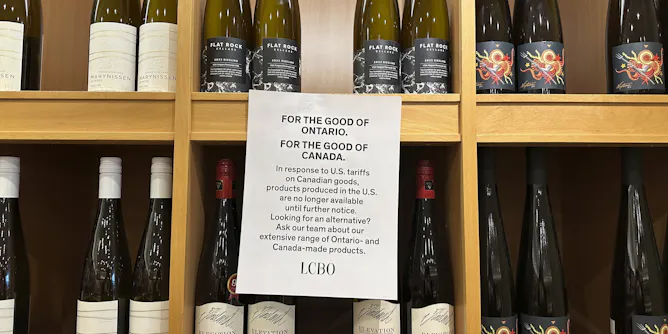
Canada’s shunning of beer, wine and spirits from the US is a textbook example of how market access for politically exposed goods can quickly unravel.
Articles on USMCA
Displaying 1 - 20 of 35 articles
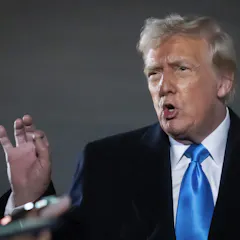
Donald Trump’s vision for his imperial presidency is organized around an old and outdated idea: the revenue tariff.

Canada should consider an export charge on Canadian energy bound for the U.S and applied directly by the federal government. That would impose some unity on Canada’s approach to Trump 2.0.
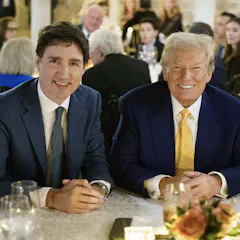
Donald Trump’s heavy-handed populist trade policies are more about irrational desires than sound politics or economics.
Amid Donald Trump’s latest tariff threat, Canada should be asking how a liberal-democratic nation survives next to a much more powerful country with no respect for the rule of law.

If Canada is prepared to leave Mexico behind in trade negotiations with the U.S., Canadian officials should be prepared for Mexico to do the same. In Trump 2.0, a united front might make more sense.
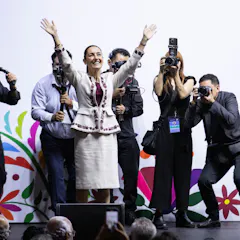
Claudia Sheinbaum has vowed to continue the social policies of her predecessor and mentor Andrés Manuel López Obrador.

The U.S., Canada and Mexico will continue to sign trade and economic agreements, but these pacts won’t deliver the certainty and protection enjoyed for three decades prior under the former NAFTA.
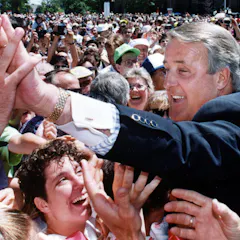
The death of former Canadian prime minister Brian Mulroney will lead to a wide examination of his legacy. A lasting policy of the Mulroney regime is free trade with the United States.

Canada’s extension of copyright might be good for corporations that hold copyrights, but it’s bad news for creators and the public.
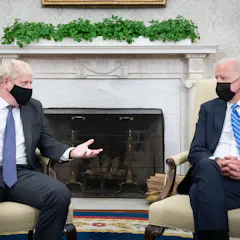
Joe Biden seems to have little appetite for closer economic ties.
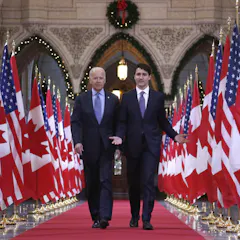
Closer political ties between Joe Biden and Justin Trudeau likely means a more constructive and co-operative approach to solving challenges between the two countries in the agri-food sector.
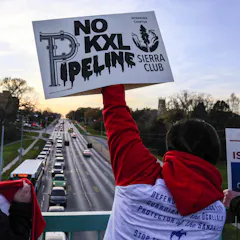
The threat of a large lawsuit could be enough to discourage some countries from taking action on climate change.
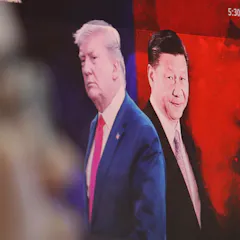
Trump launched his trade war to save American manufacturing. An economist explains why it hasn’t worked out as planned.
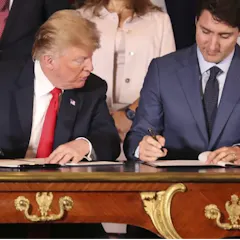
The Canada-U.S.-Mexico Free Trade Agreement, which came into force in July 2020, puts more emphasis on the environment and gives greater authority in Canada in the matter.
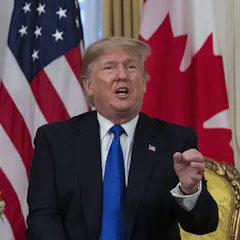
Canada’s free-trade obsession has made us overly reliant on global supply chains. That’s a huge unforced error given that 19 years ago, 9/11 showed us just how quickly border policy can change.

The U.K. is now in the unenviable position of having to negotiate multiple trade deals following Brexit. Here’s why it should start with Canada.
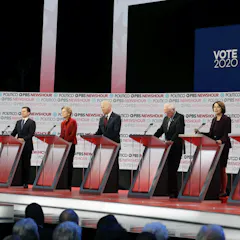
Scholars explain important moments in the Democratic presidential debate on Dec. 19.
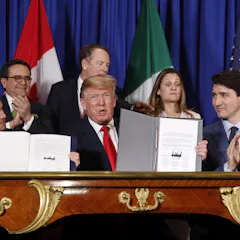
President Trump and Democrats recently agreed on a deal to pass the U.S.-Mexico-Canada Agreement. A trade scholar explains what’s new.
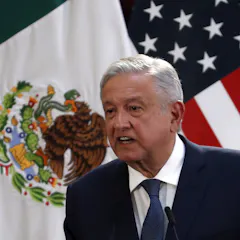
In his first year in office, the Mexican president is dismantling the political and economic structures that have made Mexico one of the most inequitable countries in the world.
Top contributors
-

Associate Professor of Political Science, Brock University
-
Canada Research Chair in Economy and Environment, Queen's University, Ontario
-
Professor, Economics, University of Calgary
-
Part-Time Professor of Economics, The New School
-
Associate Professor of Economics, Southern Methodist University
-
Professor, Food Economics, University of Guelph
-
Associate Professor of Political Science, West Virginia University
-
Research Associate, University of Guelph
-
PhD student, Researcher at the Center for Studies on Integration and Globalization (CEIM), Université du Québec à Montréal (UQAM)
-
Assistant Professor, Politics, University of Toronto
-
Dean and Professor of Finance, Rotman School of Management, University of Toronto
-
Professor and Distinguished Research Chair, Globalization and Health Equity, L’Université d’Ottawa/University of Ottawa
-
Senior Economist and Associate Director of Social Science and Policy, University of Michigan Energy Institute, University of Michigan
-
Dwight F. Benton Professor of Marketing, University of Michigan
-
Professor, Dept of Food, Agricultural and Resource Economics, University of Guelph