

US shoppers are seeing higher fruit and vegetable prices thanks to trade tensions, extreme weather and geopolitics, just to name a few reasons.
Articles on US trade policy
Displaying 1 - 20 of 28 articles

Even though Mexico is the US’s top trade partner, the fate of the pact underpinning that relationship is uncertain.

The tightly integrated North American beef market, under pressure from drought and the spread of the screwworm, could get further roiled by trade uncertainty.
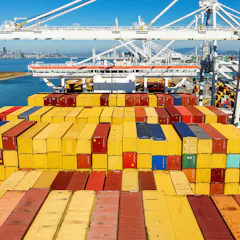
Rebuffed by the Supreme Court, President Donald Trump is seeking to exploit a different tariff tool to regain leverage. Whether it succeeds remains in question.

Amid the ongoing energy crisis, climate economics experts assess how much export credit agencies are actually driving the shift to lower-carbon as they focus financing on green energy.

Changes to fundamental World Trade Organization rules are being driven by the US and EU. This week’s meeting in Cameroon could see developing nations lose out.
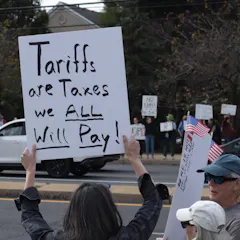
Donald Trump’s approval ratings could slip even further.

The country remains the world’s largest consumer.
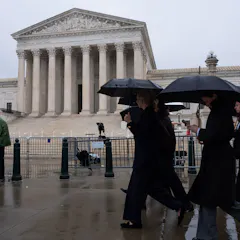
The ruling strikes down most of the Trump administration’s current tariffs, with more limited options to replace them.
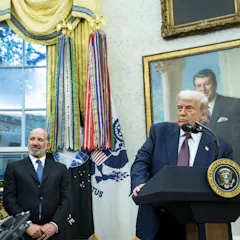
The president has promised his approach will bring back jobs – but will they be good ones?
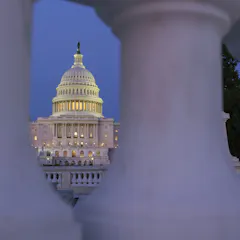
The new federal law favors energy technologies that are already profitable and increase global warming over cleaner approaches that could use the investment support.

Some technologies could rapidly cut emissions, while others do little to fight climate change. The House bill favors the latter while nixing support for the former.

US manufacturers do not produce enough solar panels to meet the nation’s demand, but industry investments and federal tax incentives have been making progress.
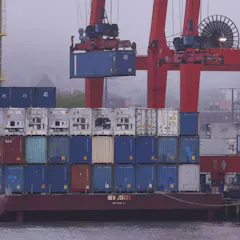
China is focused on what will happen at the end of the 90-day tariff pause, and what it can get from the US negotiators.

The IMF has drastically scaled back growth forecasts for the US and a host of other economies for 2025.
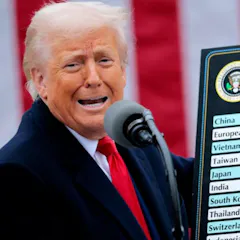
Polling shows approval ratings for the US president has shifted with the introduction of new tariffs.

The word ‘deficit’ may sound alarming, but America’s trade gap is a sign of its financial and economic dominance.

All this talk of a US-Australia trade war has left consumers wondering what this means for them. At least in the short term, it looks like good news.
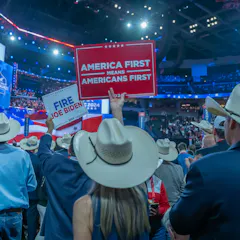
The evolution of trade gives key insights into why protectionism is as American as apple pie.

The shock will fall hardest on consumers, certain industries, and states that are sensitive to supply-chain disruptions.
Top contributors
-

Honorary Research Fellow, City Political Economy Research Centre, City St George's, University of London
-
Professor of Economics, University of Minnesota Duluth
-
Professor Emeritus of Economics, Babson College
-
Professor of Civil and Environmental Engineering, Rice University
-
Associate Professor of Agricultural Economics, Mississippi State University
-
Distinguished Professor, Arthur J. Gosnell Professor of Economics, & Head, Department of Sustainability, Rochester Institute of Technology
-
Provost Associate Professor, American University School of International Service
-
Senior lecturer, Canberra School of Government, University of Canberra
-
Bernard T. Ferrari Professor of Business, Johns Hopkins University
-
Professor of International Security, Jean Monnet Professor of European Security, National University Odesa Law Academy
-
Professor of International Security, University of Birmingham
-
Lecturer in International Relations, University of East London
-
Paul Sack Associate Professor of Political Economy, Harvard Kennedy School
-
Senior Lecturer in Economics, Lancaster University Management School, Lancaster University
-
Associate Professor of Community & Regional Planning, University of New Mexico