
Many states have found ways to remove partisan politics from their court systems.
Articles on US Senate reform
Displaying 1 - 20 of 46 articles
Sen. Warren said the filibuster stands in the way of gun reform. It does, and so much more.
Republicans were able to push through a tax plan and a flurry of judicial nominees after the Senate curtailed use of the filibuster. It’s time to go all the way.
Changes to Senate voting laws and the particular case of Senator Bob Day make for an unprecedented constitutional tangle, and one that will change the make-up of the Senate.
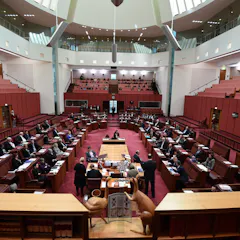
The new Senate is representative of the wide range of views in Australia – and far more so than the House of Representatives.
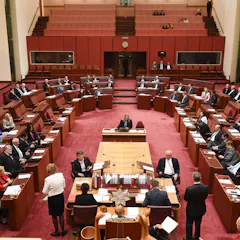
Following the Turnbull government’s recent changes, Australia has new rules for electing senators. How will they work in practise?
Many people do not yet understand the new Senate voting rules, meaning many votes could be wasted at the upcoming federal election.
One-third of people believe the next Senate should have more or the same number of crossbenchers, according to polling done for the Australia Institute.
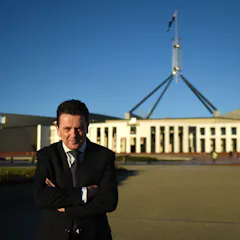
The Senate reforms and a double-dissolution election means that it is difficult to predict who will be sitting in the upper house after July 2. But you can count on Nick Xenophon being there.
Natalie Mast speaks with 'Poll Bludger' William Bowe about how the election campaign has gone so far and what the Senate might look like as a result of changes to the voting method.

With the election result almost certain to be close, preferencing will play a key role, leaving the progressive parties in particular in a difficult bind.
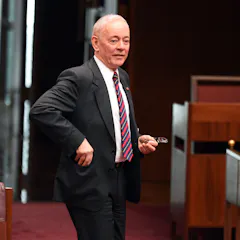
The High Court regarded none of Bob Day’s arguments in his challenge to Senate voting reforms as having any merit.
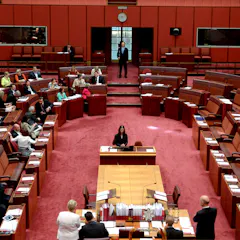
The Australian parliament is not a very representative place – but the bigger problems is the poor quality of its deliberations.
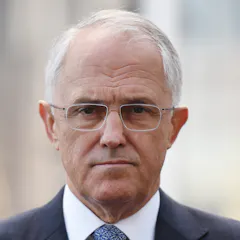
The conventional wisdom is that Bob Hawke’s 1984 election was too long and almost disastrous, and therefore not to be repeated. But the times are very different now.
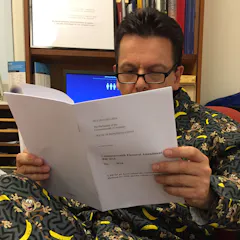
After a marathon debate the Senate has passed the government’s comprehensive rewriting of the upper house voting system, designed to limit the prospect of “micro” players being elected.
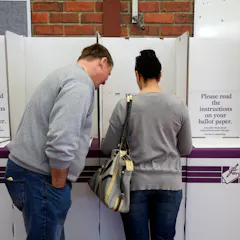
What do Australians need to know when they go to vote for their senators in this year’s federal election?
University of Canberra Vice-Chancellor Stephen Parker and Professorial Fellow Michelle Grattan discuss the week in politics.
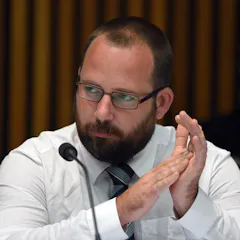
Ricky Muir from the Australian Motoring Enthusiast Party this week made an unsuccessful last roll of the dice to try to delay the government's Senate voting reform legislation.
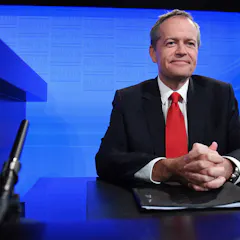
Opposition Leader Bill Shorten has said Labor would not support an early recall of the Senate, further complicating the situation if the government wants to call a double dissolution.

The Coalition has a solid 53-47% two-party lead in the latest Fairfax-Ipsos poll but Malcolm Turnbull’s ratings have taken a hit in the last month.
Top contributors
-

Professorial Fellow, University of Canberra
-
Senior Lecturer, Department of Languages and Linguistics, La Trobe University
-
Senior Lecturer, School of Political and Social Inquiry, Monash University
-
Professor Emerita in Constitutional Law, University of Sydney
-
Honorary Professorial Fellow, Melbourne CSHE, The University of Melbourne
-
Professor of Politics, University of California, Santa Cruz
-
Lecturer, Public Policy and Political Communications, The University of Melbourne
-
Senior Project Manager, Murdoch University
-
Centenary Professor, Centre for Deliberative Democracy and Global Governance, University of Canberra
-
Associate Professor of Political Science, Westminster College
-
Honorary Enterprise Professor in the School of Social and Political Sciences, The University of Melbourne
-
Election Analyst (Psephologist) at The Conversation; and Honorary Associate, School of Mathematics and Statistics, The University of Melbourne
-
Vice Chancellor's Fellow, The University of Melbourne
-
Emeritus Professor, School of Politics and International Relations, Australian National University
-
PhD Candidate, The University of Western Australia