

Senator Joe Manchin’s position on Build Back Better balances delivering for people in his state while not offending their social conservatism, writes a scholar of Appalachian politics.
Articles on US Senate
Displaying 121 - 140 of 410 articles

Republicans and a few Democrats say the Build Back Better plan would increase the already fast pace of inflation.
The government uses a process called public procurement. A professor of public policy explains how the process works and how it is increasingly used to achieve social goals.
You have evolved to tap into the wisdom of the crowds. But on social media, your cognitive biases can lead you astray, something organized disinformation campaigns count on.
Natural gas was once widely seen as a bridge fuel to renewable energy. But the industry’s methane leaks make it a larger global warming threat than people realized.

A bipartisan group of senators said it reached a deal on $550 billion in new spending on infrastructure.
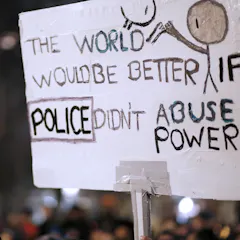
Since Tyre Nichols’ death there are renewed calls for Congress to pass police reform legislation. But the federal government has almost no control over state and local police departments.
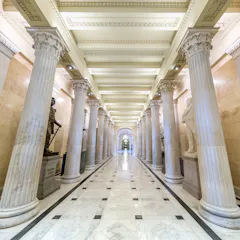
The Senate has a lot of rules, and its parliamentarian interprets what those rules allow – and what they don’t. That can mean a bill will face either huge obstacles, or very few obstacles to passage.

Many states have found ways to remove partisan politics from their court systems.
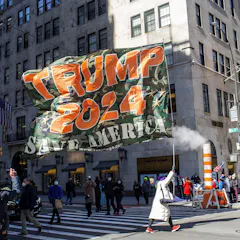
The majority of Americans say they’d like to be able to vote for a third party. Donald Trump says he might start one. But neither is likely to happen.
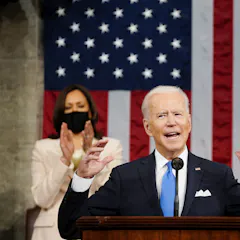
Three scholars examine President Biden’s rhetoric, the symbolism and the several ambitious plans he proposed in his first address to Congress.
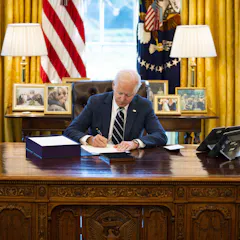
The idea that Washington, D.C., is paralyzed by gridlock rests on half-truths about the legislative process and a basic misunderstanding of how contemporary policymaking works.
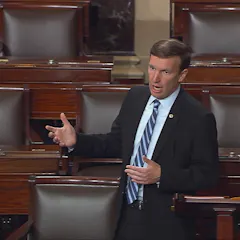
The US system was designed with more checks and balances than many other successful democracies – the filibuster’s main function is to give undue power to a vocal minority.
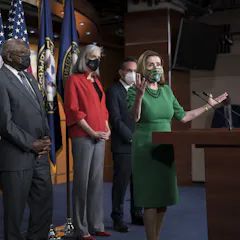
In 1974, Congress invented the reconciliation process to reduce deficits. More recently, reconciliation has been used in ways that increase the deficit. A public policy scholar explains the process.
The idea that Washington, DC is paralyzed by gridlock rests on half-truths about the legislative process and a basic misunderstanding of how contemporary policymaking works.
Endless filibustering has paralysed the US Senate, and with it all of Congress. Will this form of obstructionism be one of the main challenges facing Biden, as some Democrats fear?

In the end, Republicans could not convict the former president for inciting the January 6 Capitol riots without implicating themselves.
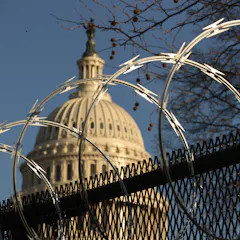
The vote to acquit former President Trump for inciting the attack on the Capitol is a symptom of the dramatic decline of the US constitutional system, which is being eroded from within.
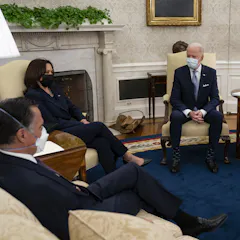
Politicians say they want it, but how often, and under what circumstances, does bipartisanship really happen?
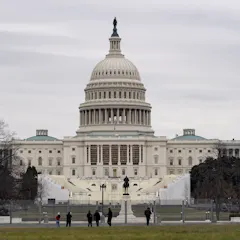
Language affects behavior. When words champion aggression, make violence acceptable and embolden audiences to action, incidents like the insurrection at the Capitol are the result.
Top contributors
-

Professorial Fellow, University of Canberra
-
Election Analyst (Psephologist) at The Conversation; and Honorary Associate, School of Mathematics and Statistics, The University of Melbourne
-
Associate Professor of Political Science, Boise State University
-
Senior Lecturer, Department of Languages and Linguistics, La Trobe University
-
Senior Lecturer, School of Political and Social Inquiry, Monash University
-
Associate Professor of Political Science, Westminster College
-
Associate Professor in Law and Public Policy, University of Oxford
-
Professor of Political Science, University of Florida
-
Professor of law and ethics, Georgia State University
-
Associate Professor of Political Science, Rochester Institute of Technology; Institute for Humane Studies
-
Distinguished Fellow in Law and Government, Dickinson Law, Penn State
-
Professor in The Division of Global Affairs and The Department of Political Science, Rutgers University - Newark
-
Professor of Political Science, Drake University
-
Professor of Politics, University of California, Santa Cruz
-
Associate Professor in Politics and International Relations, School of Social Sciences, Monash University