

Hospitals are tasked with making patients better, but when the hospital that provides care also owns the insurance company that pays for that care, the incentives get more complicated.
Articles on US Medicare
Displaying all articles

Medicare Advantage − the private option that costs taxpayers extra and requires prior approval − is the default for some state agencies and corporations.
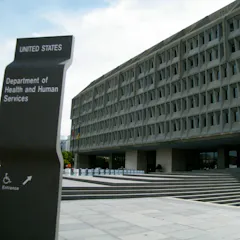
Health Secretary Robert F. Kennedy Jr.’s new vision for US health policy prioritizes deregulation and leaves Americans with fewer benefits, services and protections.

Rather than finding efficiencies and saving money all around, the private companies that administer the Medicare Advantage option to Medicare are profiting at seniors’ – and taxpayers’ – expense.

Signing up for a Medicare plan when you turn 65 − or making changes in subsequent years – means wading through a thicket of consequential choices that can’t always be undone.

There is ample evidence that poor oral health plays a role in many chronic diseases.
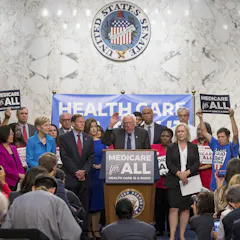
There’s a very simple way to give Medicare to all: delete six words from the legislation that created the program in 1965.
As the GOP prepares to slash spending to pay for tax cuts, lawmakers have been bringing up claims about the poor that don’t stand up to scrutiny.

Hurricane Maria has left 3.4 million Puerto Ricans facing shortages of food, health care and transit, an American humanitarian crisis fueled by the US territory’s May 2017 bankruptcy.
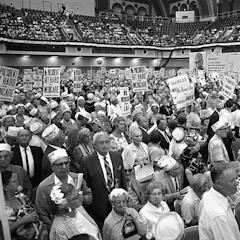
Bernie Sanders’ single-payer health care plan is bound to be expensive and politically impossible. A simple expansion of Medicare offers a cheaper and more passable path to universal care.

International comparisons show that the UK’s National Health Service outperforms other countries’ health systems, including the US.

Boxer Muhammad Ali died of septic shock, after being admitted to the hospital for a respiratory problem. Despite the fact more than a million people are hospitalized with sepsis each year, fewer than half of Americans know what the word sepsis means.
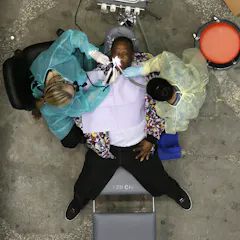
The absence of comprehensive dental care exacts a toll on millions of Americans in terms of poor health, pain and the social stigma associated with bad teeth.

Price in health care is a squishy concept. Different words relating to cost – charge, price and out-of-pocket cost – all have different meanings.

Pharmacists are trained to do far more than dispensing medicine, but outdated policies keep them from taking on a greater role in patient care.

It looks like where you live, and what regulations that state has for health insurers, may have a major impact on whether you are diagnosed early or not.

Hope, fear, and desperation, along with the unique characteristics of the cancer drug market, create a “perfect storm” that continues to drive up prices for cancer drugs.
Top contributors
-

Research Scientist of Health Policy and Economics, University of Southern California
-
Research Scientist and Director of Research Training in Health Policy and Economics, University of Southern California
-
Professor of Economics, UMass Amherst
-
Professor of Bioethics, Macquarie University
-
Assistant Professor in Internal Medicine, University of Michigan
-
Assistant professor of Health Policy & Administration, University of Illinois Chicago
-
Professor, Department of Health Policy, London School of Economics and Political Science
-
Macquarie University Research Fellow, Macquarie University
-
Professor of Bioethics & Medicine, Sydney Health Ethics, Haematologist/BMT Physician, Royal North Shore Hospital and Director, Praxis Australia, University of Sydney
-
Associate Professor, University of Michigan
-
Venable Professor of Law, University of Baltimore
-
Professor of Sociology, Suffolk University
-
Clinical Professor of Periodontics and Endodontics, Stony Brook University (The State University of New York)
-
SUNY Distinguished Professor of Oral Biology, University at Buffalo
-
Research Professor, Health Law, Policy & Management, Boston University