
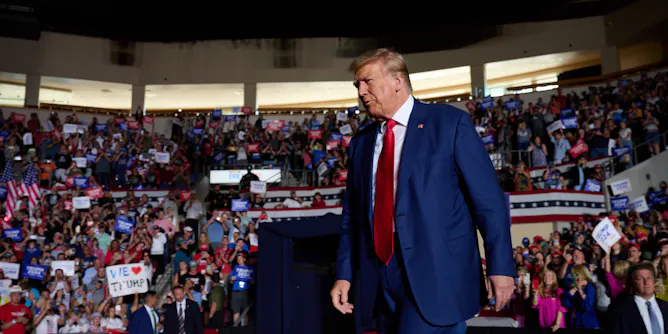
A key element in proving Trump’s guilt or innocence is determining the former president’s state of mind and whether he has shown a consciousness of guilt before and after the alleged crimes.
Articles on US Justice Department
Displaying 21 - 40 of 46 articles
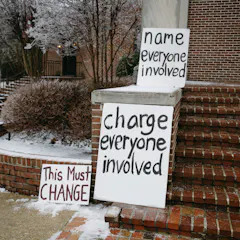
The Justice Department has launched a civil rights probe of the Memphis Police Department to examine allegations of excessive force, improper stops and searches and racial disparities.
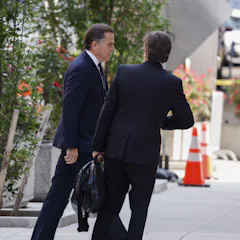
Plea deals are common in American criminal courts. But in the federal government’s tax case against Hunter Biden, the judge refused to sign off on a deal.

Trump appointed Cannon to the bench, but that alone is not a good enough reason for her to recuse herself from the case.
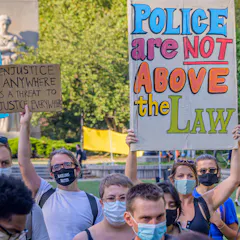
At a time when Americans celebrated their nation’s independence, it’s clear not every American enjoys the same constitutional rights.

The Constitution says that a trial must be held where an alleged crime happened – while Trump’s indictment mentions Washington, D.C. and Florida, there are a few reasons why Florida was the pick.
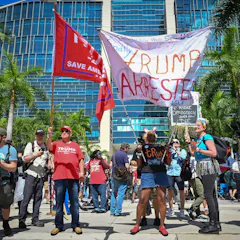
Since Facebook removed online hate groups and individuals from its platform, extremist groups are increasingly organizing in more discreet ways.

There are 38 felony charges against former President Donald Trump, and while it’s unlikely, he could potentially be sentenced to serve 400 years if found guilty on all of them.

Spy cases are rare. More typically, as in the Trump indictment, the act applies to the unauthorized gathering, possessing or transmitting of certain sensitive government information.
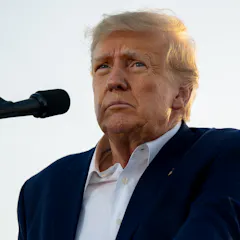
Trump’s indictment will force Americans to grapple with the exact role of presidents – and limits of their power.

The Biden administration fears that further consolidation in the aviation industry will lead to worse outcomes for consumers – but do mergers necessarily push up prices?
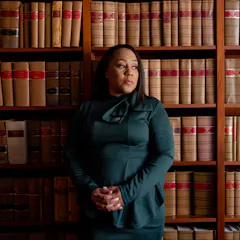
Most prosecutors are elected in uncontested races across the country. But there are signs that the posts are becoming political hotbeds, placing more pressure on the criminal justice system.
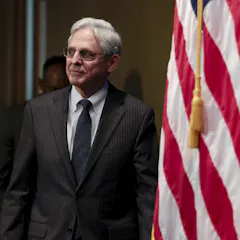
A department rule advises federal law enforcement officials to refrain from making public comments about ongoing investigations that may impact an election in the 60 days leading up to that election.
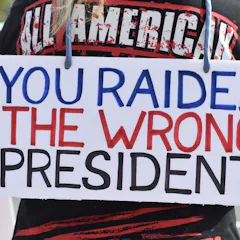
Threats to law enforcement have risen in the aftermath of the FBI raid on former President Trump’s Florida estate. Does ‘message laundering’ by top GOP figures have something to do with it?

Two national security law experts explain how the Espionage Act isn’t only about international intrigue, and share other important points about the law that was invoked in a search of Trump’s estate.
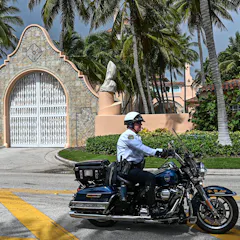
A legal scholar analyzes the unsealed warrant for the FBI’s recent search of Donald Trump’s home and the list of materials seized there. The implications for Trump are potentially grave.
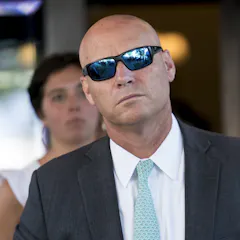
Grand juries are meeting in Georgia and Washington, D.C., as part of investigations into attempts to overturn the 2020 presidential election. How do they work?
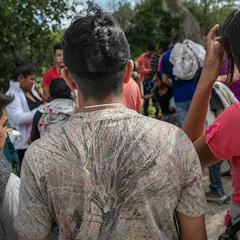
Immigration judges must base their decisions to grant asylum to immigrant children on whether these children have realistic fears of persecution. But other factors influence those decisions.
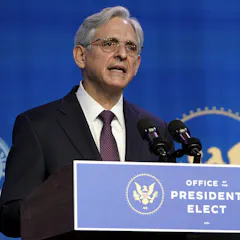
History shows that attorneys general who are picked by – and serve at the pleasure of – the president are not as independent as they may be expected to be.
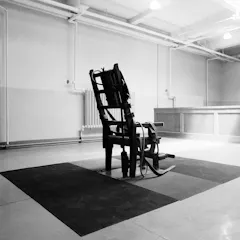
The Justice Department has approved alternatives to lethal injections for federal executions. But no method of capital punishment has been without gruesome stories of what went wrong.
Top contributors
-

Co-Director, National Security and Civil Rights Program, Loyola University Chicago
-
Distinguished Practitioner in Residence, Loyola University Chicago
-
Director of Research, Academic Development and Innovation at the Center on Terrorism, Extremism and Counterterrorism, Middlebury College
-
William Nelson Cromwell Professor of Jurisprudence and Political Science, Amherst College
-
Professor of law, Washington University in St. Louis
-
Professor of law and ethics, Georgia State University
-
Professor of Criminal Law, Immigration, and Race and Law, University of California, Davis
-
Associate Professor at the School of Social Transformation, Arizona State University
-
President, Dickinson College
-
Professor of Law, Boston University
-
Assistant Professor of Media, Communications and Journalism, California State University, Fresno
-
Associate Professor of Political Science, Westminster College
-
Assistant Professor of Economics, Purdue University
-
Outgoing Interim Director of the Frederick S. Pardee Center for the Study of the Longer-Range Future, Boston University
-
Professor of Law, University of Dayton