
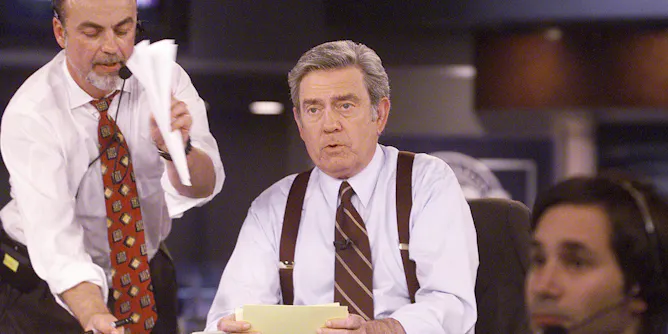
Dan Rather anchored the ‘CBS Evening News’ for over 20 years, starting on March 9, 1981. But he always seemed more in his element as a reporter, and now as a news analyst on social media.
Articles on US journalism
Displaying 1 - 20 of 57 articles

Almost all major human rights organisations agree the destruction of Gaza meets the legal definition of genocide. Yet liberal news outlets still do not use the word.
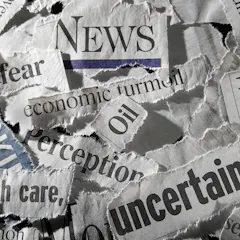
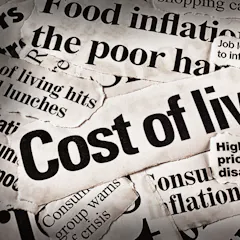
The unrelenting diet of chaotic, contradictory headlines that Americans face today echoes an antidemocratic playbook from the past.
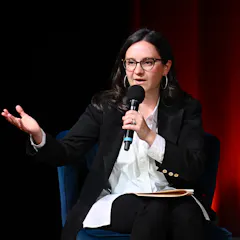
The public’s relationship with news is defined more by its skepticism of the profession than by its impressions of journalists or media outlets.
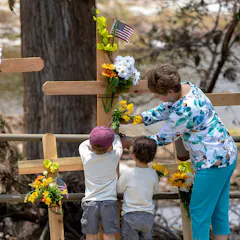
Public broadcasting regularly sends out alerts related to extreme weather and emergency news – but Trump has had these media outlets in his sights for a while.

The public typically finds out about the Supreme Court from the news media. And the way reporters have covered the court has recently changed – dramatically.

A scholar who worked with him for decades observes that what mattered to Moyers was not how close you were to power, but how close you got to reality.
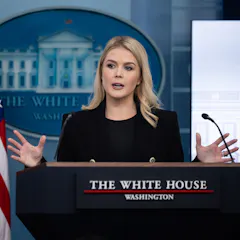
The Trump administration has moved to control which journalists have access to the US president.

As local news outlets continue to close across the country, people’s news sources keep evolving.
Legacy newsrooms have lost their audiences. Could a radical transformation in how they practice journalism make the industry relevant again?
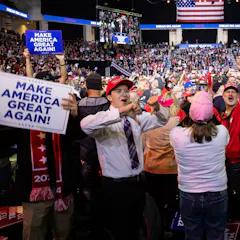
Nearly a quarter of Americans surveyed did not regard political attacks on journalists or news organisations as a threat to press freedom.

At the turn of the 20th century, Southern sympathizers started building monuments to Confederate leaders. Black newspaper editors saw these emblems clearly for what they stood for – a lost cause.

During Cooper’s long tenure as a senior executive, general manager and executive director, he changed the Associated Press and the news its readers and listeners depended on, in major ways.
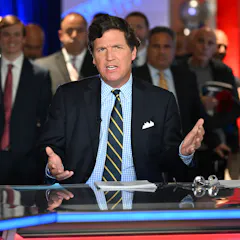
Tucker Carlson and his employer, Fox News, had an incredible understanding of what their audience wants: a kind of authenticity that is not genuine but instead manipulative.
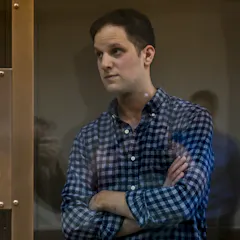
A scholar of Russia’s legal code explains the case against the Wall Street Journal reporter accused of espionage.
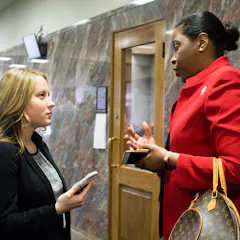
Where regular reporters have disappeared, university-led statehouse reporting programs have stepped in.
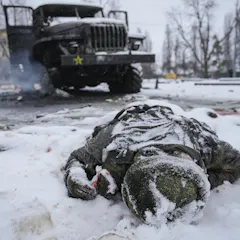
Many images from the Ukraine war are compelling and distressing depictions of the human costs of war.

Partnerships between universities and local media outlets are key ways to sustain local news where coverage is diminishing.
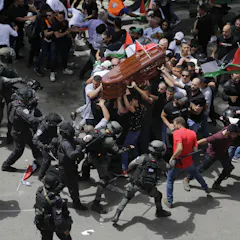
In trying to present violent events in ‘neutral’ language, media reports may be ignoring power imbalances when it comes to Israeli police or military violence against Palestinian civilians.

A series of in-depth interviews with self-described conservatives found concerns that go beyond concerns about selective facts or obvious partisanship.
Top contributors
-

Carolyn S. Chambers Professor in Journalism, University of Oregon
-
Associate Professor of Communication, University of Utah
-
Associate Professor of Communications, Penn State
-
Senior Lecturer in Critical Digital Media Practice, Lancaster University
-
Global Scholar at Woodrow Wilson International Center for Scholars, Washington, DC and Hopkins P Breazeale Professor, Manship School of Mass Communications, Louisiana State University
-
Full Professor in Journalism, Dublin City University
-
Professor of Communication and Journalism, University of Maine
-
Associate Professor of Communications, Penn State
-
Assistant Professor of Journalism, University of Florida
-
Professor of Global Communication, University of Leeds
-
Ph.D. candidate, Manship School of Mass Communication, Louisiana State University
-
Associate Professor, Washington State University
-
Director of the Brechner Center for Freedom of Information, University of Florida
-
Associate Professor of Communication, Elon University
-
Associate Professor of American History and Politics, University of East Anglia