
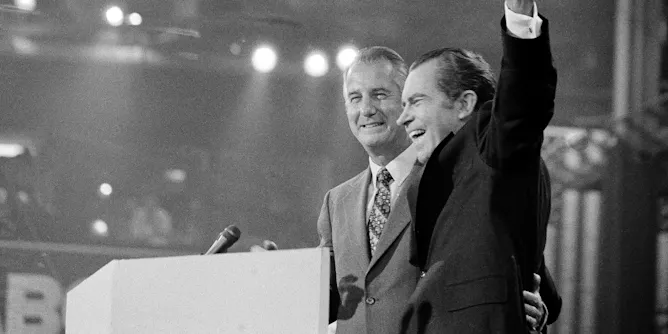
American faith in news is at an all-time low, aided by a president hostile to the press. But presidents have long attacked journalists as biased. What does objectivity really mean?
Articles on New York Times
Displaying 1 - 20 of 81 articles

This account of the first year of Donald Trump’s second presidency is full of direct quotes from White House insiders.

When AI is used to manufacture fake endorsements, copyright law doesn’t do enough to protect celebrities, influencers and other public figures.
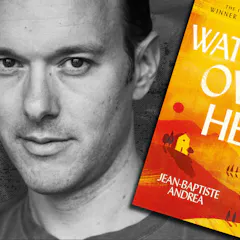
Alex Preston has admitted to using AI to write a New York Times Book Review. He has not only embarrassed himself, but broken the trust of his readers.

A researcher answers the question many asked when they heard charges of abuse and rape against civil rights icon Cesar Chavez: Why didn’t the women speak earlier about the events from decades ago?
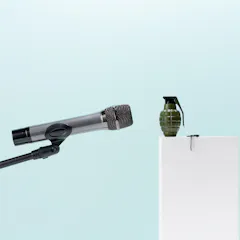
Americans have been able to know what troops at war are facing, and make informed decisions about the war’s cost, because a free press has been able to tell the story − good or bad. Can it still?
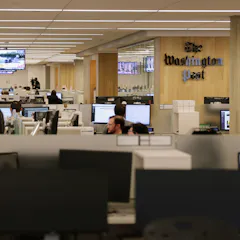
Other billionaires who own newspapers are doing a better job, a journalism professor explains.
From Australia and around the world, here are the podcast gems of 2025.

The mayor-elect can use his popularity to protect New York’s capacity for self-government from outside interference, while reaffirming what his campaign promises mean to the city.
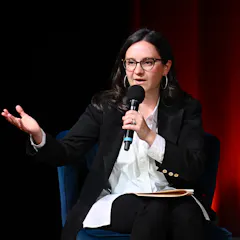
The public’s relationship with news is defined more by its skepticism of the profession than by its impressions of journalists or media outlets.
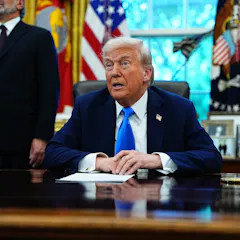
The judgment sets a very high bar for suing the news media for defamation.

The public typically finds out about the Supreme Court from the news media. And the way reporters have covered the court has recently changed – dramatically.

Challenging word-based games are not a modern invention. In early medieval England there was a strong appetite for word puzzles.

Comparisons between our current era and the societal rot of the Gilded Age abound. But it might be more useful to explore how Americans escaped the crises of the late-19th century.
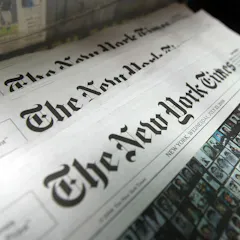
Liberal-leaning stories tend to stay longer on The New York Times’ homepage, even when controlling for popularity. We found the same thing of conservative stories in The Wall Street Journal.
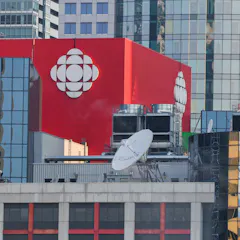
A group of Canadian news media companies are suing OpenAI for using their content, claiming that it is not covered under copyright exemptions.

Historical examples abound of American news consumers being presented with verified facts about controversial figures or events, only to have the excellent journalism have little to no effect.

The New York Times, dismayed by wayward polls in the 1952 presidential race, sent teams of reporters across the country to assess public opinion in the 1956 campaign. Its effort was no rousing success.
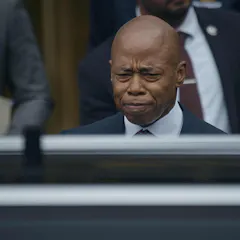
Eric Adams, the New York mayor facing an indictment that could end his career and send him to jail, long boasted that his swagger was good for the city. But swagger doesn’t make a good mayor.

Are journalists to blame for Biden dropping out? This assumes that the power of the press is significant and straightforward. It’s neither.
Top contributors
-

Professor Emeritus of Communication, American University School of Communication
-
Associate Professor of Communication, University of Utah
-
Senior Research Fellow, Centre for Advancing Journalism, The University of Melbourne
-
Professor of Communication and Journalism, University of Maine
-
Honorary Associate Professor, Journalism, University of Wollongong
-
Professor and Lee Hills Chair of Free Press Studies, University of Missouri-Columbia
-
Senior Lecturer, Department of Informatics, King's College London
-
Associate Professor of Journalism, Marist College
-
Scientia Professor of Economics, UNSW
-
Visiting Professor of Practice (Journalism), City St George's, University of London
-
Vice Provost for Inclusive Excellence and Professor of Architecture, University at Buffalo
-
Associate Professor, Department of Peace, Human Rights & Cultural Relations, American University School of International Service
-
Professor of Media Industries, University of Nottingham
-
Senior lecturer, University of Technology Sydney
-
Associate Professor in Linguistics, Macquarie University