

At the heart of this dispute is how Anthropic’s large language model Claude is being used in a military context.
Articles on US Department of Defense
Displaying all articles

Inside every smartphone and laptop are tiny specks of valuable materials, many of which are still lost even when you take your old electronics to a recycling center.

As Pete Hegseth has found, leading the US Defense Department is a big job, affecting Americans’ security at home and abroad and overseeing huge numbers of people and immense amounts of money.

The US administration said that it had received ‘written assurances’ from Ukraine that it would use cluster bombs carefully. Nonetheless, the munition will provide an additional risk to civilians.

Nasa is taking reports of unidentified objects seriously, but it hasn’t found aliens yet.

The technology exists to build autonomous weapons. How well they would work and whether they could be adequately controlled are unknown. The Ukraine war has only turned up the pressure.

The US is giving record-high amounts of money to Ukraine, signaling it is invested in this war for the long run – a political science scholar explains 3 important things to know.

The Pentagon has announced that as many as 8,500 troops have been put on standby to be deployed in Europe as a counter to the threat of the Russian military buildup on Ukraine’s eastern border.

Following the completion of the US troop withdrawal from Afghanistan, Neta Crawford, the co-director of the Costs of War Project, reflects on 7,268 days of American involvement in the conflict.
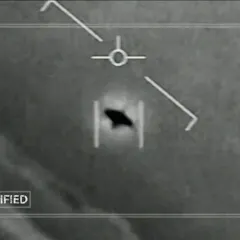
The recent Pentagon report has more questions than answers when it comes to UFOs. Here’s why that’s not surprising.

The country is not completely rudderless, even if many senior officials are quarantining to help curb the spread of the coronavirus.

The Pentagon has spent more than $800 billion on military operations in Iraq. But that doesn’t include money needed to care for veterans, rebuild the country or pay interest on war debt.

Many current and former US military leaders call climate change a serious national security threat, but few of them mention the Defense Department’s big carbon footprint.
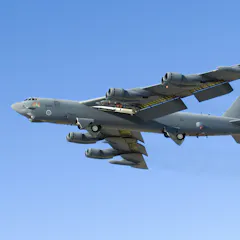
Missiles that fly 3,000 mph or faster – much faster than the speed of sound – are the next generation of high-technology weapons.
Top contributors
-

Montague Burton Chair in International Relations, University of Oxford
-
Professor of Political Science, Kansas State University
-
Professor of Political Science, Boise State University
-
Professor of Law, American University
-
Researcher at the Institute of Cosmology and Gravitation, University of Portsmouth
-
Professor of Political Science, University at Buffalo
-
Fixed-term lecturer, School of Arts and Media, University of Salford
-
Professor of English, Macalester College
-
Professor Emeritus, American University School of International Service
-
Shelby Cullom Davis Professor of International Security and Director of the Center for Strategic Studies, The Fletcher School, Tufts University
-
Executive Director, McCain Institute, Arizona State University
-
Professor of Political Theory, Queen Mary University of London
-
Lecturer in Ethics, University of New South Wales; Fellow of the Centre for Military Studies, University of Copenhagen
-
Associate Professor of Engineering, West Virginia University
-
Director of the Center for National Security Initiatives and Professor of Aerospace Engineering Sciences, University of Colorado Boulder