
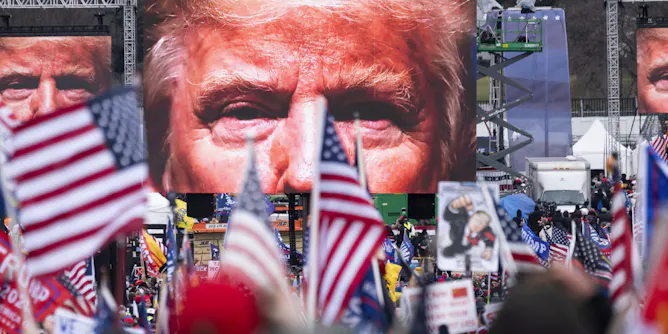
Diaries, visitor logs, handwritten notes and speech drafts are among the records Donald Trump has tried to keep from a Congressional committee investigating the Capitol riot of Jan. 6.
Articles on US courts
Displaying 21 - 40 of 45 articles
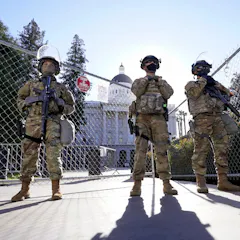
A recent federal court ruling appeared to expand Second Amendment rights to private citizen militias, which a historian of early America explains is not what the founders intended.
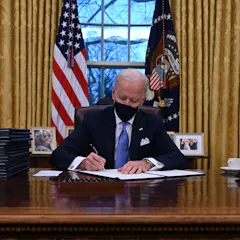
Executive orders aren’t as unilateral as they seem. Here’s how government keeps them in check.

An appeals court described the EPA’s effort as ‘a series of tortured misreadings’ of US law.
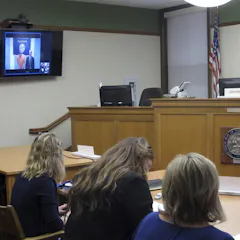
Compared to many other advanced countries, both federal and state court systems in the United States are behind in using videoconferencing in court settings.
In a handful of cases, defendants in murder cases have said that they were defending themselves from a same-sex pass or attempted sexual assault.
President Trump refuses to provide information to lawmakers in the impeachment inquiry. But courts have been reluctant to take such cases for fear of upsetting the government’s balance of power.

Ambiguities in the Americans with Disabilities Act have allowed employers to sidestep a major component of the law: the requirement to provide workers with ‘reasonable accommodations.’
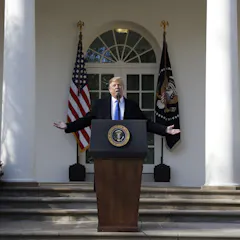
History shows that Congress can play an important role in checking a president’s power.
What happens when assault survivors enter systems that are not designed to respond to their words or meet their needs.

A little-noticed court ruling represents the biggest setback for opponents of child porn in decades.
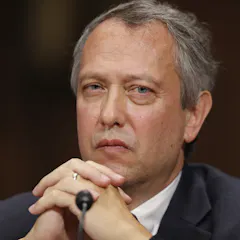
Appointing judges to lifetime terms can be among a president’s longest lasting legacies. The overwhelming majority of Trump’s nominees are conservative, white and male.
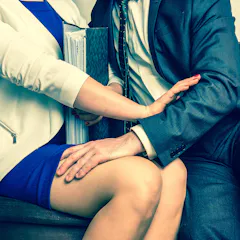
Courts have created three legal barriers that have made it much harder for workers to complain to their employers about sexual harassment.
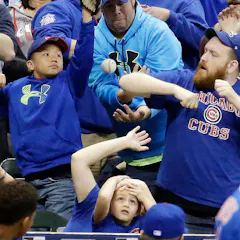
A century-old legal doctrine has protected MLB teams from liability, when a fans gets injured by a foul ball. New research shows why it’s time that changed.

Years after their trials, he got in touch with the victims he thought he had helped. They described feeling ‘dumped’ by the system.

A study of 100,000 convicted felons shows why rethinking parole may be the key to reversing mass incarceration.
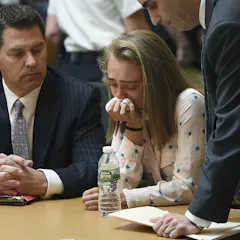
When do words at an end-of-life decision constitute a crime? A law professor explains why lawmakers should act to clear up the gray area that remains.
The rule of law can take on different meanings depending whom you ask and where you are – but in the US it pretty much means one thing.
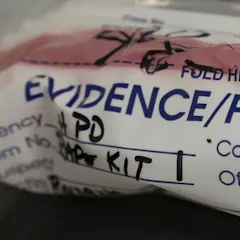
Forensics has a way to go before it’s a mature, academic science. Attorney General Jeff Sessions just terminated an independent commission charged with helping it get there.

The Supreme Court’s public reputation is strong in part because people see it as less political than other government branches. What can text analysis tell us about how accurate that perception is?
Top contributors
-

Professor of Practice, International Affairs, Georgia Institute of Technology
-
Professor of Law, Georgia State University
-
Professor of Economics, University of Gothenburg
-
Professor of Law and Co-Director, Center on Applied Feminism, University of Baltimore
-
Associate Professor of Law, University of Virginia
-
Professor of Middle Eastern Studies and Public Policy and Director of the Interdisciplinary Studies Institute, UMass Amherst
-
Associate Professor of Political Science, Oregon State University
-
Professor and Chair, Women's and Gender Studies (St. Louis University, Fall 2022), Saint Louis University
-
Professor of Sociology and Criminology, University of North Carolina Wilmington
-
Professor of Public Administration and Policy, University at Albany, State University of New York
-
Professor of Law, Boston University
-
Professor of Economics, Duke University
-
William H. Neukom 1964 Distinguished Professor of Computational Science, Associate Dean for the Sciences, Dartmouth College, Dartmouth College
-
Master of Art in Gallery and Museum Management Program Director, Western Colorado University
-
Associate Professor of Business Law and Ethics, Indiana University